
Trump Insists US Needs Greenland for Security as Danish and Greenlandic Foreign Ministers Visit Washington
Introduction: An Old Idea Returns to the Spotlight
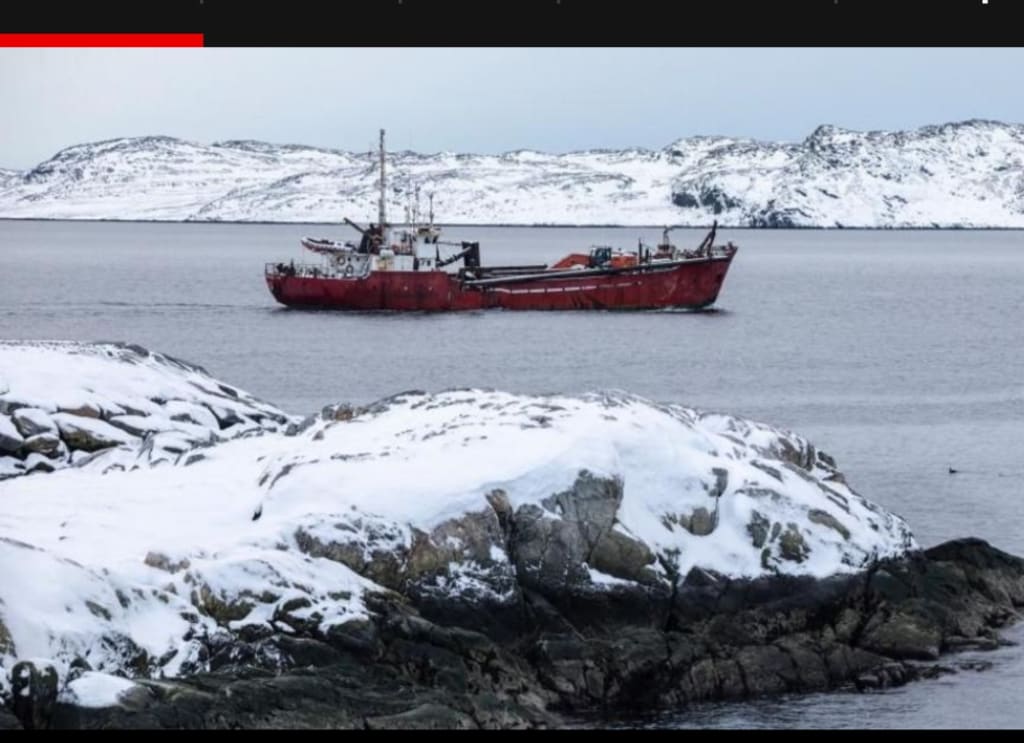
Former US President Donald Trump has once again insisted that the United States “needs” Greenland for national and global security, reviving a controversial idea as the Danish and Greenlandic foreign ministers visit Washington for high-level talks. The remarks, echoing Trump’s much-publicized interest in acquiring Greenland during his presidency, have reignited debate over Arctic geopolitics, sovereignty, and the future of international cooperation in the rapidly changing polar region.
As climate change accelerates Arctic ice melt and global powers eye new shipping routes and resources, Greenland has become far more than a distant island. Trump’s comments, timed with diplomatic meetings in Washington, underline how strategic competition in the Arctic is intensifying.
Trump’s Security Argument
Trump’s renewed insistence centers on security. He has argued that Greenland’s geographic position makes it vital to US defense interests, particularly as Russia and China expand their presence in the Arctic. Greenland sits along key air and sea routes between North America and Europe and hosts the US-operated Pituffik Space Base (formerly Thule Air Base), a critical component of America’s missile warning and space surveillance systems.
According to Trump’s logic, stronger US control—or influence—over Greenland would enhance early warning capabilities, protect transatlantic security, and counter rival powers seeking to gain a foothold in the region. Supporters of this view say the Arctic is becoming a frontline of 21st-century security competition.
Danish and Greenlandic Leaders Push Back
Denmark and Greenland have consistently rejected any suggestion that Greenland could be acquired or controlled by another nation. Greenland is an autonomous territory within the Kingdom of Denmark, with its own government and increasing self-rule.
Ahead of and during their Washington visit, Danish and Greenlandic officials reiterated that Greenland is not for sale and that its future will be decided by its people alone. Greenland’s leaders have emphasized cooperation with allies, including the US, while firmly defending sovereignty and self-determination.
The visit to Washington was framed as an opportunity to strengthen diplomatic ties, discuss Arctic security, climate challenges, and economic development—not to revisit territorial ambitions.
Why Greenland Matters More Than Ever
Greenland’s importance has grown dramatically in recent years. Melting ice is opening new shipping routes across the Arctic, potentially shortening travel times between Asia, Europe, and North America. At the same time, the island holds vast reserves of rare earth minerals, uranium, and other resources critical to modern technologies and clean energy transitions.
These factors have drawn increased interest from global powers. China has described itself as a “near-Arctic state” and invested in Arctic research and infrastructure, while Russia has expanded military bases and icebreaker fleets in the region.
For the US, maintaining influence in Greenland is seen as essential to preventing strategic rivals from filling the gap.
The Legacy of Trump’s Greenland Proposal
Trump first floated the idea of buying Greenland in 2019, prompting international disbelief and swift rejection from Denmark. At the time, Danish leaders called the idea “absurd,” and Greenlandic officials stressed their autonomy and right to self-governance.
Although the proposal never advanced, it had lasting consequences. It strained US-Danish relations temporarily but also sparked renewed attention to Greenland’s strategic role. Since then, the US has increased diplomatic engagement with Greenland, reopening a consulate in Nuuk and expanding cooperation on economic and security issues.
Trump’s latest comments suggest that, at least rhetorically, the idea still resonates with his broader worldview of assertive, interest-driven foreign policy.
Arctic Security and NATO
Security in the Arctic is increasingly intertwined with NATO strategy. Denmark is a NATO member, and Greenland’s location gives the alliance a critical vantage point over the North Atlantic and Arctic regions.
US officials, regardless of administration, have acknowledged the need to modernize Arctic defenses, improve surveillance, and enhance cooperation with allies. However, they have generally framed this effort as a partnership rather than a question of ownership.
Danish and Greenlandic leaders argue that collaboration within NATO and existing agreements already address security concerns effectively, without undermining sovereignty.
Greenland’s Own Priorities
For Greenland, security is only one piece of a larger picture. The island faces immense challenges from climate change, including melting ice sheets, rising sea levels, and disruptions to traditional livelihoods.
Economic development is another key priority. Greenland’s government has sought foreign investment to build sustainable industries, improve infrastructure, and reduce dependence on Danish subsidies. At the same time, leaders are cautious about becoming overly reliant on any single external power.
Greenlanders have repeatedly emphasized that they want respectful partnerships, not geopolitical bargaining over their land.
Diplomatic Signals From Washington
The visit of Danish and Greenlandic foreign ministers to Washington was widely seen as a signal of unity and dialogue in response to renewed rhetoric. US officials have stressed their commitment to working with Denmark and Greenland as allies, focusing on shared security interests, climate research, and economic cooperation.
While Trump’s comments dominated headlines, current US policy continues to recognize Greenland’s status and sovereignty. Analysts note that rhetorical statements, even from influential figures, do not necessarily translate into official policy—but they do shape public debate and international perceptions.
Public and International Reaction
Trump’s remarks have drawn mixed reactions. Supporters view them as blunt realism, arguing that the US must prioritize strategic interests in an increasingly competitive world. Critics see them as outdated and dismissive of international norms and self-determination.
In Greenland and Denmark, public reaction has leaned strongly toward reaffirming independence and autonomy. Many Greenlanders see the renewed attention as a reminder of their strategic importance—but also of the need to assert their own voice on the global stage.
What This Means Going Forward
The renewed focus on Greenland highlights a broader shift in global politics. The Arctic is no longer a remote frontier; it is a central arena for climate, security, and economic competition.
While Trump’s insistence on US “need” for Greenland may not lead to concrete action, it underscores the urgency for clear, respectful, and cooperative Arctic strategies. For Denmark, Greenland, and the US, the challenge will be balancing security interests with sovereignty, partnership, and the rights of local populations.
Conclusion: Security Without Sovereignty?
Donald Trump’s claim that the US needs Greenland for security has once again thrust the island into the global spotlight. As Danish and Greenlandic foreign ministers engage Washington, the message from Nuuk and Copenhagen remains clear: cooperation is welcome, but ownership is not on the table.
In an era of rising Arctic competition, the future of Greenland will be shaped not by bold declarations, but by diplomacy, respect for self-determination, and shared responsibility for one of the world’s most strategically and environmentally significant regions.
About the Creator
Keep reading
More stories from Aarif Lashari and writers in The Swamp and other communities.
Workers at Chinese Factory That Produces Labubu Toys Are Being Exploited, Says NGO
Labubu toys, known for their quirky designs and growing global popularity among collectors and children alike, have become a recognizable name in the designer toy market. But behind the colorful packaging and playful characters, a darker story is emerging. A new report by a labor rights non-governmental organization (NGO) claims that workers at a Chinese factory producing Labubu toys are facing exploitation, poor working conditions, and violations of basic labor rights.
By Aarif Lashari6 days ago in The Swamp
India Builds Rockets and Warplanes — So Why Not Passenger Jets?
India has earned global recognition for its accomplishments in defense and space technology. From sending satellites into orbit with the Indian Space Research Organisation (ISRO) to producing advanced fighter jets like the Tejas, the nation has proven that it can engineer highly sophisticated and high-stakes technology. Yet, when it comes to commercial aviation — particularly the production of large passenger jets — India remains conspicuously absent. This gap raises a pressing question: if India can build rockets and warplanes, why not passenger aircraft?
By Fiaz Ahmed Brohi4 days ago in The Swamp
How to Succeed at the Benson Directory®
Congratulations and welcome to the Benson Directory® employee #22391! As our newest call handler, you will have the privilege of speaking with dozens of unique and interesting people on a daily basis as well as the opportunity to earn bonuses for high performance. Contained within this handbook you will find a set of ease to follow instructions designed to help you settle in to your new role and begin paving the way to success.
By S. A. Crawford3 days ago in Fiction




Comments
There are no comments for this story
Be the first to respond and start the conversation.