
Trump Announces New Tariffs for EU and Canada Here’s What You Need to Expect
The Trade War Resurfaces

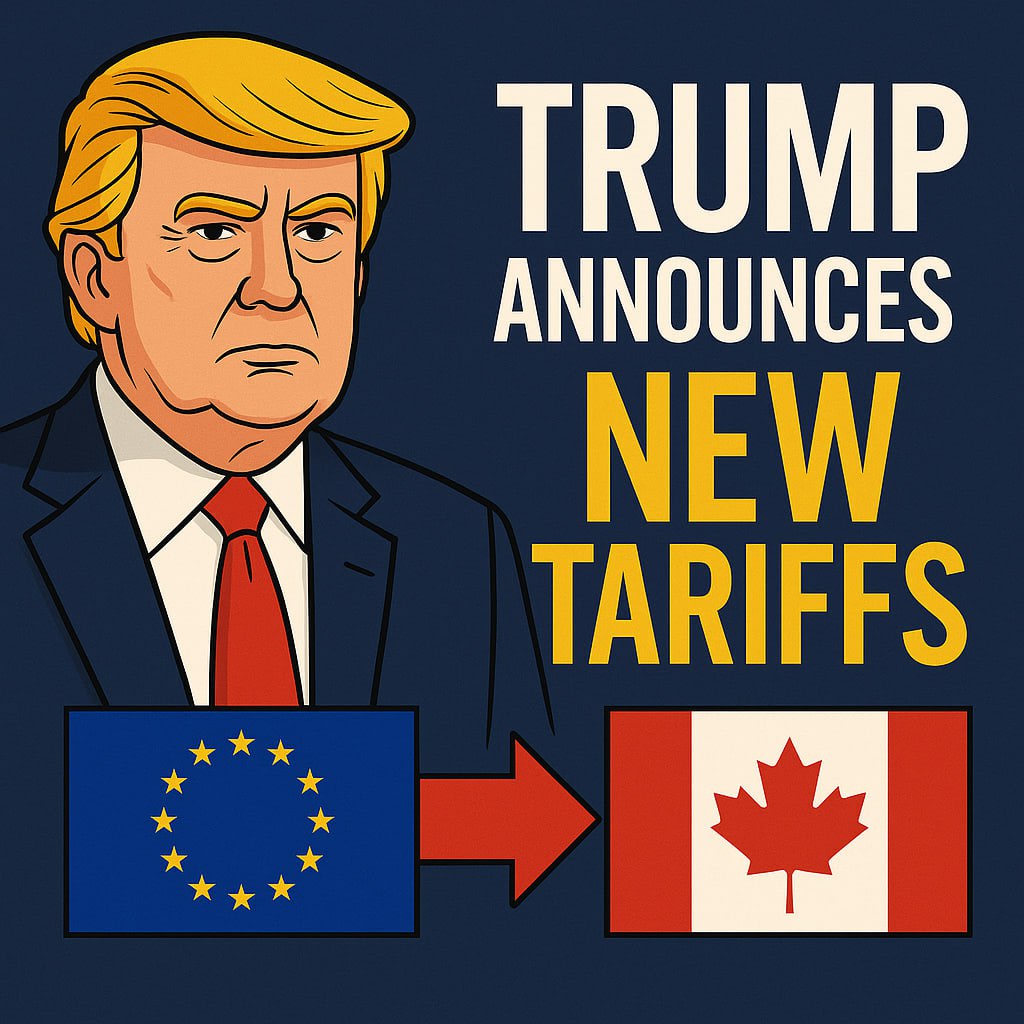
Former President Donald Trump, campaigning on a familiar promise of economic protectionism, has announced plans to impose new tariffs on imports from the European Union and Canada. These tariffs, expected to take effect by late 2025 if Trump wins a second term, are aimed at what he calls “unfair trade advantages” and “foreign manipulation. While many view the announcement as campaign rhetoric, markets and global policymakers are taking it seriously and so should you.
What could this mean for consumers, global trade, and even crypto markets? Let’s break it down
What the Tariffs Target
The proposed tariffs are wide-ranging. Early outlines suggest increased duties on automotive parts, luxury goods, steel and aluminum, and potentially agricultural exports like dairy and wine. While final details are pending, Trump’s team has indicated that these tariffs could mirror or exceed the levels imposed during his first term
European automakers and Canadian steel producers are expected to be among the hardest hit. The U.S. Chamber of Commerce and various trade lobbies have already voiced concern, citing the risk of retaliatory tariffs and supply chain disruptions
Impact on U.S. Consumers and Businesses
Tariffs are essentially taxes on imported goods. That means higher costs for U.S. companies that rely on materials and components from Europe and Canada. For consumers, this could translate to more expensive cars, appliances, and even groceries. Small businesses, which often lack the pricing power of larger corporations, may feel the pinch most acutely.
Industries that have adjusted to post pandemic global sourcing may be forced to pivot again, absorbing increased costs or seeking alternative suppliers often at lower quality or higher logistical risk
The Global Response
The European Union has warned it will respond in kind if the U.S. moves forward with punitive tariffs. Canada has taken a more cautious tone but has hinted at similar reciprocal measures. This raises the specter of a renewed trade war, reminiscent of the 2018-2019 standoff that rattled markets and hurt both exporters and consumers
Retaliatory tariffs could also target politically sensitive sectors such as American agriculture, technology, or energy, leading to wider economic reverberations
Macro and Market Ripple Effects
Financial markets have responded cautiously to the announcement, with equity futures dipping and the U.S. dollar showing volatility. Investors are wary of higher inflation, supply chain strain, and slowed economic growth. Safe-haven assets like gold have seen modest inflows, and commodity markets are on alert
Interestingly, crypto markets have shown subtle upward movement, with some analysts suggesting that digital assets may be viewed as hedges against geopolitical instability and fiat turbulence. Bitcoin and other decentralized assets often perform well in times of macro uncertainty, though correlation is inconsistent
Prepare for Friction
While these tariffs are not yet implemented, their political and economic signals are loud and clear. A potential second Trump administration would likely double down on protectionist trade policies. If you’re a consumer, investor, or business owner, now is the time to assess your exposure
From supply chains to global markets, the ripple effects of tariffs are rarely contained. Whether or not the trade war reignites fully, expect turbulence ahead and plan accordingly
About the Creator
Inkveil
Writing about meme coins with a straight face — mostly.
I chase trends, decode culture, and sometimes pretend I understand the charts.
Welcome to the weird side of Web3
Iran Acknowledges Mass Protest Deaths, But Claims Situation Under Control as Trump Mulls Response
Iran is facing one of the most intense and deadly waves of civil unrest in years, with nationwide protests pushing the clerical regime into a precarious position. While Tehran has publicly acknowledged that demonstrators have died, Iranian officials maintain that the situation is now under control — a claim sharply contrasted by mounting reports of deaths, widespread arrests, and international pressure. Meanwhile, U.S. President Donald Trump has made clear that Washington is weighing a range of responses, including possible military action, in reaction to Tehran’s violent crackdown.
By Aadil shanawar7 days ago in The Swamp


Comments
There are no comments for this story
Be the first to respond and start the conversation.