
Trump and the Son of Iran’s Last Shah: Could a Meeting Signal a New Political Chapter?
Exploring the political implications of a possible meeting between Donald Trump and Reza Pahlavi

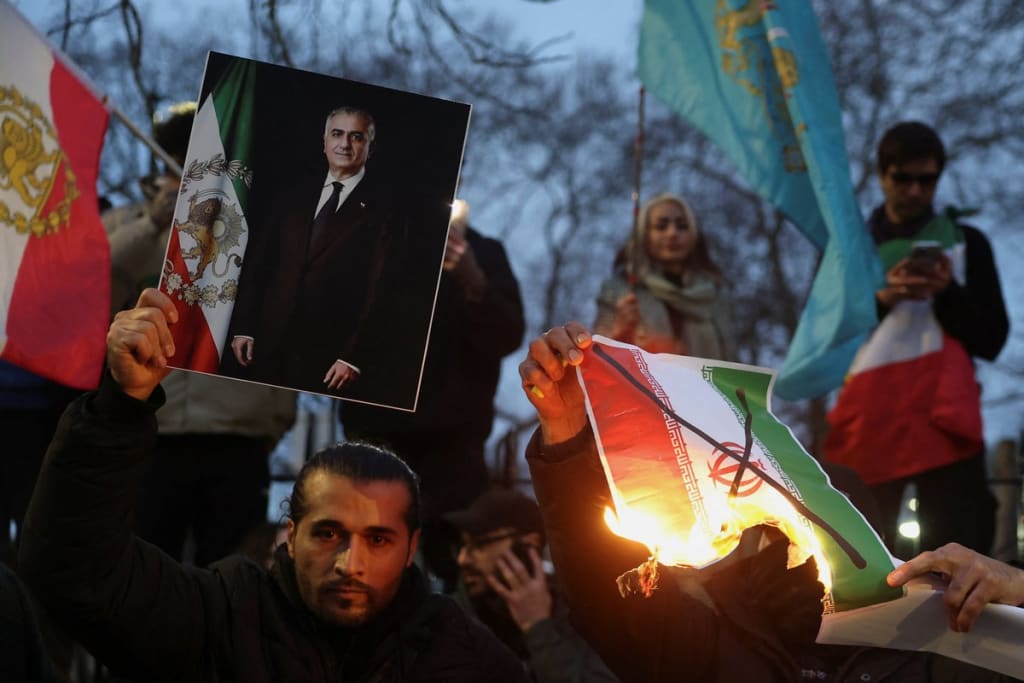
Speculation is growing around the possibility of a future meeting between Donald Trump and Reza Pahlavi, the son of the late Shah of Iran. While Trump has so far declined to meet him, political observers suggest that if circumstances evolve, such an encounter could eventually take place. The discussion highlights shifting dynamics within Iranian opposition politics and the broader geopolitical implications tied to U.S.–Iran relations.
Though no formal talks are currently planned, the idea itself has captured attention among analysts, exiled Iranian communities, and international policymakers.
Who Is Reza Pahlavi?
Reza Pahlavi is the eldest son of Mohammad Reza Shah Pahlavi, Iran’s last monarch, who was overthrown during the 1979 Islamic Revolution. Living in exile for decades, Pahlavi has positioned himself as a prominent voice advocating for a secular, democratic Iran, often emphasizing human rights, national unity, and nonviolent political change.
Unlike traditional monarchist rhetoric, Pahlavi has stated repeatedly that he does not seek to restore the monarchy but supports a system chosen by the Iranian people through free and fair elections. His messaging has resonated with segments of the Iranian diaspora, particularly amid ongoing unrest and dissatisfaction with Iran’s ruling establishment.
Trump’s Position So Far
Donald Trump, known for his unconventional approach to foreign policy, has so far declined a meeting with Pahlavi. Observers suggest this hesitation reflects Trump’s cautious approach toward symbolic engagements that could be interpreted as official endorsements.
During his presidency, Trump adopted a hardline stance on Iran, withdrawing from the nuclear deal and imposing sweeping sanctions. However, he largely avoided backing specific opposition figures, preferring economic and diplomatic pressure over direct political alignment.
Analysts note that Trump may view any meeting with Pahlavi as a move that carries diplomatic weight, especially given Iran’s sensitivity to foreign involvement in its internal affairs.
Why the Possibility Still Matters
Despite the lack of immediate engagement, experts argue that the possibility of a future meeting is not insignificant. Such a meeting would signal increased international recognition of Iran’s opposition voices and could reshape conversations around Iran’s political future.
For Pahlavi, even indirect acknowledgment from a figure like Trump would elevate his global profile. For Trump, engaging with the son of the former Shah could appeal to voters who favor a tough stance on Iran while also aligning with themes of regime accountability.
The quote suggesting that “if this progresses further, you could see that happening” reflects a belief that evolving political or regional developments could shift calculations on both sides.
Implications for Iranian Opposition Politics
Iran’s opposition landscape is fragmented, with activists, reformists, monarchists, and secular groups often divided by ideology and strategy. A potential Trump–Pahlavi meeting could intensify debates within these circles about leadership, legitimacy, and external support.
Supporters may see such engagement as validation of Pahlavi’s role as a unifying figure. Critics, however, warn that association with U.S. political figures—particularly polarizing ones—could undermine domestic credibility inside Iran, where foreign involvement is often viewed with suspicion.
This tension underscores the delicate balance opposition leaders must maintain between international advocacy and internal legitimacy.
Regional and Global Considerations
Any high-profile interaction involving Iran’s future leadership has broader geopolitical implications. U.S.–Iran relations remain strained, with ongoing disputes over sanctions, regional influence, and nuclear ambitions.
A meeting between Trump and Pahlavi would likely provoke strong reactions from Tehran, potentially escalating rhetorical tensions. Allies and adversaries alike would interpret the gesture as a signal of U.S. intentions, even if framed as informal or symbolic.
As a result, many analysts believe caution will continue to guide Trump’s approach unless a clear strategic benefit emerges.
What Could Change the Equation?
Several factors could make such a meeting more likely in the future:
Escalation of political unrest inside Iran
Increased international pressure on Iran’s leadership
A shift in U.S. electoral or foreign policy priorities
Greater unity among Iranian opposition groups
Until then, discussions remain speculative, driven more by political signaling than concrete planning.
Conclusion
While Donald Trump has so far declined to meet Reza Pahlavi, the ongoing discussion around the possibility reflects deeper questions about Iran’s future and the role of exiled opposition figures on the global stage. A meeting, if it were to occur, would carry symbolic weight rather than immediate policy impact—but symbolism matters in international politics.
For now, the idea remains a “what if” scenario, shaped by evolving political conditions and strategic calculations. Whether it ever materializes or not, the conversation itself highlights the continued global focus on Iran’s internal struggles and the search for viable paths toward political change.
About the Creator
Asad Ali
I'm Asad Ali, a passionate blogger with 3 years of experience creating engaging and informative content across various niches. I specialize in crafting SEO-friendly articles that drive traffic and deliver value to readers.
The Forsyth House Fire
Since 1851, Forsyth House has stood on the corner of Union Street and Gordon Street in the heart of Glasgow. Its iconic, or was... because on Sunday 8th of March, 2026, a fire broke out in a small, seemingly un-named shop in the building and tore all that history down. As I write, the rubble is still unsettled and the street is still blocked off. Central Station is quiet on the upper level, and around 30 small businesses have quite literally gone up in smoke.
By S. A. Crawford3 days ago in The Swamp
Indian warships on standby near Persian Gulf for merchant vessels
Indian Warships on Standby Near Persian Gulf for Merchant Vessels New Delhi deploys naval assets as tensions rise in West Asia, ensuring safe passage for maritime trade Several Indian Navy warships have been deployed near the Persian Gulf and Strait of Hormuz, remaining on standby to assist merchant vessels — especially those bound for India — amid the ongoing war in West Asia that has disrupted commercial sea lanes and heightened regional security risks. The deployment reflects New Delhi’s growing efforts to safeguard its maritime trade routes and protect Indian seafarers during a period of escalating conflict. Why Indian Warships Are in the Region With the Middle East at the centre of a widening conflict involving Iran, the United States, and Israel, strategic chokepoints like the Strait of Hormuz — through which a significant share of global oil and liquefied gas supplies transit — have become areas of intense diplomatic and military focus. In this environment, Indian authorities have kept naval vessels near the Gulf to support and monitor merchant ships navigating these waters. Officials said the warships are being kept on standby to assist merchant vessels coming towards India, responding to potential calls for help, providing situational awareness, and reassuring India‑bound cargo owners and crews amid heightened risks. This naval presence is part of Operation Sankalp, a longer‑running mission under which Indian warships have patrolled the Gulf of Oman and Gulf of Aden — and now the wider Persian Gulf region — to ensure maritime safety and respond to potential threats or emergencies affecting commercial shipping. Safe Passage Through the Strait of Hormuz Despite tensions, several Indian‑flagged vessels have made headway. Two Indian LPG carriers, Shivalik and Nanda Devi, have been granted passage through the Strait of Hormuz and are en route to Indian ports, carrying critical energy supplies. These successful transits underscore the importance of safe shipping corridors for India’s economic interests. However, many other India‑flagged vessels remain in the region, with the government actively negotiating and coordinating with regional partners to secure safe movement and, if necessary, naval support or escorts. Recent diplomatic engagements reflect India’s effort to coordinate with Iran, Gulf Cooperation Council states, and Western powers to keep trade routes open. Protecting Indian Seafarers and Commerce The maritime deployment also responds to growing concerns for the safety of Indian seafarers working aboard ships in the Persian Gulf. According to a Reuters report, thousands of Indian sailors are currently in the region, with some stranded and caught between the escalation of hostilities and restrictions on commercial travel and shipping. These crews face increased anxiety as airspace and waters remain tense. India has been clear that the naval presence is aimed at ensuring the safe passage of merchant vessels, providing operational support if needed, and maintaining vigilance in a highly volatile maritime environment — not to contribute to combat. The Indian Navy regularly conducts patrols, surveillance and escort missions to deter threats and monitor hazardous situations. Strategic Importance of the Deployment The Strait of Hormuz remains one of the world’s most critical maritime chokepoints, accounting for a large portion of oil and gas transit worldwide. Disruption here affects global energy markets and economic stability, making international attention to naval deployments all the more significant. India, heavily dependent on imports for energy and trade, has a vested interest in keeping these routes secure. Deploying warships in such locations also serves as a deterrent to potential threats — from state actors to non‑state groups — that might target commercial vessels or disrupt shipping in response to regional tensions. The presence of naval assets aims to reassure both Indian and international shipping operators that maritime safety remains a priority. Naval Cooperation and Regional Dynamics India’s naval deployments complement diplomatic efforts to maintain open seas and safe navigation. In recent weeks, New Delhi has communicated with key stakeholders to facilitate safe passage and protect Indian nationals and seafarers. This includes regular contact with Gulf nations, Iran, and allied countries seeking to reduce maritime risks amid broader geopolitical challenges. Furthermore, Indian warships have been involved in maritime security operations elsewhere in the region for years, including anti‑piracy missions in the Gulf of Aden and Arabian Sea. These longstanding efforts bolster India’s ability to respond effectively to evolving security needs in the Gulf. What Comes Next As the West Asia conflict continues, India’s maritime posture is expected to adapt, balancing diplomacy, commercial interests and security imperatives. Authorities have stressed that naval forces will remain vigilant while working through diplomatic channels to ensure Indian and allied vessels can traverse critical sea lanes without undue risk. In a time of heightened tension, India’s naval presence near the Persian Gulf signals both a commitment to maritime security and a proactive stance in safeguarding its economic and strategic interests. Continued monitoring and cooperation with international partners will be essential as the situation evolves.
By Fiaz Ahmed a day ago in The Swamp


Comments
There are no comments for this story
Be the first to respond and start the conversation.