
Top Goldman Sachs lawyer Kathy Ruemmler resigns over Epstein ties
The departure of Kathy Ruemmler underscores how lingering ties to Jeffrey Epstein continue to reshape corporate leadership and accountability.

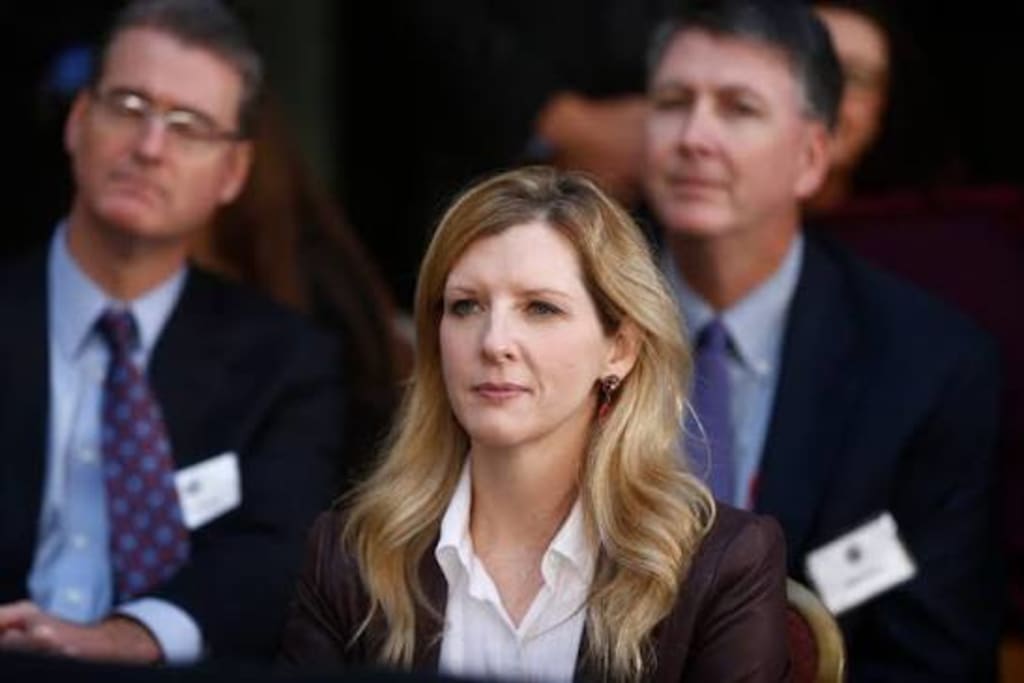
The resignation of Kathy Ruemmler, one of Wall Street’s most influential legal figures, has sent shockwaves through the financial and corporate governance world. Ruemmler, who served as chief legal officer of Goldman Sachs, stepped down following renewed scrutiny of her past professional interactions linked to Jeffrey Epstein, the disgraced financier whose crimes continue to cast a long shadow over powerful institutions.
Goldman Sachs confirmed Ruemmler’s departure in a brief statement, saying she had decided to resign after internal discussions regarding reputational risk and compliance concerns. The firm did not accuse her of wrongdoing but acknowledged that the controversy surrounding Epstein had become a growing distraction for the bank’s leadership and operations.
Ruemmler, who joined Goldman Sachs in 2020, previously served as White House counsel during the Obama administration and built a reputation as one of the most respected attorneys in corporate America. Her exit underscores how Epstein’s network of relationships continues to generate consequences years after his death in federal custody in 2019.
At the center of the controversy are reports that Ruemmler had professional contact with Epstein while working in private legal practice before joining Goldman. Though these interactions were not alleged to be criminal, critics argue that senior executives in sensitive compliance roles must be held to a higher standard of judgment and transparency.
In a statement released through her attorney, Ruemmler said she deeply regretted any past professional association that could now be viewed as a mistake. “I never engaged in or supported any illegal conduct,” she said. “However, I recognize that these matters have become a distraction for the firm and its important work. For that reason, I believe stepping aside is in the best interest of Goldman Sachs.”
Goldman Sachs has spent years attempting to distance itself from Epstein-related scandals. The bank previously paid a substantial settlement to resolve claims that it failed to properly monitor its relationship with Epstein as a client, after lawsuits accused the firm of benefiting financially from his activities while ignoring red flags about his behavior.
Corporate governance experts say Ruemmler’s resignation highlights the growing pressure on financial institutions to demonstrate accountability beyond legal liability. “This is about reputation and trust,” said one former federal regulator. “Even indirect ties to Epstein carry enormous symbolic weight. Firms are realizing that they must respond decisively when leadership credibility is questioned.”
The development also raises broader questions about how elite legal and financial networks protected or enabled Epstein for years. Despite his 2008 conviction for sex crimes, Epstein maintained relationships with powerful individuals across politics, finance, and academia. Investigations have since revealed that many institutions failed to sever ties promptly or conduct sufficient due diligence.
Advocacy groups for victims of Epstein welcomed Ruemmler’s resignation but called for deeper reforms. “One resignation does not fix a system that allowed Epstein to move freely among the most powerful people in the world,” said a spokesperson for a survivors’ rights organization. “True accountability means changing how institutions vet their clients and their leaders.”
Inside Goldman Sachs, the departure of its top lawyer creates immediate leadership challenges. The chief legal officer role is critical in managing regulatory compliance, litigation risk, and ethical standards. Analysts say the bank will likely appoint an interim replacement while launching a search for a permanent successor with a strong background in compliance and crisis management.
Employees reportedly learned of Ruemmler’s resignation through an internal memo emphasizing the firm’s commitment to integrity and transparency. The memo reaffirmed that Goldman Sachs would continue cooperating with regulators and strengthening its oversight policies to avoid future reputational crises.
The case reflects a broader shift in corporate culture, where personal histories and past associations are increasingly examined through the lens of public accountability. In an era of social media and instant scrutiny, even professional relationships once considered routine can become career-defining liabilities.
Legal scholars also note the symbolic importance of Ruemmler’s exit. As a former White House counsel, her presence at Goldman represented the close ties between government and corporate power. Her resignation over Epstein-related concerns illustrates how those connections are now being reevaluated under public pressure.
For Goldman Sachs, the episode is another chapter in its ongoing effort to rebuild trust after multiple high-profile controversies in recent years. While the bank insists it is turning a page, the Epstein connection continues to resurface as a reminder of how reputational risk can linger long after formal legal settlements are reached.
Ultimately, Ruemmler’s resignation serves as a stark example of how the Epstein scandal remains unfinished business for powerful institutions. Even years after his death, the consequences continue to unfold, reshaping careers and forcing companies to confront uncomfortable questions about judgment, oversight, and responsibility.
As investigations and public debate persist, financial and legal leaders across the industry are watching closely. The message is clear: in the post-Epstein era, associations that once seemed distant or defensible can become untenable, and the cost of reputational damage may be as significant as any legal penalty.
About the Creator
Fiaz Ahmed
I am Fiaz Ahmed. I am a passionate writer. I love covering trending topics and breaking news. With a sharp eye for what’s happening around the world, and crafts timely and engaging stories that keep readers informed and updated.
Keep reading
More stories from Fiaz Ahmed and writers in The Swamp and other communities.
Verified Video Shows Collision Between US Navy Ships in Caribbean Sea
A verified video circulating online has captured a dramatic collision between two vessels belonging to the United States Navy in the Caribbean Sea, raising fresh concerns about maritime safety and operational coordination in busy international waters. The footage, first shared by a civilian ship crew and later confirmed by naval officials as authentic, shows one warship maneuvering at moderate speed before striking the side of another vessel operating nearby. The impact appears sudden but not catastrophic, with visible damage to the hull of at least one ship and crew members rushing to respond in the immediate aftermath. According to preliminary statements from Navy officials, the collision occurred during routine operations. Both vessels were reportedly conducting training and patrol activities when the incident took place. No fatalities were reported, though several sailors sustained minor injuries and were treated aboard ship. The ships were able to remain afloat and move under their own power after the collision. The Navy has launched a formal investigation to determine the precise cause of the accident. Early indications suggest a possible breakdown in communication or misjudgment in navigation, but officials stressed that conclusions would not be drawn until all evidence is reviewed, including radar data, bridge logs, and crew testimony. Maritime experts say that while collisions involving military vessels are rare, they are not unprecedented. The Caribbean Sea is a heavily trafficked region, hosting commercial shipping routes, fishing vessels, and military patrols from multiple nations. Even with advanced navigation systems and trained crews, the risk of accidents increases in congested or complex operational environments. The release of video footage has intensified public scrutiny. In the clip, alarms can be heard sounding shortly before the collision, and sailors appear to react quickly to secure equipment and assess damage. Analysts note that the footage provides valuable insight into the seconds leading up to the impact and will likely play a central role in the investigation. A Navy spokesperson said the service is committed to transparency and safety. “We are reviewing all available information to understand what happened and how similar incidents can be prevented in the future,” the statement read. The spokesperson added that both ships have since returned to port for inspection and repairs. The incident has prompted questions about training standards and operational tempo. In recent years, the Navy has faced challenges related to crew fatigue and increased deployment demands. Defense observers argue that sustained high activity levels can strain personnel and heighten the likelihood of human error, even among experienced crews. This collision also comes amid broader discussions about maritime readiness and modernization. As the Navy upgrades its fleet with more advanced sensors and automated systems, critics emphasize that technology alone cannot replace sound judgment and disciplined command procedures. Safe navigation, they argue, still depends heavily on human decision-making. From a strategic perspective, the Caribbean Sea remains an important region for U.S. naval operations, including counter-narcotics missions, disaster response, and regional security cooperation. Any disruption to fleet readiness, even from non-combat incidents, can affect broader mission objectives. International reaction has been muted, but regional maritime authorities have requested information to ensure that commercial shipping lanes were not affected. So far, no environmental damage has been reported, and there were no signs of fuel leakage or hazardous material release into the sea. The verified nature of the video has also reignited debate about operational security in the digital age. With smartphones and onboard cameras now common, incidents that once might have remained internal quickly become public. Some defense officials worry that such footage, while valuable for accountability, could expose vulnerabilities or be misinterpreted without full context. Legal and procedural reviews are expected to follow the Navy’s internal investigation. Depending on the findings, disciplinary action or changes in navigation protocols could be recommended. Historically, similar incidents have led to revised training programs and stricter enforcement of maritime rules of the road. For sailors involved, the priority remains recovery and readiness. Both crews have reportedly resumed limited duties while repairs are underway. Counseling and medical evaluations have also been offered, recognizing the psychological impact of sudden accidents at sea. As the investigation continues, the collision serves as a reminder of the inherent risks of naval operations, even in peacetime conditions. The oceans may appear vast, but the margins for error can be narrow when large, heavily armed vessels operate in close proximity. The Navy has pledged to release further details once the inquiry is complete. Until then, the verified video stands as a stark visual record of how quickly routine maneuvers can turn into serious incidents—and how crucial vigilance remains in safeguarding lives and ships on the open sea.
By Fiaz Ahmed a day ago in The Swamp
Why Black History Matters in America?
The United States of America is celebrating their 250th anniversary in 2026. I'm proud to be an American and as someone who was born here, I wouldn't imagine myself living anywhere else. This is a country where opportunities are possible. Where anyone can be successful in anything they desire to do. Equality, community, and togetherness are the backbones of what America is and should be about. However, we have an administration who wants to erase and disregard those who have made positive, meaningful impacts in our country, specifically Black figures, such as Martin Luther King, Jr., Rosa Parks, and Maya Angelou. President Trump and his administration have been constantly complaining and fighting against what they call the "Woke agenda". They use this excuse as a distraction from other issues they refuse to address, such as the high cost of living, climate change, and inflation. That equality is dividing America, when in reality, it's bringing us together. Being woke is not tied to a specific political party. No matter where you stand on the political spectrum, you can still care about other people and their plights. Compassion and empathy for others isn't tied to a political party, either. We were taught as children to treat others the way we want to be treated and not judge others because they're different from us. Caring about others isn't a personal attack on your beliefs. It doesn't make you any less of a person. People who are easily offended over African American figures, past or present, or anything related to it, are grasping at straws. Current and future generations need to know who people like Harriet Tubman and Shirley Chisholm were, especially in the classroom. Black History is part of American History. It should be recognized, not hidden or forgotten. Besides, you can't shield children from everything, just because your feelings are easily hurt.
By Mark Wesley Pritchard 13 days ago in The Swamp
YouTube Argues It Isn’t Social Media: Redefining the Digital Platform Debate
In an era when digital platforms are facing mounting legal, political, and regulatory scrutiny, YouTube has put forward a notable argument: it does not consider itself a social media platform. Instead, the company describes its core identity as a video streaming service and content distribution platform. This distinction, while seemingly semantic, carries significant legal, economic, and cultural implications.
By Ayesha Lashari4 days ago in The Swamp



Comments
There are no comments for this story
Be the first to respond and start the conversation.