
Thousands Flee Thailand–Cambodia Border After Deadly Clashes and Air Strikes
Civilians Caught in the Crossfire as Regional Tensions Explode Into Violence

Introduction
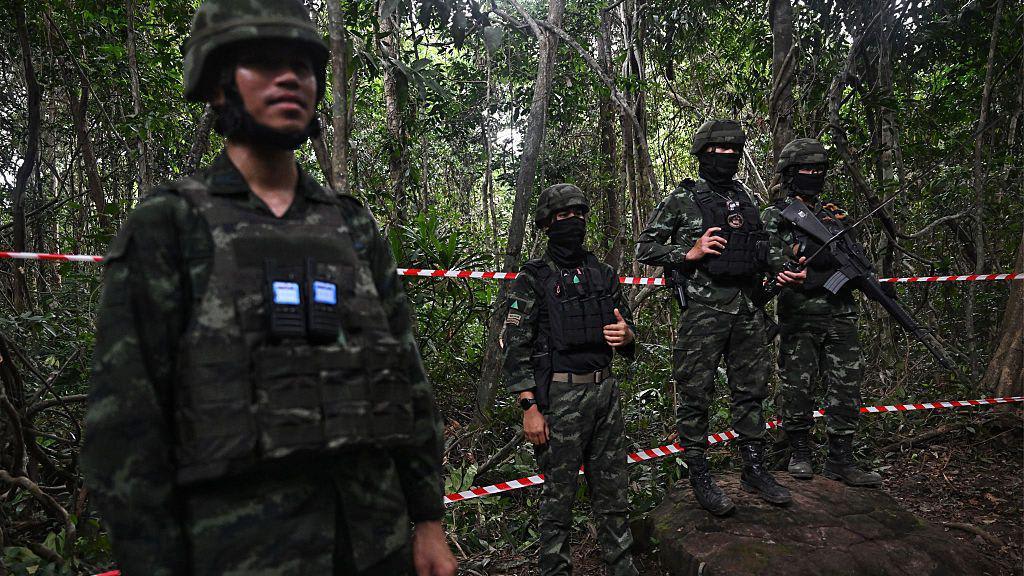
A sudden eruption of violence along the Thailand–Cambodia border has forced thousands of civilians to flee their homes, as deadly clashes and air strikes shattered what had been a fragile peace. The conflict, rooted in long-standing territorial disputes and renewed military tensions, has reignited fears of a broader regional crisis in Southeast Asia. With villages emptied, border towns on high alert, and international observers urging restraint, the situation has become one of the most alarming escalations in the region in recent years.
Historic Fault Lines Reopen
The Thailand–Cambodia border has long been plagued by disputes, many connected to the contested area surrounding the Preah Vihear Temple, a UNESCO World Heritage site claimed by both nations. Despite several ceasefire agreements and international rulings, mistrust has persisted.
Skirmishes in the past—particularly between 2008 and 2013—left dozens dead and forced repeated evacuations. However, the latest clashes have escalated far more quickly, involving air strikes, heavy artillery, and troop mobilizations on both sides.
Analysts warn this may be the most serious confrontation between the two countries in over a decade.
The Clashes Begin
According to early reports, the violence began after an exchange of fire between Thai and Cambodian border units. Each side accuses the other of initiating the attack:
Thailand claims Cambodian forces crossed into disputed territory and opened fire.
Cambodia insists Thai troops launched the first assault and carried out air strikes on villages close to the border.
Within hours, the confrontation expanded into a full-scale skirmish involving air power, artillery shelling, and rapid troop deployments. The presence of air strikes—a rare escalation in these disputes—sent shockwaves across the region.
Mass Evacuations as Panic Spreads
As explosions intensified, thousands of villagers fled their homes in panic. Entire communities packed into trucks, motorcycles, and even on foot, desperate to escape the fighting.
Local authorities on both sides of the border set up temporary shelters in schools, community halls, and religious centers. But these facilities are quickly becoming overwhelmed.
Officials report:
Thousands displaced within 48 hours
Shortages of food, clean water, and mattresses
Increased medical needs due to injuries, heat, and stress
Families split apart in the chaos
Aid workers warn that if the conflict continues even briefly, humanitarian conditions may deteriorate rapidly.
Lives Lost and Communities Destroyed
Preliminary casualty reports highlight the seriousness of the situation:
Soldiers from both sides have been killed
Civilians in border villages have suffered injuries and deaths
Homes, farms, and small businesses have been damaged or destroyed
Livestock and crops left behind are at risk of being burned or looted
The economic impact will likely be severe. Many villagers rely on farming and cross-border trade—both of which have been abruptly halted.
Regional and Global Alarm
The outbreak has drawn immediate concern from neighboring countries and international organizations. ASEAN has called for a halt to hostilities and offered to mediate dialogue, though such efforts in the past have produced limited long-term results.
The United Nations, meanwhile, has urged both Thailand and Cambodia to prioritize civilian safety and prevent further escalation.
Major powers such as the United States and China—each with strategic interests in Southeast Asia—have called for restraint, worried that even a localized conflict could destabilize an economically vital region.
Political Pressures Fueling the Conflict
Behind the military confrontation lies a complex web of political dynamics. Both countries’ governments have faced internal pressure:
In Thailand, political divisions and leadership changes have left the military seeking assertiveness along border areas.
In Cambodia, nationalist sentiment and upcoming political events may be intensifying the push to appear uncompromising on territorial issues.
Experts note that border disputes often become tools for political advantage, with leaders using external tensions to rally domestic support.
But this strategy carries real risks. Miscalculation or an accidental escalation could quickly draw both countries into prolonged conflict.
Humanitarian Agencies Prepare for a Long Crisis
Organizations working in the region fear displacement numbers could rise significantly. The rugged terrain, unexploded landmines from past conflicts, and limited road access complicate rescue and relief efforts.
Health experts warn of potential outbreaks of disease in crowded shelters, especially with limited sanitation facilities. Children, the elderly, and people with disabilities remain the most vulnerable.
Aid groups are calling for an immediate humanitarian corridor to ensure safe passage for civilians trapped near conflict zones.
What Happens Next?
Several scenarios are currently possible:
Diplomatic de-escalation if both sides agree to ASEAN-led negotiations
Temporary ceasefire that cools tensions but doesn’t resolve underlying disputes
Prolonged standoff leading to more displacement and casualties
Wider military engagement if further air strikes or misunderstandings occur
Observers warn that without external mediation, the situation could deteriorate unpredictably.
Conclusion
The deadly clashes and air strikes along the Thailand–Cambodia border have thrust thousands of civilians into a sudden humanitarian crisis, exposing the fragility of peace in the region. As families flee with whatever they can carry and tensions remain dangerously high, the world is watching closely for signs of de-escalation. While political leaders trade accusations, ordinary people are paying the highest price—losing homes, livelihoods, and loved ones in a conflict they had no part in starting.
The coming days will determine whether this crisis stabilizes or spirals into one of Southeast Asia’s most serious conflicts in years.
About the Creator
Asad Ali
I'm Asad Ali, a passionate blogger with 3 years of experience creating engaging and informative content across various niches. I specialize in crafting SEO-friendly articles that drive traffic and deliver value to readers.
U.S. Pushes for Faster Action to Cut Reliance on China for Rare Earths
Rare Earths: Small Minerals, Massive Power Rare earth elements may sound obscure, but they sit at the heart of modern life. From smartphones and electric vehicles to fighter jets and missile systems, these minerals are essential to both civilian technology and national defense. That reality is why the United States is now pushing for quicker, more decisive action to reduce its dependence on China for rare earth supplies. For years, Washington talked about diversification. Now, it wants speed. The shift reflects growing concern that reliance on a geopolitical rival for critical materials is no longer sustainable in an era of strategic competition. Why China’s Dominance Worries Washington China controls roughly 60–70% of global rare earth mining and an even larger share of processing and refining. Even when rare earths are mined elsewhere, they are often shipped to China for processing. This gives Beijing enormous leverage over global supply chains. U.S. officials fear that in a moment of heightened tension—over Taiwan, trade disputes, or technology restrictions—China could restrict exports. Beijing has already hinted at this possibility in the past, using export controls as a diplomatic tool. From Washington’s perspective, this is not a hypothetical risk. It is a strategic vulnerability that touches everything from renewable energy goals to military readiness. Rare Earths and National Security Few issues unite Democrats and Republicans as strongly as national security. Rare earths fall squarely into that category. Advanced weapons systems rely on these materials for precision guidance, radar, and communications. A disrupted supply could delay production, weaken deterrence, and raise costs dramatically. Pentagon officials have repeatedly warned that dependence on China for defense-critical materials undermines U.S. security. As a result, rare earth supply chains are increasingly viewed through the same lens as energy independence once was. This framing explains the urgency behind Washington’s push for faster action. Why “Quicker Action” Matters Now The U.S. has discussed rare earth independence for over a decade, yet progress has been slow. Mining projects face environmental reviews, local opposition, and long development timelines. Processing facilities require heavy investment and technical expertise that has largely migrated to China. What has changed is the global context. Rising U.S.-China tensions, supply-chain disruptions during the pandemic, and growing demand for clean energy technologies have compressed timelines. Waiting another decade is no longer acceptable to policymakers. Quicker action now means fast-tracking permits, increasing federal funding, and working more aggressively with allies. The Role of Allies in Diversification The United States does not expect to solve the rare earth challenge alone. Instead, Washington is pushing for a “friend-shoring” strategy—building supply chains with trusted partners rather than relying on geopolitical rivals. Australia, Canada, Japan, and several European countries are key players in this effort. Australia already hosts significant rare earth mining operations, while Japan has invested heavily in reducing its own dependence on China after facing export restrictions in the past. By coordinating investment, sharing technology, and aligning regulations, the U.S. hopes to create an alternative ecosystem that can compete with China’s dominance. Environmental and Economic Tensions Rare earth mining is not clean. It involves toxic waste, radioactive byproducts, and significant environmental risks. Ironically, minerals essential for green technologies come with heavy environmental costs at the extraction stage. This creates a political dilemma. Americans want clean energy, but often oppose mining projects in their own communities. Faster action will require balancing environmental protections with strategic necessity—a challenge that has stalled projects in the past. The Biden administration, like administrations before it, faces pressure to prove that domestic mining can be done responsibly without undermining climate commitments. China’s Likely Response Beijing is watching these developments closely. While China has not yet weaponized rare earth exports on a large scale, it understands the leverage it holds. At the same time, China is moving up the value chain—focusing more on advanced manufacturing and less on raw material exports. If the U.S. accelerates diversification successfully, China may respond by tightening export controls in the short term while investing in higher-end technologies that keep it indispensable in other ways. This dynamic underscores that rare earths are not just a resource issue, but part of a broader strategic competition. Economic Implications Beyond Security Reducing reliance on China is not only about defense. It is also about economic resilience. Supply disruptions during the pandemic exposed how fragile global supply chains can be. Rare earth shortages could slow electric vehicle adoption, raise consumer prices, and delay infrastructure projects. By pushing for faster action, Washington hopes to stabilize future growth and protect key industries. Domestic production and allied partnerships could also create jobs and spur innovation, particularly in rural and industrial regions. However, building new supply chains will not be cheap. Consumers and taxpayers may face higher costs in the short term as alternatives to Chinese supplies come online. Challenges That Could Slow Progress Despite political momentum, obstacles remain. Mining projects take years to develop. Processing facilities require specialized knowledge. Workforce shortages, local resistance, and regulatory complexity all pose risks to rapid progress. There is also the danger of overpromising. Policymakers must manage expectations, making clear that reducing reliance on China is a long-term effort, even if action accelerates now. Failure to deliver tangible results could weaken public support and give critics ammunition. Final Thoughts The U.S. push for quicker action in reducing reliance on China for rare earths marks a turning point. What was once a niche policy issue has become a strategic priority at the highest levels of government. This is not about cutting China out of the global economy entirely. It is about ensuring that no single country can control materials essential to modern life and national defense. Speed, coordination, and political will will determine whether Washington succeeds. As competition intensifies, rare earths will remain a quiet but powerful force shaping the future of technology, security, and global influence. The race is no longer just about who has the minerals—but who controls the supply chains that define the 21st centur
By Muhammad Hassan7 days ago in The Swamp




Comments
There are no comments for this story
Be the first to respond and start the conversation.