
This May Be the Real Reason Trump Wants Greenland
Beyond the headlines: Why Greenland’s strategic and economic value makes it a coveted asset for the U.S."
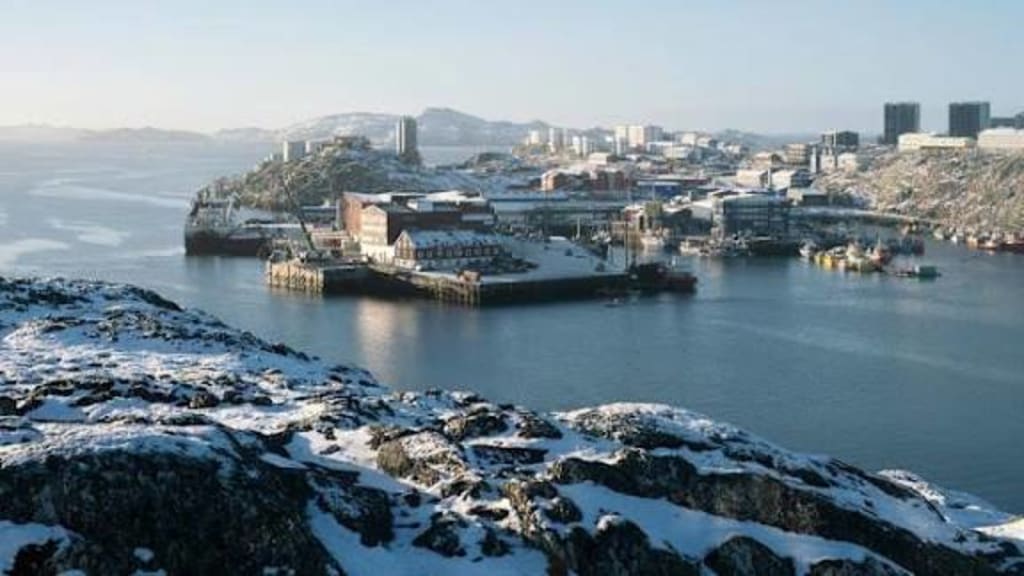
Former U.S. President Donald Trump’s fascination with Greenland has sparked curiosity, debate, and even ridicule across the political spectrum. While his 2019 proposal to purchase Greenland from Denmark made headlines worldwide, many dismissed it as an impulsive or eccentric idea. However, a closer look at the strategic, economic, and geopolitical factors suggests that Trump’s interest in Greenland might have more to do with national security and global influence than mere novelty.
Greenland: More Than Ice and Snow
Greenland, the world’s largest island, is often associated with remote landscapes, ice sheets, and extreme Arctic conditions. Yet beneath its frozen surface lies a treasure trove of resources. The island is believed to hold significant reserves of rare earth minerals, iron ore, oil, and natural gas. These resources are becoming increasingly valuable as nations compete for materials essential for technology, defense, and energy production.
For Trump, Greenland represented a potential strategic asset for the United States. Control over Greenland would give the U.S. direct access to untapped mineral wealth and bolster its Arctic influence—an area of growing international competition. Russia and China have both shown increasing interest in the Arctic region, seeking to expand their presence for both economic and military purposes. Owning Greenland, or at least having a substantial presence there, could ensure that the U.S. maintains a competitive edge in this crucial region.
Military and Strategic Significance
Greenland is not just an economic prize; it is also of immense military importance. The island hosts Thule Air Base, the U.S. military’s northernmost installation, which plays a key role in missile defense, early warning systems, and Arctic surveillance. Its location allows the U.S. to monitor Russian activity and safeguard North American airspace.
Trump, who often framed decisions through a lens of American security and power, likely recognized that Greenland offered a strategic advantage. By increasing U.S. influence over the island, the country could enhance its defense capabilities in the Arctic, which is rapidly becoming a theater of geopolitical competition. Control or ownership of Greenland would also prevent other nations from expanding their footprint in a region that could have serious implications for national security.
Geopolitical Maneuvering
Beyond resources and military significance, Greenland carries diplomatic weight. Trump’s interest can also be interpreted as a move to assert U.S. dominance on the global stage. By proposing to purchase the island, the former president signaled that America was willing to think boldly to protect its interests and maintain global influence.
The Greenland proposal also highlighted tensions in U.S.-Denmark relations. Denmark, which governs Greenland as an autonomous territory, firmly rejected the idea of selling the island. This diplomatic friction underscored the strategic importance of Greenland in the context of transatlantic relations. It also reflected a broader theme in Trump’s foreign policy approach: prioritizing American interests, sometimes in ways that defied conventional diplomacy.
Climate Change and the Arctic
Another factor likely influencing Trump’s Greenland focus is the region’s changing climate. As Arctic ice melts due to global warming, new shipping routes and resource extraction opportunities are opening up. Greenland’s thawing ice could accelerate access to mineral reserves, oil, and natural gas, making the island an even more attractive asset in the coming decades.
In this light, Trump’s proposal can be seen as a forward-looking, if unconventional, strategy to secure U.S. access to critical resources and trade routes before other global powers do. While critics have mocked the idea as impractical, proponents argue that it represents a recognition of Greenland’s future strategic value.
Public Perception and Political Messaging
It is also important to acknowledge the political dimension of Trump’s Greenland fascination. Bold, headline-grabbing proposals have been a hallmark of his style, energizing his base and dominating media narratives. By focusing on Greenland, Trump reinforced an image of decisive, unconventional leadership willing to make audacious moves in defense of American interests.
Conclusion
While the notion of buying Greenland may have seemed bizarre at first glance, the reality is that the island represents far more than ice and snow. Its rich mineral resources, strategic location, military significance, and emerging Arctic opportunities make it a highly valuable asset on multiple fronts. Trump’s interest in Greenland appears to be grounded in practical considerations of national security, economic advantage, and global influence.
Whether or not the purchase was ever feasible, the episode sheds light on a central aspect of Trump’s worldview: a focus on securing American power and resources in an increasingly competitive world. In the end, Greenland is less about eccentricity and more about strategy—a reminder that, sometimes, audacious ideas mask serious geopolitical calculations.
About the Creator
Keep reading
More stories from Fiazahmedbrohi and writers in The Swamp and other communities.
Opposition Leader Machado Says Her Coalition Should Lead Venezuela
Venezuela finds itself at a pivotal moment in history as the political landscape continues to shift dramatically in the aftermath of the ouster of long‑time ruler Nicolás Maduro. At the center of this turbulent transition is María Corina Machado, a leading opposition figure who has asserted that her coalition is the rightful choice to lead the South American nation forward. Her declaration comes amid uncertainty about Venezuela’s political future and competing claims to power. � Sandhills Express A Leader Poised for Change María Corina Machado, a seasoned politician and former legislator, has long been one of the most vocal critics of the Maduro regime. In a recent interview, she told U.S. media that Venezuelans have “already chosen” her coalition to govern the country now that Maduro has been removed from power. Machado said “absolutely yes” when asked whether that means she should be Venezuela’s next leader — insisting that her coalition is “ready and willing to serve our people, as we have been mandated.” � Sandhills Express Machado’s comments underscore a broader struggle over legitimacy and leadership in a nation marked by years of political crisis, economic hardship, and mass migration. Her coalition’s claim to leadership hinges not only on recent political developments but also on the contested results of the 2024 presidential election — widely criticized for fraud and irregularities by international observers and opposition leaders. � Sandhills Express The Context of Maduro’s Removal Maduro’s removal from power followed a bold U.S. military operation that culminated in his arrest. The move shocked many around the world and immediately transformed Venezuela’s political dynamics. While some saw it as a necessary step toward justice and democratic renewal, others warned of the risks inherent in external military intervention in a sovereign nation. � theguardian.com In the immediate aftermath, Maduro’s vice president, Delcy Rodríguez, was named interim president by Venezuela’s highest court. Rodríguez — a figure closely associated with Maduro’s administration — has since attempted to assert authority, even as Machado and her supporters reject her legitimacy and character. Machado has labeled Rodríguez as “one of the main architects” of the regime’s repressive tactics, including alleged human rights abuses. � cbsnews.com Claiming the Mandate Machado’s assertion that her coalition should govern is rooted in her political standing within Venezuela’s opposition movement. She won the opposition primary for the 2024 election by a significant margin, even though she was barred from running against Maduro by government authorities. In her place, retired diplomat Edmundo González stood as the opposition’s candidate — a nomination Machado now points to as further evidence that her movement represents the will of the people. � Sandhills Express Her claim is further bolstered by international recognition of González as the legitimate winner of the contested 2024 presidential election. Although Rodríguez currently holds formal authority in Caracas, Machado insists that it is fundamentally the opposition coalition — and by extension her leadership — that should shape Venezuela’s next chapter. � Sandhills Express Support and Skepticism Opinions on Machado’s leadership vary widely within Venezuela and abroad. Internationally, some governments and analysts view her as a symbol of democratic resistance against decades of authoritarian rule. Machado’s coalition has long championed free elections, sovereignty, and economic reform — positions that resonate with many Venezuelans who have endured hyperinflation, shortages, and a refugee crisis that has pushed millions to leave the country. � euronews However, not all support her claim. Even in the United States — which played a central role in Maduro’s removal — figures such as former president Donald Trump have publicly questioned her suitability as Venezuela’s leader, suggesting that she lacks widespread respect within the country. Trump’s stance highlights the complex dance between international influence and domestic legitimacy in Venezuelan politics. � Sandhills Express A Road Paved With Challenges Machado’s path forward is far from guaranteed. Venezuela remains deeply polarized, and power structures loyal to the old regime persist within the military and judiciary. These forces could complicate any attempt by Machado or her coalition to assume leadership on the ground, even if they enjoy strong popular support outside the country. � theguardian.com Machado herself has hinted that any return to Venezuelan soil may be imminent, as she maintains plans to lead the transition and eventually win a free and fair election. But with the interim government under Rodríguez, and internal factions jockeying for control, the coming weeks will likely be marked by intense political negotiations and possibly further unrest. � geo.tv The Broader Stakes The situation in Venezuela is not just an internal political dispute — it carries significant regional and global implications. Neighboring countries, many host to Venezuelan refugees, are watching closely. International alliances may realign depending on how the leadership question is resolved. And for Venezuelans inside and outside the country, Machado’s bid represents both hope for democratic renewal and the uncertainty of an unpredictable transition. Whether Machado and her coalition will ultimately lead Venezuela remains to be seen. But her emphatic declaration that her movement is ready to serve underscores the deep yearning among many Venezuelans for political change after years of hardship.
By Fiazahmedbrohi 4 days ago in The Swamp
US May Intercept and Seize Oil Tanker Heading for Europe, Reports Say
The United States is reportedly considering intercepting and seizing an oil tanker bound for Europe, according to multiple media reports citing officials familiar with the matter. The development has sparked concern among diplomats, shipping companies, and energy analysts, who warn that such an action could significantly escalate tensions in an already fragile global energy and security environment.
By Aarif Lashari5 days ago in The Swamp
'20/20'
"Do It Again" the track that would ultimately open the Beach Boys final album on Capitol Records which was released on February 10th 1969 had originally been released as a single in August of 1968. The track was the first of many post-Pet Sounds era throwbacks to the early Beach Boys sound which would become continually more cliched and eventually lead the Beach Boys to the level of self-parody they would eventually succumb to in the 1980s while their closest contemporaries The Beatles nearing the end of their run in 1969 would go on to be viewed as the most influential band of all time. However, the song itself is not bad on its surface, and it opens with a futuristic sounding (for 1969) drumbeat captured by then-Beach Boys engineer Stephen Desper using tape delays on the drums performed by Dennis Wilson and John Guerin. The song has been re-recorded numerous times over the years on various Beach Boys-related projects most notably the 2011 re-recording at Capitol studios featuring the five surviving Beach Boys at the time backed instrumentally by various members of both the Brian Wilson Band and Mike Loves touring "Beach Boys" to promote the then upcoming Beach Boys 50th Anniversary reunion tour in 2012. The hammering and power drill sound at the end of the song was an excerpt from a track called "Workshop" that was to be a part of the uncompleted "SMiLE" album.
By Sean Callaghan6 days ago in Beat


Comments
There are no comments for this story
Be the first to respond and start the conversation.