
Think of the Children
How the desire to shirk parenting has caused a library crisis


Growing up in a library space, I was taught one very important rule by my mother. If I read something that made me uncomfortable, I would come to her. And through my reading journey, I was given access to spaces within the library by her, first directed to the easy readers, then to larger books, and upwards into the teen section. It was an experience I had to engage with books which was very simple: there were just some books which I shouldn't read. Not because the books themselves were necessarily bad, but that I wasn't ready to read them. I had a relationship with my parents which meant they were constantly in the loop about what I was reading.
As an adult, the current discourse in library spaces puzzles me. Librarians are guides, who assist in finding reading material which is age appropriate, sure, but they also aren't mind readers. Parents presume that their life principles should be imposed onto library spaces. That rather than teaching their children good reading principles or being apart of their children's reading journey, the library needs to be the parent in this situation.
Here is why that's not feasible.
Libraries can place informational tags on books. They can make leaflets and guides to best assess what books fit into a particular category. But they are ultimately a repository of information. Mein Kampf is in the same building as the Bible. Libraries are about education. And this includes education on things that exist and were written, even if they are wrong.
The 'Think of the Children' movement assumes many things. Often it targets LGBTQ+ content, or content that includes sexual scenes. Rather than having the parents take it upon themselves to guide their children through reading, by looking up a summary, reading the book as well, or simply just making sure their children has a good enough relationship with them to talk to their parents when they read something distressing, these parents assume that the library shouldn't have the books at all. They are often religious, but seem to take no issue that the Bible is also in the library, which has sexual content as well.
The issue is not with the libraries, but with the parenting. The children will eventually run into content which they dislike, which distress them, or is uncomfortable. Parenting within the library space should be on the shoulders of the parents because it is important that parents teach their children how to respond to information. What better place then a library, which can be a safe space of education? It should not be the library's responsibility to cater the collection to any single person's desire for 'think of the children' but rather public and community interests. If the community is interested in these books - even if just to critique them - it is the library's job to get them.
The 'Think of the Children' movement comes from a place of insecurity in library spaces. The mere existence of 'distasteful' books means there is a possibility for their drive to be shaken or their world view to shift. If there was a better acknowledgment and knowledge of the thing they hated, it might be easier to engage with it.
Ultimately, it isn't feasible for libraries to bow to the 'Think of the Children' movement because it will not fix any problems. It will simply allow more issue to be taken with more books. Rather, the reframing of libraries as houses for information, without warnings for 'offensive' material. It expects readers to read critically and with media literacy. It is the job of parents to let that media literacy grow and foster in themselves and their children.
About the Creator
Minte Stara
Small writer and artist who spends a lot of their time stuck in books, the past, and probably a library.
Currently I'm working on my debut novel What's Normal Here, a historical/fantasy romance.
Keep reading
More stories from Minte Stara and writers in The Swamp and other communities.
Freedom Behind Bars: Reading and Book Banning in US Prisons
Last year, I and a group of others started a Reader's Advisory for books banned within the prison system of the United States. Information on finding these books became the main purpose of our goals during that project.
By Minte Stara9 months ago in The Swamp
Parallel Protests
I haven't written for quite some time, but I have A LOT of thoughts about yesterday's protest rally against our government's involvement and complicity in America's war on Iran, on the harbourside of my home city Bristol, and I need to put them somewhere. My gorgeous girlfriend is always a loving and listening ear and sharing it all with her will always be a healthy and happy way of processing the mental and emotional weight, but getting it straight in my brain to share means writing it all down in straight lines, so, here we are and thanks for being here.
By Steph Cole8 days ago in The Swamp
Sweden Investigates Cargo Ship Allegedly Transporting Stolen Grain with Russian Crew
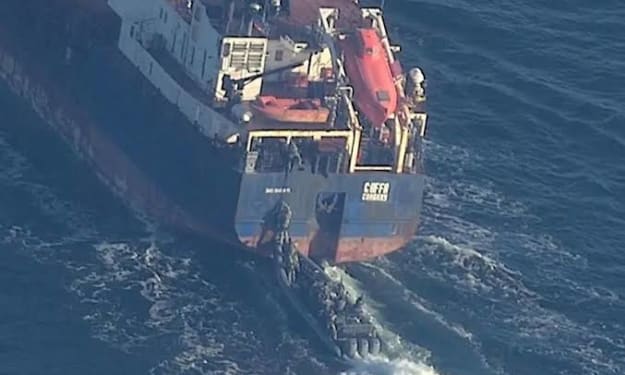
Authorities probe suspected illegal shipment linked to grain seized in occupied Ukrainian territories. Swedish authorities have launched an investigation into a cargo vessel suspected of transporting stolen grain believed to have originated from Ukraine’s occupied territories. The probe follows concerns raised by Ukrainian officials and international observers that the shipment may be part of a broader network trafficking agricultural goods taken from farms and storage facilities during the ongoing conflict. According to officials in Sweden, maritime authorities began examining the vessel after it entered waters under Swedish jurisdiction. The cargo ship, reportedly operated by a crew largely composed of Russian nationals, had drawn attention due to irregular documentation and suspicions regarding the origin of its grain cargo. The case has emerged against the backdrop of longstanding accusations by Ukraine that grain harvested from its occupied regions has been transported through international shipping routes and sold on global markets. Since the beginning of the war with Russia in 2022, Kyiv has repeatedly claimed that agricultural commodities taken from Ukrainian territory are being exported abroad through complex logistical channels. Suspicion Over Cargo Origins The vessel under investigation reportedly arrived at a port in southern Sweden earlier this week. Authorities said that customs officials and maritime inspectors became suspicious when reviewing shipping records and cargo manifests, which appeared incomplete or inconsistent. While officials have not publicly disclosed the ship’s name pending the ongoing investigation, reports suggest that the grain cargo may have originated from areas of eastern or southern Ukraine currently under Russian control. Ukrainian officials argue that such shipments represent the systematic removal of resources from territories seized during the conflict. Representatives of Sweden’s customs and coast guard agencies have confirmed that samples of the grain cargo are being examined. Experts are attempting to determine the grain’s geographic origin using agricultural and trade data, a process that may help establish whether the shipment matches harvest patterns from Ukrainian regions. Diplomatic and Legal Implications The investigation highlights the increasingly complex legal issues surrounding wartime trade and maritime commerce. If the grain is proven to have been taken from occupied territories without the consent of Ukrainian authorities, it could potentially constitute the transport of stolen goods under international law. Officials from European Union institutions have also been monitoring such cases closely. The EU has imposed extensive sanctions on Russia since the invasion of Ukraine, targeting sectors ranging from energy to shipping and agriculture. Any confirmed involvement in transporting looted commodities could lead to further legal or financial penalties. For Sweden, which joined NATO in 2024, the investigation underscores the broader geopolitical tensions surrounding the war in Ukraine and the enforcement of international sanctions. Swedish authorities have emphasised that their investigation is being conducted in accordance with national law and international maritime regulations. Ukraine’s Claims of Grain Theft Ukrainian officials have long alleged that millions of tonnes of grain have been removed from occupied areas since the start of the conflict. The country, one of the world’s largest grain exporters, relies heavily on agricultural exports to support its economy and global food supply chains. Kyiv has argued that the alleged seizure of grain not only damages Ukraine’s economy but also distorts international markets by introducing agricultural products whose origins may be concealed. Ukrainian diplomats have repeatedly urged governments and shipping authorities to investigate suspicious cargo shipments arriving in international ports. In several previous cases, ships suspected of carrying Ukrainian grain were reportedly turned away from ports or subjected to inspection after documentation discrepancies were discovered. The Investigation Continues Swedish authorities have stressed that the inquiry remains in its early stages and that no formal charges have yet been filed against the ship’s crew or operators. Investigators are reviewing shipping logs, satellite tracking data, and customs paperwork to reconstruct the vessel’s journey. Maritime experts say such investigations can take weeks or months, particularly when cargo may have been transferred between ports or mixed with grain from other sources during transit. For now, the cargo ship remains under scrutiny while authorities determine whether the shipment violated international trade regulations or sanctions regimes. The outcome of Sweden’s investigation could set an important precedent for how European ports handle suspected shipments of goods taken from conflict zones. As the war continues, scrutiny over global trade routes and cargo origins is expected to intensify, with governments seeking to ensure that international markets are not used to profit from resources seized during wartime.
By Fiaz Ahmed 4 days ago in The Swamp


Comments
There are no comments for this story
Be the first to respond and start the conversation.