
They Pulled Roman Ships from This Italian Lake After 2,000 Years and Lost Them Again in a WWII Fire
The tragic story of Emperor Caligula’s floating palaces and one of archaeology’s greatest losses.

Introduction: A Discovery That Ended in Disaster
History is full of extraordinary discoveries, but few stories are as bitterstersweet as that of the Roman ships recovered from Lake Nemi in Italy. After lying hidden underwater for nearly 2,000 years, two massive Roman vessels were finally raised in the 1930s—only to be tragically destroyed during World War II.
These ships were no ordinary boats. They were floating palaces built for the infamous Roman emperor Caligula, lavishly decorated and technologically advanced beyond their time. Their recovery was hailed as one of archaeology’s greatest achievements. Their destruction, however, became one of its greatest tragedies.
Lake Nemi and the Legend of Sunken Ships
Lake Nemi is a small volcanic lake located about 20 miles south of Rome. For centuries, local fishermen and villagers spoke of mysterious ruins resting beneath its dark waters. Ancient Roman writers had recorded that Caligula built enormous ceremonial ships on the lake during his reign in the first century AD.
Caligula, known for his excess and eccentric behavior, used the lake as a sacred site dedicated to the goddess Diana. His ships were rumored to contain temples, gardens, marble floors, and even plumbing systems—essentially floating villas meant for pleasure and ritual.
After Caligula’s assassination in AD 41, his ships were deliberately sunk, likely as part of an effort to erase his memory from Roman history. Over time, they became legends beneath the lake.
The Fascist-Era Recovery Project
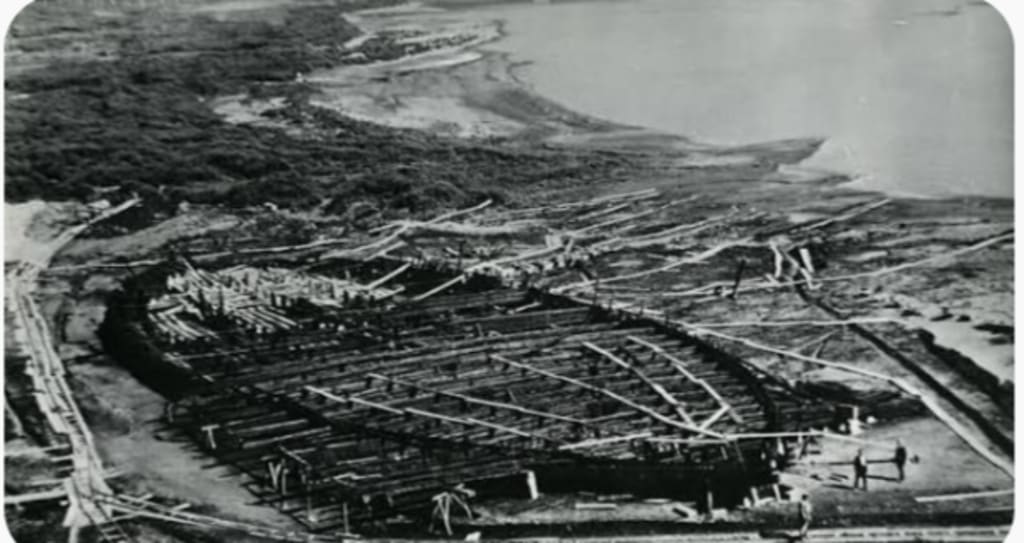
In the early 20th century, Italian dictator Benito Mussolini launched an ambitious project to recover the ships as a symbol of Italy’s connection to ancient Roman glory. The plan was bold: drain much of Lake Nemi to expose the wrecks resting on the bottom.
Engineers reopened an ancient Roman tunnel that once controlled the lake’s water level and pumped millions of gallons of water out. By 1932, the first ship emerged. The second followed soon after.
The world watched in amazement as the vessels were revealed almost intact after two millennia underwater.
Floating Marvels of Ancient Engineering
The ships were astonishing in size and craftsmanship. Each measured more than 230 feet long—larger than many modern fishing vessels. They featured:
Marble floors
Mosaic tiles
Bronze decorations
Statues
Heating systems
Lead plumbing
Anchors with rotating arms
Advanced mechanical parts
Some fittings showed early forms of ball bearings and sophisticated metalwork previously thought impossible for Roman engineering.
One ship appeared to be a pleasure barge, while the other may have served as a floating temple. Together, they demonstrated Roman technical mastery and Caligula’s obsession with grandeur.
A Museum Built for the Ships
To house these treasures, a museum was constructed on the lake’s shore specifically designed to contain the massive vessels. By 1940, visitors could walk alongside the ships and marvel at their preserved structures.
They became a powerful symbol of national pride and archaeological achievement. Scholars studied them, artists sketched them, and photographs documented every detail.
Everything seemed secure—until World War II reached Italy.
The Night of the Fire
In May 1944, as Allied and German forces clashed near Rome, tragedy struck. A fire broke out at the Lake Nemi museum. By morning, both ships had been reduced to charred ruins.
The exact cause remains debated. Some accounts suggest German soldiers accidentally ignited the fire while camping inside the museum. Others blame artillery shelling or sabotage during retreat.
Whatever the cause, the result was catastrophic: two of the best-preserved Roman ships ever discovered were lost forever.
Only a few metal parts and charred fragments survived.
What Was Lost
The destruction of the Nemi ships represented more than physical loss. It erased priceless information about Roman naval architecture and technology.
If preserved, they could have taught modern engineers and historians about:
Ancient shipbuilding methods
Hydraulic systems
Decorative arts
Religious practices
Imperial luxury
Mechanical innovations
Instead, much of that knowledge vanished in flames.
Thankfully, extensive photographs, drawings, and blueprints taken before the war have allowed researchers to reconstruct much of what the ships looked like. Scale models now exist in museums, offering glimpses of their former grandeur.
A Lesson in Cultural Vulnerability
The fate of the Nemi ships is a powerful reminder of how fragile cultural heritage can be, especially during war. Even after surviving two thousand years underwater, they could not survive a few hours of conflict.
Their story underscores the importance of protecting historical artifacts not only from natural decay but from human violence and political turmoil.
Many modern international agreements on heritage protection, such as UNESCO conventions, were influenced by tragedies like this.
Caligula’s Reputation Revisited
The ships also complicate Caligula’s legacy. Often remembered solely as a mad tyrant, these vessels show another side of him: a ruler obsessed with engineering, architecture, and spectacle.
Though excessive, the ships demonstrate Roman innovation at its peak. They were monuments not just to power, but to craftsmanship and imagination.
Ironically, what Caligula built to glorify himself ended up becoming one of history’s most haunting archaeological stories.
What Remains Today
Today, visitors to Lake Nemi can still visit the museum, which now displays:
Original metal fragments
Anchors
Decorative pieces
Scale reconstructions
Historical photographs
The calm lake surface hides the memory of the floating palaces that once glided across its waters.
The story of the ships lives on in books, documentaries, and museum exhibits, reminding us that discovery does not guarantee preservation.
Conclusion: Found, Then Lost Again
The Roman ships of Lake Nemi survived earthquakes, floods, and centuries of silence beneath the water—only to be destroyed by modern warfare. Their journey from myth to discovery to destruction is one of the most tragic chapters in archaeological history.
They teach us that recovering the past is only half the battle. Protecting it is the other half.
In the end, Caligula’s floating palaces became symbols not of imperial excess, but of how easily human heritage can vanish. Their story stands as both a marvel of ancient ingenuity and a warning for the future: some wonders, once lost, can never be rebuilt.
About the Creator
Sajida Sikandar
Hi, I’m Sajida Sikandar, a passionate blogger with 3 years of experience in crafting engaging and insightful content. Join me as I share my thoughts, stories, and ideas on a variety of topics that matter to you.
Keep reading
More stories from Sajida Sikandar and writers in The Swamp and other communities.
Disney World Confirms Imminent Closure of Orlando Theme Park
Introduction: A Shocking Announcement for Theme Park Fans In an announcement that has stunned Disney fans and the global tourism industry alike, Walt Disney World has confirmed the imminent closure of one of its Orlando theme parks. The decision marks a major turning point for a destination that has long been considered the crown jewel of family entertainment and tourism in the United States.
By Sajida Sikandar4 days ago in The Swamp
The Saddest Thing - The Billionaires Who Rule America Aren't Even Enjoying Themselves
This single post says more about our ruling class than a thousand policy papers. The saddest thing about today's system is that the men robbing the rest of us - sabotaging our economic prospects, our pensions, our access to affordable healthcare - are not even happy.
By Scott Christenson🌴6 days ago in The Swamp
“We’re Unable to Grieve for Dad”
Grief is meant to follow its own fragile rhythm. It arrives in waves, recedes into silence, and slowly reshapes a person’s understanding of life. But for some families, grief is interrupted—paused by procedures, postponed by investigations, and overshadowed by public scrutiny. For the family of a man killed in the Nottingham attacks, mourning has not been a private journey of remembrance. Instead, it has become a prolonged waiting room, where sorrow is suspended by the looming presence of an official inquiry.
By Ayesha Lashari4 days ago in The Swamp




Comments
There are no comments for this story
Be the first to respond and start the conversation.