
They Can't Crush Our Protests”: Georgians Vow Defiance After a Year of Resistance
How Georgia’s youth-led uprising is redefining democracy in the Caucasus

Introduction: A Year That Changed Georgia
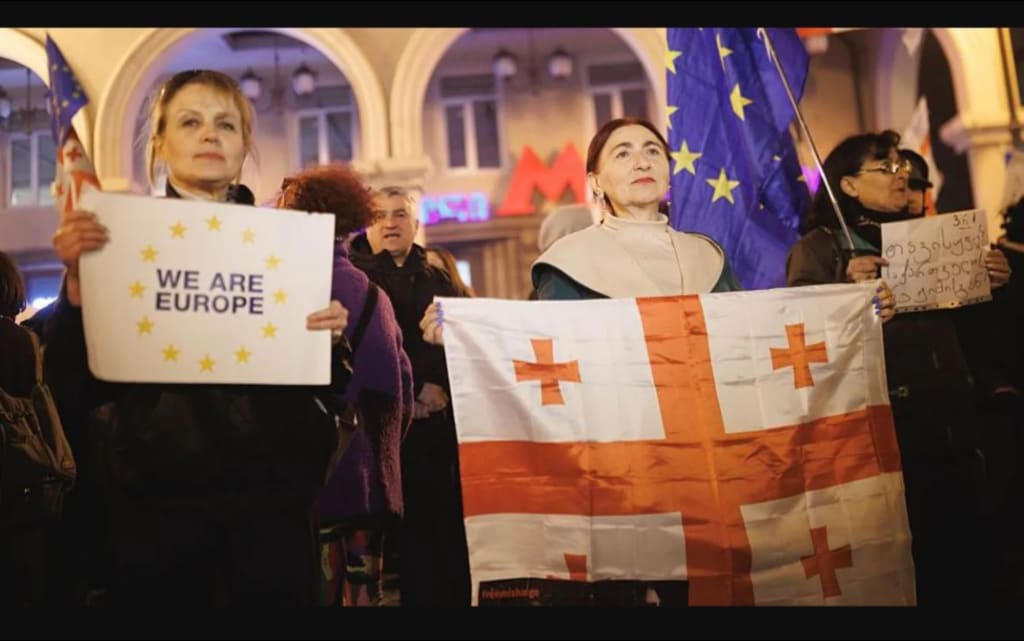
For more than a year, the streets of Tbilisi and several Georgian cities have become a symbol of unwavering civic resistance. As protesters continue to chant, “They can’t crush our protests,” the phrase has transformed from a slogan into a national statement—one that reflects the determination of citizens fighting for democratic values, European integration, and political accountability. What began as a reaction to controversial legislation has evolved into a sustained movement at the heart of Georgia’s political future.
This article explores the roots of the protest, the motivations of the people, the government’s reaction, and why this resistance is becoming one of the most important democratic movements in Eastern Europe today.
A Controversial Law That Sparked the Fire
The immediate trigger for the uprising was the government’s attempt to pass a bill popularly known as the “foreign agents” law. Critics argued it mirrored Moscow-style policies meant to suppress NGOs, journalists, student groups, and civil society organizations that receive funding from abroad. For many Georgians, especially youth, the law felt like a step backward—a move toward authoritarianism rather than democratic progress.
Mass protests erupted within hours of the bill’s introduction. Tens of thousands took to the streets waving Georgian and European Union flags, chanting for freedom, transparency, and unity with the West. Although the government temporarily withdrew the legislation after global criticism, it returned months later, solidifying public fears that Georgia’s democratic path was under threat.
Why Georgians Say They Will Not Be Silenced
Despite police crackdowns, water cannons, and aggressive detentions, demonstrators insist their fight is far from over. The message is clear: “We have survived pressure, fear, and intimidation. They cannot crush our protests.”
Here are the key reasons why resistance continues:
1. A Fight for European Integration
Georgia’s younger generation overwhelmingly supports joining the European Union. They see the EU as a route to economic growth, stronger democratic institutions, and protection from Russian influence. Any political move that threatens this dream immediately fuels national resistance.
2. Protection of Civil Liberties
Protesters believe that registering individuals or organizations as “foreign-funded” undermines freedom of speech, independent journalism, and human rights. It creates an atmosphere of fear—where critics of the government become easy targets.
3. Generational Shift in Politics
For the first time in decades, young citizens have taken the lead: students, artists, programmers, medical interns, content creators, and activists. Their digital organizing skills, creativity, and unity are energizing the movement.
4. A Deep Distrust of Political Power
After years of political polarization, Georgians have grown more skeptical of those in power. Many believe that the proposed laws represent not public interest, but political control.
The Government’s Response: Tough Tactics, Tougher Resistance
The Georgian government has repeatedly tried to quell the protests—sometimes forcefully. Several activists have been detained, and police have been accused of using excessive force. Yet each attempt to suppress dissent only brings more people into the streets. Families march together. Students skip classes to raise banners. Older generations stand side by side with youth to protect their constitutional rights.
Instead of silencing the movement, these crackdowns have strengthened it. Protesters now organize larger marches, hold nightly vigils, and establish social media campaigns that reach millions.
The Role of the International Community
The situation in Georgia has caught global attention. The European Union, the United States, and several human rights organizations have openly criticized the foreign agents law and the harsh treatment of protesters. International pressure has placed the Georgian government under intense scrutiny, making it harder to implement restrictive measures quietly.
Moreover, the consistent presence of EU flags at demonstrations symbolizes a major cultural shift: Georgians are not only resisting their government’s policies—they are aligning themselves with Western democratic values.
A Movement That Is Reshaping Georgian Identity
What makes these protests unique is not just their duration, but their transformation into a broader social movement. The rallies have become a space for artistic expression, political debate, and national unity. Musicians perform live to motivate crowds, poets recite verses about freedom, and young activists livestream events for the world to see.
The protests are not merely about rejecting a single law—they are about asserting a vision of the country’s future.
Conclusion: Georgia’s Fight for Democracy Is Far From Over
After a year of relentless resistance, Georgians have proven one thing: you cannot crush the voice of a determined nation. The phrase echoing through Tbilisi—“They can’t crush our protests”—is no longer just a defiant chant. It has become the guiding principle of a generation unwilling to sacrifice its democratic future.
As the movement continues, Georgia stands at a crossroads. But one truth remains: its people have shown remarkable courage, unity, and resilience. Whether on the streets, online, or in public discourse, they are shaping the next chapter of their nation’s history—one protest at a time.
About the Creator
Asad Ali
I'm Asad Ali, a passionate blogger with 3 years of experience creating engaging and informative content across various niches. I specialize in crafting SEO-friendly articles that drive traffic and deliver value to readers.
Saudi Arabia LED Lighting Market Size and Forecast 2025–2033
Saudi Arabia LED Lighting Market Overview The Saudi Arabia LED Lighting Market is entering a powerful growth phase, fueled by the Kingdom’s commitment to sustainability, energy efficiency, and large-scale infrastructure modernization. According to Renub Research, the market is expected to expand from US$ 832.18 million in 2024 to US$ 1,837.48 million by 2033, growing at a robust CAGR of 9.2% during 2025–2033.
By Marthan Sirabout 13 hours ago in The Swamp


Comments
There are no comments for this story
Be the first to respond and start the conversation.