
There are no fair drugs
People who define themselves as environmentally conscious find themselves in need of justification when it comes to tobacco or coke.


T. wants to quit smoking. Not because she is so shocked by the new pictures on the cigarette packets or because she once saw one of these encrusted smoking lungs. She is not pregnant either. “It is simply inconsistent when you live as we do,” she thinks. By that, she means: Eating organic, changing clothes, instead of buying and generally finding exploitation stupid. Hedonism in the form of drugs and tobacco no longer fits in with her political attitude. Smoking promotes exploitation and child labor, coke and other drugs strengthen cartels, prostitution, and life-threatening smuggling. We have known this not only since Netflix and “Narcos”.
Somehow she is right. But when she says “we” she also means me a little bit. And thus creates a strange compulsion to justify herself. Because I share T.’s views. I can’t remember the last time I bought something at H&M. If possible, I’d rather sit on a train for ten hours than on a budget plane, and sometimes I even think about taking the cloth bag with me when I go shopping. Of course, it would be consistent to refrain from smoking as well. And on all the other dirty things.
Children pick what I smoke on demos for more climate justice
For the tobacco industry is probably the most exploitative outgrowth of globalization. Children pick what I then smoke on demos for more climate justice. Big corporations earn stupidly and foolishly from my hedonism and make whole countries dependent on tobacco export (a very extensive report on this can be found here). Thousands of people have fallen victim to the drug war in Mexico. I know all this. And yet it doesn’t change my consumption behavior. For some reason, I react more defiantly than insightfully to these measures. But why does it make me so angry when T. is right?
Sometimes I feel in my circle of friends as if there is a prize for the fairest lifestyle to win at the end of the year. And one thing is clear as early as January: there’s not much for me there. Maybe because I’m afraid of losing, I don’t play along from the start. But mainly because this game is no fun. Because it feels like only the winners are playing anyway. Because most people have completely different starting conditions.
Living consciously is a privilege. It means having money, being able to afford certain products, and time to look for alternatives. If you have to work a lot for little money, you can’t take part in this competition. Even a fair cooking evening does not change this, and neither does the renunciation of alcohol or tobacco at the next Soli Party. The fact that this feels like self-flagellation confirms a nasty suspicion. Namely that the whole debate is about one thing: myself. I don’t feel bad because I’m haunted by tobacco-picking children in my dreams, but because I feel uncomfortable having to constantly justify myself in my social environment. I would assume the same thing for T.
Organic tobacco seems to allow legitimate hedonism
Our discussions are not really about consumer criticism, but about a lifestyle. We don’t discuss production conditions, but the quality of the products. And that makes us the perfect target group for an industry that is aimed precisely at these conscience-stricken eco-students: Every discounter now has a whole range of products under its organic label and even American Spirit launched organic tobacco in 2008. Because no other consumer good had been able to expose our political inconsistency as quickly as tobacco. At last! Legitimate hedonism.
We cover up the faint suspicion that there might be some residual unfairness in telling everyone about this great alternative. Unfortunately a short joke: Since last year it is forbidden for tobacco companies in the EU to pretend in advertisements that their products are fair or healthy. And we should take this as an example.
Let us be happy about the fact that we have the opportunity to think about our consumption. But let’s stop stylizing individual consumption into a political issue. Let’s stop profiling what or how we consume. Rather, it should be about developing a political stance that attacks the overall problem. A stance that speaks out against production conditions, child labor, or a policy of illegalization that makes the trade-in party drugs such an exploitative business. One does not develop such an attitude alone. Instead of smoking less or giving up drugs while partying, all these motivated do-gooders could simply join forces. There are enough places where many people exert pressure together: In human rights organizations, in political initiatives for the legalization of drugs or generally in the fight against poverty, which pushes people into cartels, prostitution, and drug trafficking. Perhaps fair hedonism could still be saved in this way. In any case, we could then stop beating each other up about fairness.
About the Creator
AddictiveWritings
I’m a young creative writer and artist from Germany who has a fable for anything strange or odd.^^
Keep reading
More stories from AddictiveWritings and writers in The Swamp and other communities.
This is how you actively campaign against racist violence
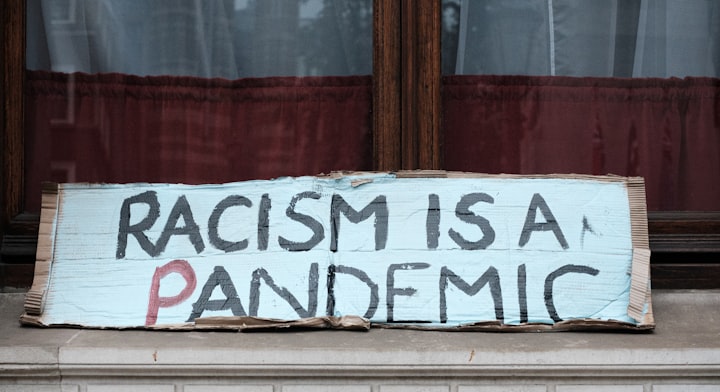
It’s been over three weeks since police officer Derek Chauvin brutally knelt on the neck of African-American George Floyd for 8 minutes and 46 seconds, killing him. This another sad chapter in the history of racist police violence has sparked a historic wave of protest around the world — not only on the streets but also in social media.
By AddictiveWritings5 years ago in The Swamp
The Saddest Thing - The Billionaires Who Rule America Aren't Even Enjoying Themselves
This single post says more about our ruling class than a thousand policy papers. The saddest thing about today's system is that the men robbing the rest of us - sabotaging our economic prospects, our pensions, our access to affordable healthcare - are not even happy.
By Scott Christenson🌴25 days ago in The Swamp
When the Shelter Closes
Across the street from my house, a man slept under a tree, his dog by his side. My first, naive thought: he must be traveling through. But he kept coming back, often sleeping there during the day. Then it hit me—that person might not have a home.
By Bride of Sound6 days ago in Humans



Comments
There are no comments for this story
Be the first to respond and start the conversation.