
Theranos Founder Elizabeth Holmes Asks Trump to Commute Prison Sentence
Disgraced Silicon Valley Executive Seeks Clemency as Debate Over Justice, Power, and Accountability Reignites

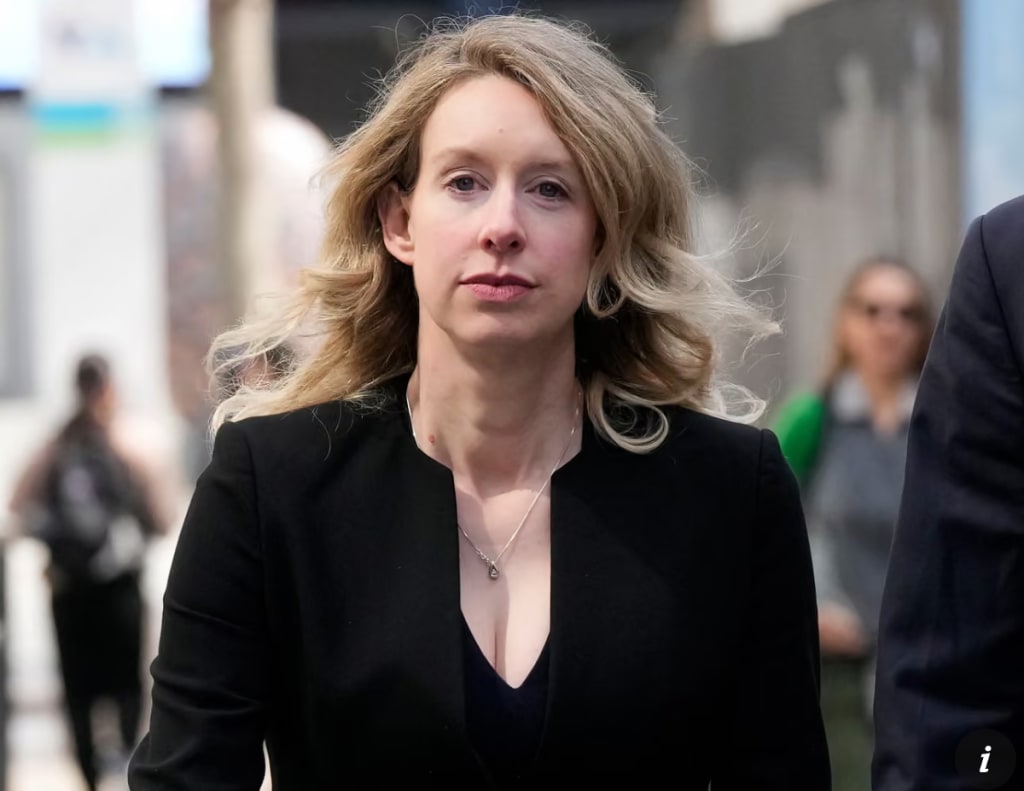
Elizabeth Holmes, the once-celebrated founder of biotech startup Theranos, has formally asked former U.S. President Donald Trump to commute her federal prison sentence, reviving public debate over white-collar crime, executive accountability, and the power of presidential clemency.
Holmes, who is serving a lengthy prison term after being convicted of fraud and conspiracy, rose to fame in the early 2010s as the youngest self-made female billionaire. Her company promised revolutionary blood-testing technology—claims that later unraveled into one of Silicon Valley’s most notorious scandals.
The request for clemency has reignited controversy, with critics questioning whether high-profile executives receive preferential treatment, while supporters argue that Holmes’ sentence was excessive and deserves reconsideration.
From Tech Icon to Convicted Felon
Theranos was once valued at billions of dollars and hailed as a breakthrough in medical diagnostics. Holmes was widely praised for her vision, charisma, and ambition, frequently compared to Steve Jobs for her black turtlenecks and bold rhetoric.
However, investigative reporting revealed that Theranos’ technology did not work as advertised. The company relied on traditional machines while misleading investors, partners, and patients about its capabilities. In 2018, federal prosecutors charged Holmes with multiple counts of fraud.
After a highly publicized trial, a jury found her guilty on several counts related to defrauding investors. She was later sentenced to more than a decade in federal prison, marking a dramatic fall from grace.
The Clemency Request
Holmes’ legal team has now turned to presidential clemency, requesting that Trump commute her sentence. A commutation would not overturn her conviction but would reduce or eliminate the remaining prison time.
In her petition, Holmes reportedly emphasizes factors such as her lack of prior criminal history, her role as a mother, and what her lawyers describe as disproportionate punishment compared to similar cases. The request does not claim innocence but seeks mercy.
Clemency petitions are not uncommon, but Holmes’ case stands out due to her notoriety and the scale of the fraud involved.
Trump and the Power of Clemency
Under the U.S. Constitution, presidents have broad authority to grant pardons and commutations for federal crimes. Trump made frequent use of this power during his presidency, often favoring high-profile or politically connected individuals.
Supporters of Holmes’ petition argue that Trump has shown willingness to challenge traditional legal norms and may be receptive to claims of prosecutorial overreach or excessive sentencing.
Critics, however, warn that granting clemency in such a case would send a troubling message—that wealthy executives can escape consequences that ordinary defendants cannot.
Public and Legal Backlash
Reaction to Holmes’ request has been swift and polarized. Many legal experts and victims of the Theranos scandal argue that clemency would undermine trust in the justice system.
Patients were harmed by inaccurate blood test results, and investors lost hundreds of millions of dollars. Critics say that Holmes’ sentence reflects the seriousness of her actions and serves as a deterrent against corporate fraud.
“Clemency in this case would reinforce the perception that there are two justice systems,” one legal analyst noted—“one for the powerful, and one for everyone else.”
Supporters Call Sentence Excessive
Holmes does have defenders. Some argue that she did not personally profit to the extent portrayed and that Theranos was a failed startup rather than a criminal enterprise from inception.
Others point out that male executives involved in major financial scandals have sometimes received lighter sentences. From this perspective, Holmes’ punishment is viewed as unusually harsh and symbolic.
These arguments form the backbone of her clemency appeal, framing the issue as one of fairness rather than denial of wrongdoing.
Broader Implications for Silicon Valley
The Theranos case has become a defining moment for Silicon Valley, exposing the dangers of hype-driven innovation and insufficient oversight. Holmes’ conviction was widely seen as a warning to startup founders that deception—even in the name of innovation—carries serious consequences.
A commuted sentence could complicate that legacy. Critics fear it would weaken accountability in an industry already criticized for prioritizing growth over ethics.
Supporters counter that accountability has already been established through conviction and incarceration, and that mercy does not negate justice.
The Political Dimension
Holmes’ request also carries political implications. Trump’s involvement—even if indirect—adds a layer of controversy, given his history of controversial clemency decisions.
If Trump were to grant the commutation, it would likely trigger renewed scrutiny of how clemency power is used and whether reforms are needed to ensure transparency and fairness.
Even if the request is denied, the episode underscores how political influence can intersect with the criminal justice system in high-profile cases.
Conclusion
Elizabeth Holmes’ request for Trump to commute her prison sentence has reopened one of the most polarizing chapters in recent corporate history. The case sits at the intersection of justice, power, gender, wealth, and accountability—raising difficult questions with no easy answers.
Should clemency be an instrument of mercy, even for those convicted of massive fraud? Or should the sentence stand as a warning that innovation does not excuse deception?
As public attention returns to the Theranos scandal, the outcome of Holmes’ request—whether granted or denied—will carry symbolic weight far beyond her own fate, shaping how society views justice for elite offenders in the modern economy.
About the Creator
Muhammad Hassan
Muhammad Hassan | Content writer with 2 years of experience crafting engaging articles on world news, current affairs, and trending topics. I simplify complex stories to keep readers informed and connected.
Keep reading
More stories from Muhammad Hassan and writers in The Swamp and other communities.
Trump Pushes for Lower Rates and Ban on Investor Home Purchases to Tackle Housing Affordability
As housing affordability remains one of the most pressing economic issues for American families, former U.S. President Donald Trump has renewed his focus on the housing market with a bold set of proposals. Trump is calling for lower interest rates and a ban on investor home purchases, arguing that these measures are necessary to restore affordability and give ordinary Americans a fair chance at homeownership.
By Muhammad Hassan2 months ago in The Swamp
The Forsyth House Fire
Since 1851, Forsyth House has stood on the corner of Union Street and Gordon Street in the heart of Glasgow. Its iconic, or was... because on Sunday 8th of March, 2026, a fire broke out in a small, seemingly un-named shop in the building and tore all that history down. As I write, the rubble is still unsettled and the street is still blocked off. Central Station is quiet on the upper level, and around 30 small businesses have quite literally gone up in smoke.
By S. A. Crawford3 days ago in The Swamp
Russian Strike on Kyiv Region Kills 4 People and Wounds 15 as Peace Talks Stall
A Russian military strike in the Kyiv region has left at least four civilians dead and 15 others injured, further heightening fears over escalating violence even as stalled peace negotiations underscore the difficulty of ending the conflict. Ukrainian authorities confirmed the casualties, while local emergency services rushed to provide medical care and assess the damage to residential areas. The strike, part of a series of attacks over the past several weeks, targeted both infrastructure and population centers. Explosions destroyed multiple buildings, leaving several residents trapped under debris. Emergency responders and volunteers worked through the night to evacuate survivors and provide urgent assistance to those injured. Civilian Impact and Humanitarian Concerns The human toll of the attack underscores the ongoing vulnerability of civilians in conflict zones. Families living in suburban and rural areas near Kyiv have faced repeated bombardment, which not only causes immediate casualties but also disrupts daily life, schooling, and access to essential services. Medical personnel report that hospitals in the region are operating under significant strain, treating injuries ranging from shrapnel wounds to burns. Local authorities warned that repeated attacks increase both physical and psychological trauma for residents, especially children. International humanitarian organizations have expressed alarm over the rising number of civilian casualties in Ukraine, emphasizing the need for adherence to international law and the protection of noncombatants. Escalation Amid Stalled Peace Talks The strike comes at a time when formal peace discussions remain stalled. Negotiations between Ukrainian officials and Russian representatives, mediated by international actors, have made little progress in recent months. Analysts warn that ongoing attacks, including strikes on urban centers like Kyiv, may further complicate any diplomatic efforts. Officials in Kyiv have stressed that military pressure continues to be a key tactic for Russia, even as international actors push for negotiations. The continuation of strikes raises concerns about both the stability of the truce mechanisms and the broader prospects for a ceasefire. Strategic and Political Implications Beyond the immediate humanitarian impact, attacks on the Kyiv region carry significant political and strategic implications. The Ukrainian government has accused Russia of deliberately targeting populated areas to exert pressure, while Moscow maintains that military operations are aimed at neutralizing Ukrainian military capabilities. The international community remains closely monitoring these developments. Countries supporting Ukraine have condemned attacks on civilian areas, highlighting violations of international humanitarian law, and continue to provide military, financial, and logistical support to Kyiv. Conversely, the continuation of strikes complicates diplomatic engagement by signaling persistent Russian resolve. Regional Security and Infrastructure Damage Infrastructure in the Kyiv region has also suffered extensive damage. Utilities, transportation networks, and residential buildings were affected, creating immediate challenges for recovery and reconstruction. Local authorities are prioritizing the repair of essential services, but the repeated bombardments slow restoration efforts and leave communities exposed to further risk. Energy and water supply systems were reported to be intermittently disrupted, forcing residents to rely on emergency measures. Schools and healthcare facilities have had to adjust operations to accommodate safety concerns, and the local economy continues to be affected by interruptions in daily life. International Reactions The international response to the strike has been swift. The United Nations called for restraint and urged all parties to comply with international law protecting civilians. Western nations, including members of the European Union and United States, issued statements condemning the attacks and reaffirmed support for Ukraine’s sovereignty. Aid organizations are coordinating with local authorities to deliver emergency supplies, medical care, and psychosocial support to affected families. However, the ongoing security situation complicates the logistics of delivering relief in some areas. Civilian Resilience and Community Response Despite the danger, local communities have shown remarkable resilience. Volunteers and neighborhood organizations mobilize quickly to provide shelter, food, and first aid to those affected by strikes. These efforts, combined with government and international assistance, help mitigate the immediate humanitarian consequences. Nevertheless, the repeated attacks erode a sense of security and heighten anxiety among residents, particularly children and the elderly, creating long-term psychological challenges. Outlook and Continuing Tensions The strike in the Kyiv region illustrates the persistent volatility in Ukraine, where civilians remain caught between ongoing military operations and stalled diplomatic efforts. Analysts warn that without renewed negotiations and adherence to humanitarian protections, civilian casualties are likely to increase, further complicating prospects for peace. For now, Ukrainian authorities continue to reinforce emergency response systems and seek international support, while the people of Kyiv brace for further uncertainty. The situation remains a stark reminder of the human cost of conflict and the urgent need for renewed diplomatic engagement to prevent further loss of life.
By Fiaz Ahmed Brohi2 days ago in The Swamp



Comments
There are no comments for this story
Be the first to respond and start the conversation.