
The United Nations General Assembly: The Center for Peace and Global Cooperation
A Comprehensive Review of Purposes, Goals, Structure, and Role

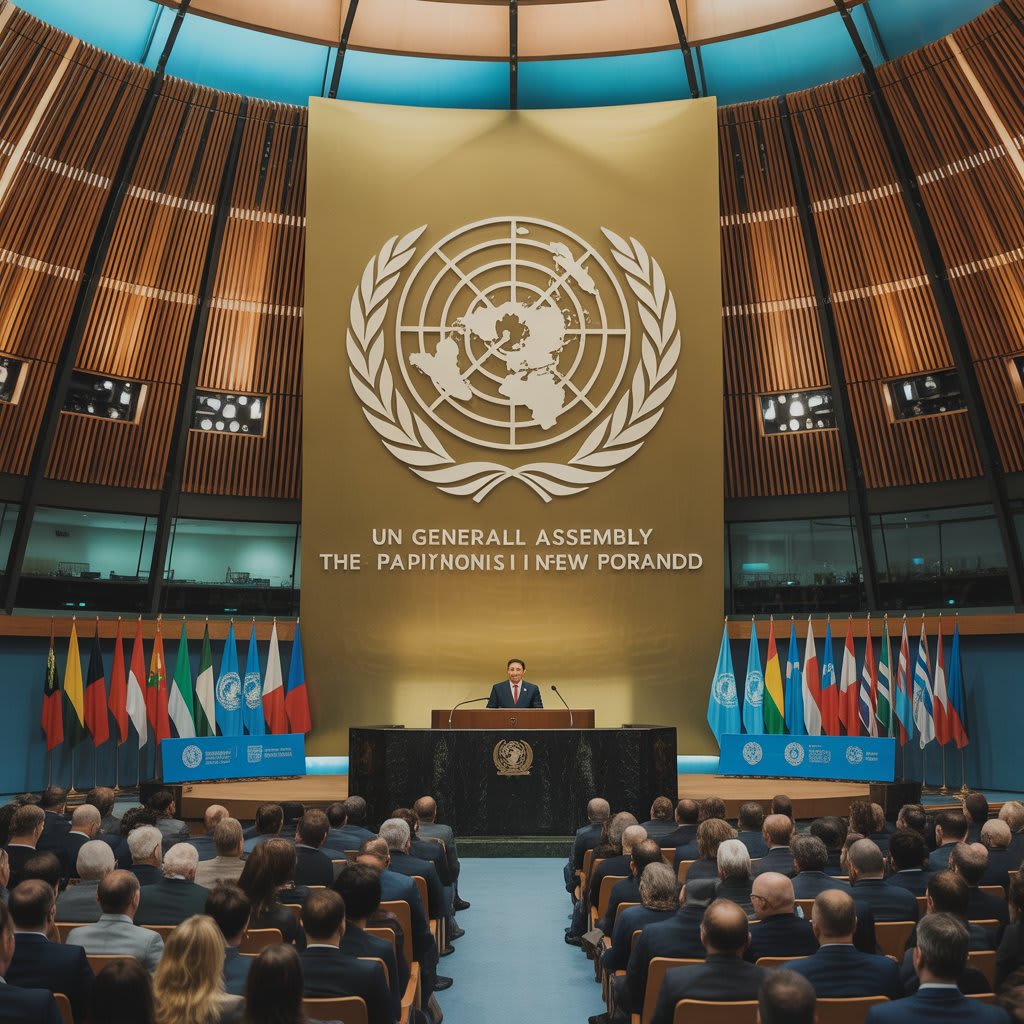
United Nations General Assembly: A Platform for Peace, Cooperation and Global Unity
World history is full of wars, conflicts and differences. The First and Second World Wars revealed the fact that if humanity is to survive, a global organization based on peace and cooperation must be established that can bring all countries to the same table. The United Nations came into being in 1945 at the end of World War II. Its most prominent and central organ is the General Assembly, which is a unique forum for dialogue, cooperation and policy-making among nations at the global level.
Establishment and Background of the General Assembly
The United Nations was founded on October 24, 1945. Its charter was to protect the world from future devastating wars and to resolve differences between nations through negotiations and law. The General Assembly was established to implement this goal. It is the most representative and inclusive organ of the United Nations where all member states have equal status.
The main objectives of the General Assembly
The objectives of the General Assembly are broad and comprehensive:
- Promoting international peace and security: Seeking to resolve differences and disputes through peaceful negotiations.
- International cooperation: Enhancing cooperation in science, education, culture, economy and social development.
- Protection of human rights: Upholding the principles of human dignity, freedom and equality at the global level.
- Decolonization: Helping countries gain independence from foreign domination.
- Support for developing countries: Supporting the fight against poverty, backwardness and disease.
Goals and roles of the General Assembly
- The General Assembly is the largest platform for discussing all major issues in the world. Some of its prominent goals are as follows:
- Peacemaking: Bringing parties closer together through dialogue and mediation in the event of any conflict.
- International lawmaking: Adopting resolutions to develop new principles and agreements.
- Development programs: Promoting projects such as the Sustainable Development Goals (SDGs).
- Budget and Funding: Allocating financial resources to UN agencies.
- Representation of Member States: Giving each country the opportunity to present its policies and perspectives.
Structure and Organization of the General Assembly
The structure of the General Assembly is based on democratic principles.
Member States: The General Assembly includes all 193 member states of the United Nations. Each country has one vote, no matter how large or small.
Session: The annual session of the General Assembly is held in New York in September, attended by heads of state, foreign ministers and representatives from all over the world.
President of the General Assembly: A new president is elected each year to preside over the session. This president is elected alternately from different regions so that everyone is represented.
Committees: The General Assembly is made up of six major committees:
- First Committee: Security and Political Affairs
- Second Committee: Economic and Financial Affairs
- Third Committee: Human Rights and Social Issues
- Fourth Committee: Colonial Affairs and Peacekeeping Missions
- Fifth Committee: Administrative and Budgetary Matters
- Sixth Committee: Legal Affairs
Importance of the General Assembly Session
Each annual session is a turning point in world politics. Heads of state present their policies and views on global issues. Be it the Palestinian issue or climate change, poverty or war, all issues are discussed here. Although the General Assembly does not have the power to directly prevent war or enforce decisions, its resolutions articulate global public opinion and create moral pressure.
Achievements of the General Assembly
Universal Declaration of Human Rights (1948): A milestone in protecting human dignity and freedom.
- Independence of colonial countries: General Assembly resolutions played a role in many countries gaining independence.
- Sustainable Development Goals (2015): A global plan of action to eradicate poverty and protect the environment.
- Environmental agreements: Role in raising global awareness and reaching agreements on climate change.
Challenges and criticisms
Although the General Assembly is an important platform, it is also subject to several criticisms:
- Its decisions are mostly non-binding.
- Major powers often try to impose their will.
- Its resolutions have limited impact compared to the decisions of the Security Council.
Yet, it is the only body in the world where every country, large or small, has equal standing and can raise its voice.
Closing remarks
The United Nations General Assembly is the conscience of the world. This platform reminds humanity that we are all inhabitants of the same planet and that our problems are interconnected. The efforts of the General Assembly to turn the dream of peace, cooperation, development and human rights into reality will always be remembered in history. Although the challenges are many, this body has repeatedly taught the world that dialogue, tolerance and partnership are the only way to save humanity.
About the Creator
Echoes of Life
I’m a storyteller and lifelong learner who writes about history, human experiences, animals, and motivational lessons that spark change. Through true stories, thoughtful advice, and reflections on life.
Keep reading
More stories from Echoes of Life and writers in The Swamp and other communities.
The Gilded Age: Wealth, Power, and Hidden Struggles
The late 19th century in America is often remembered as an age of glittering progress, towering fortunes, and dazzling inventions. This was the Gilded Age, a period roughly spanning from the 1870s to the early 1900s. On the surface, it looked like a golden era—railroads stretching across the continent, skyscrapers rising into the sky, and industrial titans amassing unimaginable wealth.
By Echoes of Life6 months ago in The Swamp
The Forsyth House Fire
Since 1851, Forsyth House has stood on the corner of Union Street and Gordon Street in the heart of Glasgow. Its iconic, or was... because on Sunday 8th of March, 2026, a fire broke out in a small, seemingly un-named shop in the building and tore all that history down. As I write, the rubble is still unsettled and the street is still blocked off. Central Station is quiet on the upper level, and around 30 small businesses have quite literally gone up in smoke.
By S. A. Crawford3 days ago in The Swamp


Comments
There are no comments for this story
Be the first to respond and start the conversation.