
The Uneasy Embrace: US-Pakistan Relations and the Geostrategic Puzzle of South Asia
From Cold War Ally to Strategic Enigma: Tracing the Highs, Lows, and Shifting Realities of a Complicated Alliance between the US and Pakistan.

By Inzamam Ul Haq
In the intricate geopolitical theater of Asia, alliances are not forged solely on ideological lines or historic friendships. They are shaped by necessity, strategy, and ever-shifting regional dynamics. Among the most enigmatic and often misunderstood of these relationships is the long, layered, and sometimes strained alliance between the United States and Pakistan.
For decades, the US has projected its core values—democracy, human rights, and individual freedoms—as guiding principles in its foreign policy. Yet, in South Asia, these ideals have often collided with the hard realities of regional instability, nuclear rivalries, and counterterrorism imperatives. In this context, US-Pakistan relations stand as a prime example of geopolitical pragmatism shadowed by a complex historical baggage.
1947–1959: Birth of a Partnership Amid Cold War Winds
When Pakistan emerged on the map in 1947, born from the trauma of partition and facing immediate challenges from its neighbor India, it sought powerful allies. The United States, recognizing Pakistan’s strategic location bordering the Soviet Union, China, Iran, and India, saw a valuable partner.
The 1950s marked the honeymoon phase. Pakistan became a key member of US-backed security pacts—SEATO (Southeast Asia Treaty Organization) and CENTO (Central Treaty Organization). The US, in turn, provided generous military and economic aid, seeing Pakistan as a bulwark against communist expansion. The alliance, however, was transactional. While the US sought containment of the USSR, Pakistan aimed to secure support against India.
1960s: Fractures and Frustrations
The 1965 Indo-Pak war over Kashmir exposed the fragility of the alliance. The US suspended military aid to both Pakistan and India, angering Pakistani leadership who felt betrayed. Washington's attempt at neutrality—guided by its broader strategic balance in the region—was perceived in Islamabad as a breach of loyalty.
This decade ended with a sense of disillusionment in Pakistan, which began to reconsider its overreliance on the US. Yet, the American strategic interest in the region never waned.
1970s: Shifting Sands and Secret Diplomacy
The 1971 Indo-Pak war—resulting in the creation of Bangladesh—was another low point. The US, under President Nixon and guided by Secretary of State Henry Kissinger, tilted toward Pakistan diplomatically. But it could not prevent India's military victory.
Despite this, the 1970s saw Pakistan play a crucial role in opening diplomatic channels between the US and China, through covert arrangements with Beijing. This not only restored strategic relevance to Pakistan but also showed its utility in US global maneuvers.
Domestically, however, Pakistan under Prime Minister Zulfikar Ali Bhutto began leaning toward a more independent foreign policy, asserting sovereignty, and initiating Pakistan's nuclear program—something that would haunt US-Pak ties in years to come.
1980s: The Afghan Jihad and Strategic Convergence
The Soviet invasion of Afghanistan in 1979 was a game-changer. The US once again turned to Pakistan—not just as an ally but as the primary conduit for arms, funds, and fighters to support the Afghan mujahideen.
This era saw unprecedented cooperation. Billions flowed into Pakistan—much of it covertly through the CIA and Pakistan's ISI (Inter-Services Intelligence). Pakistan became a frontline state in the Cold War, and the ideological divergences were conveniently set aside.
However, this strategic intimacy came with long-term costs. The influx of weapons, fighters, and radical ideologies created a volatile internal environment in Pakistan. The seeds of extremism were sown, which would bear bitter fruit in the decades ahead.
1990s: Sanctions and Suspicion
With the Soviet withdrawal and the Cold War’s end, US interest waned. The 1990 Pressler Amendment imposed sanctions on Pakistan due to its nuclear ambitions. This was a sharp reversal from the generous aid of the 1980s.
During this period, Pakistan faced international isolation, especially after its nuclear tests in 1998 in response to India’s tests. Washington’s dual sanctions on both India and Pakistan were again seen in Islamabad as signs of US hypocrisy and strategic ambivalence.
2000s: 9/11 and a Renewed Alliance Under Duress
The September 11, 2001 attacks forced a strategic reset. The US invaded Afghanistan, and once again, Pakistan’s geography and influence in the region made it indispensable.
Under General Pervez Musharraf, Pakistan became a “major non-NATO ally.” Billions in military and economic aid were disbursed, and Pakistan provided crucial logistical support. But beneath the surface, mistrust simmered.
The US accused Pakistan of playing a double game—supporting the US publicly while allegedly providing safe havens to the Taliban and the Haqqani network. Pakistan, in turn, accused the US of ignoring its sacrifices and fostering instability along the Afghan-Pakistan border.
2010s: Osama Bin Laden and Strategic Divorce
The 2011 US raid in Abbottabad that killed Osama Bin Laden without prior notice to Pakistani authorities was a nadir in the relationship. It confirmed US doubts about Pakistan’s sincerity and embarrassed Islamabad internationally.
The Obama administration gradually pivoted toward India, strengthening economic and defense ties. Pakistan, meanwhile, grew closer to China, deepening cooperation under the China-Pakistan Economic Corridor (CPEC)—a major component of Beijing's Belt and Road Initiative.
US aid declined. Relations became transactional again, centered on counterterrorism operations and Afghanistan.
2020s: Withdrawal, Recalibration, and a New Era?
The US withdrawal from Afghanistan in 2021 left Pakistan grappling with a Taliban-led Kabul and a potential security vacuum. While the US exited the battlefield, Pakistan remained entrenched in the region’s instability.
A new strategic recalibration seems to be underway
In December 2023, a year after his appointment, COAS Asim Munir visited the US and met with senior US military and government officials. Sources indicated the meetings were focused on resetting ties, exploring regional counterterrorism cooperation, and potential economic engagement.
In June 2025, behind closed doors, former President Donald Trump met with Pakistan’s Chief of Army Staff, General Asim Munir—a meeting that raised eyebrows in diplomatic circles. This covert engagement was followed in early 2025 by an emerging economic framework between the two nations. Still in nascent stages, the deal hints at US interest in Pakistan’s economic revival, particularly in green energy, tech transfer, and agriculture—a move possibly aimed at counterbalancing China’s influence in South Asia.
US Core Values vs. Strategic Realities
At the heart of this complex relationship lies a fundamental contradiction. The US champions democracy, human rights, and freedoms. Pakistan’s democratic record, with alternating civilian and military rule, human rights issues, and curbs on press freedoms, often sits uncomfortably with American ideals.
Yet history shows that when strategic interests dominate, values take a back seat. The Cold War, the War on Terror, and regional containment strategies have repeatedly pushed the US to engage Pakistan regardless of internal governance dynamics.
This contradiction continues today. The US remains concerned about human rights in Pakistan, particularly in Balochistan, the treatment of journalists, and electoral transparency. However, the need to maintain influence in a nuclear-armed nation bordering China, Iran, India, and Afghanistan keeps the door open.
Looking Forward: A Realist Alliance?
As China’s assertiveness grows, and India treads an independent foreign policy path, the US may seek to hedge its bets. A balanced engagement with Pakistan—focused not just on security but also on economic development—could serve mutual interests.
For Pakistan, a stable relationship with the US could provide an economic lifeline amid a chronic financial crisis. But the days of blank checks and unquestioned support are over. Washington is likely to demand transparency, accountability, and genuine counterterrorism cooperation in return.
Whether this recalibrated alliance can overcome decades of mistrust and conflicting expectations remains uncertain. But in a multipolar world, both nations might find pragmatism more useful than perfection.
About the Creator
Keep reading
More stories from Inzamam Ul Haq and writers in The Swamp and other communities.
The Saddest Thing - The Billionaires Who Rule America Aren't Even Enjoying Themselves
This single post says more about our ruling class than a thousand policy papers. The saddest thing about today's system is that the men robbing the rest of us - sabotaging our economic prospects, our pensions, our access to affordable healthcare - are not even happy.
By Scott Christenson🌴21 days ago in The Swamp
What’s Happened Since the Supreme Court’s Tariff Ruling
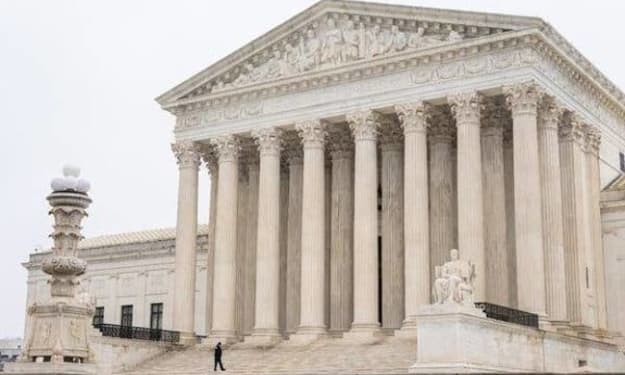
Since the landmark decision by the Supreme Court of the United States limiting the president’s authority to impose sweeping tariffs without congressional approval, Washington and global markets have entered a period of adjustment marked by political debate, legal uncertainty, and cautious economic recalibration. The ruling stemmed from a challenge to emergency trade powers used to justify broad import taxes on foreign goods. While the Court did not immediately strike down all existing tariffs, it made clear that large-scale trade measures must rest on firmer legislative authority. The decision reasserted Congress’s constitutional role in regulating commerce and narrowed the scope of unilateral executive action in trade policy. Congress Moves to Reclaim Control In the weeks following the ruling, lawmakers introduced competing proposals to redefine how future tariffs can be enacted. Some bills aim to require congressional approval for any new tariffs lasting longer than 60 days. Others seek to create a streamlined process for emergency actions, balancing speed with oversight. Supporters of the Court’s decision argue it restores democratic accountability. “Trade policy affects every household,” said one senior lawmaker. “It should not be decided by one office alone.” Critics, however, warn that slower legislative procedures could weaken the United States’ leverage in negotiations with foreign governments accused of unfair trade practices. Committee hearings have featured testimony from economists, manufacturers, and labor groups, reflecting sharply divided views. Exporters want predictability, while domestic producers want continued protection from low-cost imports. For now, Congress has not passed a comprehensive replacement framework, leaving trade policy in a temporary holding pattern. Markets and Businesses Adjust Financial markets initially reacted with modest optimism, interpreting the ruling as a signal of reduced risk of sudden tariff escalations. Shares of retail and manufacturing companies dependent on imported components rose slightly, while shipping and logistics firms welcomed the prospect of more stable trade rules. Businesses, however, remain cautious. Several multinational corporations have delayed long-term supply contracts, citing uncertainty over whether Congress will loosen or reinforce tariff controls. “Legal clarity doesn’t equal policy clarity,” said a trade consultant based in Chicago. “Companies still don’t know what the next six months will bring.” Small and medium-sized enterprises, which often lack the resources to absorb sudden cost increases, have been among the most vocal supporters of the ruling. Many hope it will lead to fewer abrupt changes in import duties and a more predictable regulatory environment. International Response U.S. trading partners reacted with guarded relief. European and Asian officials welcomed the Court’s emphasis on institutional checks, interpreting it as a move toward more rules-based trade policy. Several stalled trade discussions were quietly revived, particularly on industrial goods and agricultural exports. China and other major exporters are watching closely to see how Congress reshapes tariff authority. Diplomats say the ruling could reduce the likelihood of rapid trade wars but may also slow negotiations if U.S. policymakers become divided internally. One senior European official described the decision as “a stabilizing signal,” adding that predictable U.S. policy would benefit global markets already strained by geopolitical tensions and supply chain disruptions. Impact on Consumers For American consumers, the effects have been subtle so far. Prices of imported electronics, appliances, and vehicles remain largely unchanged, as existing tariffs are still in place. Economists say any noticeable shift will depend on whether Congress eventually rolls back certain duties or replaces them with a more targeted system. Consumer advocacy groups argue that the ruling opens the door to lower costs in the long term. “Tariffs are hidden taxes,” one spokesperson said. “If lawmakers use this moment to reduce them responsibly, households could see relief.” A Broader Constitutional Signal Beyond economics, the ruling has set an important legal precedent. Constitutional scholars note that it reinforces limits on executive power in areas tied to national emergencies and foreign commerce. This could influence future cases involving sanctions, export controls, and emergency economic measures. The decision has also reshaped political debate, forcing both parties to confront how trade policy should be made in an era of global competition and domestic economic anxiety. What Comes Next The coming months will determine whether the ruling produces meaningful reform or prolonged gridlock. Businesses want certainty, allies want predictability, and voters want relief from rising costs. All eyes are now on Congress to define a new balance between flexibility and accountability in U.S. trade policy. What is clear is that the Supreme Court’s tariff ruling did not end the controversy—it shifted it from the courtroom to the halls of Congress and the negotiating tables of international trade, where its consequences will continue to unfold.
By Fiaz Ahmed 4 days ago in The Swamp



Comments
There are no comments for this story
Be the first to respond and start the conversation.