
The Roar of Freedom
There's a thunder in the Glens of Scotland that is drowning out the endless attacks and snide commentary from Westminster.

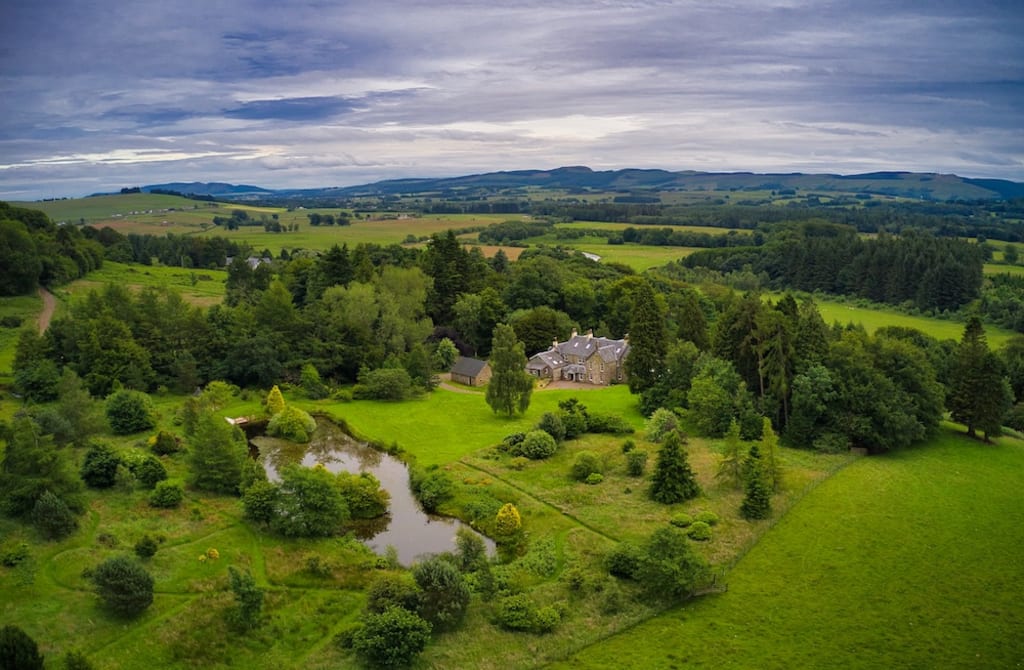
There's a day fast approaching within which the freedom of the people of Scotland will come to the fore. You may ask why they are askign for 'freedom'? Do they feel trapped, incarcerated, penned in maybe?
The answer or of those and more would be a resounding yes!
A look from the outside at the state of current British politics and diplomacy provides even the most failed of states some hope that they weren't all that bad after all. The United Kingom, that last vestiture of a failed Empire project is not teetering on the edge of oblivion largely driven not by those seekign their freedom from it but by the English nationalists and their narrow view of the world.
Their view, somewhat obscured by past days of apparent glory, the empire, world wars (apparently they 'won' something or other from those wars) is one being designed by a leadership in 'Westmonster' (not a typo) that seeks to divide, isolate and control the country largely for the financial gain of the top party members. Yes that does sound a but more like an assessment of North Korea but it is a fact in the current United Kingdom.
And what will the Scots do about this?
Well to be fair it is not only the Scots. Their Celtic cousins the Irish and Welsh are also looking to place some distance from London rule and bring their own countries back under their control. And yes, these are all separate countries!
The Scots have been hankering for independance for decades. In a political system which is heavily dominated by English parties the Scots, Welsh and Irish very rarely if ever get what they vote for. The dominant party in Westminister, the Conservaties, haven't been successful in Scotland for just as many decades and their English cousins, the Labour party have been all but wiped off the Scottish poltical scene as the Scottish National Party (SNP) dominate the politics of the day with an overwhelming majority in the Scottish Parliament.
The Scots have nothing to lose. They have no say in UK policy, their revenues are sent to London and they are reimbursed a lot less for their own spending, they have no control over their own borders, their political powers are extremely restrictive and to top it all off they're told they need permission from London to leave this uneven union.
Imagine it as an abusive marriage. One partner in the marriage is abusive and controlling to the point thast the other can no longer take it. WHat does that other partner do? Should they just leave? They do have very vaiable options on their own. Or, should they ask permission from the control freak and see what happens?
Well, let's see how that goes.
Look out for Part 2 of this journey coming soon on Vocal.
About the Creator
Keep reading
More stories from Ilyas Campbell and writers in The Swamp and other communities.
Breaking Bad Middle East
I often get asked what we do in terms of risk and crisis management. It’s not all about disasters and evacuations, sometimes it much more surreal involving the actions of employees putting the business, personnel and assets at risk. Sometimes, you really couldn’t make it up!
By Ilyas Campbell5 years ago in Criminal
Trump Renews Threat on Greenland Before Meeting at White House
When it comes to bold headlines, few U.S. presidents rival Donald Trump. In recent days, the former president has once again put Greenland in the spotlight, reigniting debates over international diplomacy, natural resources, and the strategic importance of the Arctic. With a scheduled meeting at the White House on the horizon, Trump’s renewed comments about Greenland have left allies and critics alike scrambling to interpret his intentions. Greenland in the Global Spotlight Greenland, the world’s largest island, has long fascinated global powers due to its strategic location between North America and Europe. Beyond its geopolitical relevance, the island is rich in untapped natural resources, including rare earth minerals, oil, and gas reserves. These factors make Greenland not only a significant strategic interest for the United States but also a sensitive subject for Denmark, which administers the island as part of its kingdom. Trump’s comments have once again drawn attention to this icy territory, sparking questions about what the U.S. might gain from closer engagement—or, as some speculate, potential acquisition efforts. The History Behind Trump’s Greenland Interest This is not the first time Donald Trump has expressed unusual interest in Greenland. In 2019, during his presidency, Trump famously suggested purchasing the island from Denmark—a proposal that Denmark quickly rejected. Critics at the time dismissed the idea as improbable, while supporters argued it was a bold assertion of U.S. influence in the Arctic. Fast forward to today, Trump’s remarks hint at a continuing fascination with the Arctic region. Analysts suggest that this renewed attention is not just political theater; the Arctic is increasingly central to global security, trade, and climate discussions. Strategic Importance of Greenland Greenland’s importance extends far beyond its icy landscapes. The island sits atop key shipping lanes that could become critical as melting ice opens new maritime routes. Moreover, its proximity to the Arctic Circle makes it an essential location for military and intelligence operations. The U.S. already maintains a presence at Thule Air Base, one of the northernmost military installations in the world, highlighting the island’s strategic relevance. Trump’s comments, therefore, resonate within a broader geopolitical context. They underscore the U.S.’s enduring interest in Arctic security, particularly in an era of rising competition with Russia and China. Environmental and Climate Considerations Greenland is also a focal point for climate change discussions. The island’s ice sheet is melting at alarming rates, contributing to rising global sea levels. This environmental transformation has sparked international scientific attention, as well as debates over how to balance strategic interests with the urgent need for climate action. Trump’s rhetoric, however, tends to prioritize strategic and economic opportunities over environmental concerns. Critics argue that this approach risks sidelining urgent climate considerations at a time when Greenland’s ice melt is not just a local issue but a global threat. Denmark’s Reaction Denmark, which governs Greenland, has consistently emphasized that Greenland is not for sale and that the island’s future decisions should be made by its people. Following Trump’s renewed comments, Danish officials have reiterated their stance, stressing the importance of cooperation and respect for Greenland’s autonomy. In response, Greenland’s government has also emphasized self-determination. While U.S. engagement in Arctic research, defense, and trade is welcome, any attempt to influence sovereignty would be met with resistance. Public and Political Reactions in the U.S. Within the United States, Trump’s comments have elicited a range of reactions. Supporters argue that a strong U.S. presence in Greenland is a strategic necessity, particularly given the global competition for Arctic influence. Critics, however, see the remarks as a distraction from pressing domestic issues, framing the Greenland discourse as yet another example of Trump’s unconventional approach to foreign policy. Political analysts note that Trump’s pattern of making provocative statements ahead of key meetings is often a calculated move, designed to dominate headlines and frame the agenda on his terms. The upcoming White House meeting could provide further clarity—or more surprises. The Global Implications Beyond U.S.-Denmark relations, Trump’s Greenland comments reverberate globally. Nations like Russia, Canada, and China are increasingly active in Arctic affairs, making Greenland a potential flashpoint in international diplomacy. How the United States approaches this issue could shape Arctic policy, military positioning, and resource negotiations for years to come. Additionally, the environmental stakes are enormous. As melting ice opens new shipping lanes and exposes valuable minerals, the international community faces the challenge of balancing economic ambitions with sustainability. Trump’s remarks signal a prioritization of strategic and economic opportunities, potentially complicating cooperative efforts on climate action. Looking Ahead: What to Expect As the White House meeting approaches, all eyes will be on Trump’s statements and the reactions they provoke. Will this renewed Greenland focus result in concrete policy proposals, or is it another headline-grabbing maneuver? Observers agree that the Arctic will remain a key geopolitical arena, with Greenland at its center. For Americans and international audiences alike, understanding Greenland’s importance is crucial. This island may seem remote and icy, but its strategic, economic, and environmental significance makes it a place where global interests converge—often contentiously. Trump’s renewed threat or interest, therefore, is not just a political quip; it is a reminder of how central the Arctic is to 21st-century geopolitics. Conclusion Trump’s renewed comments on Greenland have once again thrust the island into international headlines. While the rhetoric may be polarizing, the underlying issues—strategic positioning, natural resources, climate implications, and sovereignty—are profoundly serious. As the world watches the upcoming White House meeting, one thing is clear: Greenland, a vast icy land, is far more than a distant territory. It is a linchpin in global politics, and any U.S. action there will have far-reaching implications. In the end, Trump’s Greenland remarks serve as a reminder that even the most remote parts of the world can capture the attention of the most powerful leaders—and that in today’s interconnected world, no territory is too far away to matter.
By Muhammad Hassana day ago in The Swamp
Wild Card Weekend Recap: What Happens Now?
I think I figured out why I love Wild Card Weekend so much. It's because it's the first playoff anything of the calendar year. The NFL season starts in the fall, and once upon a time, the champion was crowned either on or slightly before New Year's. The evolution of the NFL schedule has resulted in the playoffs starting just into the New Year, and currently, the final week of the season falls on the first weekend of the New Year, with Wild Card Weekend coming a week after that. So yes, chronologically, the NFL's Wild Card Weekend serves as the first playoff anything of the calendar year.
By Clyde E. Dawkins3 days ago in Unbalanced



Comments
There are no comments for this story
Be the first to respond and start the conversation.