
🇧🇷🇷🇺🇮🇳🇨🇳🇿🇦 The Rise of BRICS and the Fall of the Dollar Empire: Is the Global Power Order Shifting Forever?
As the BRICS alliance challenges U.S. dominance, global finance faces a historic shift — from dollar control to multipolar cooperation.

🌍 Introduction: A Quiet Revolution in Global Finance
For nearly eight decades, the U.S. dollar has reigned supreme as the undisputed king of global trade, investment, and political influence. From oil pricing to international loans, the greenback became more than a currency — it became a tool of power.
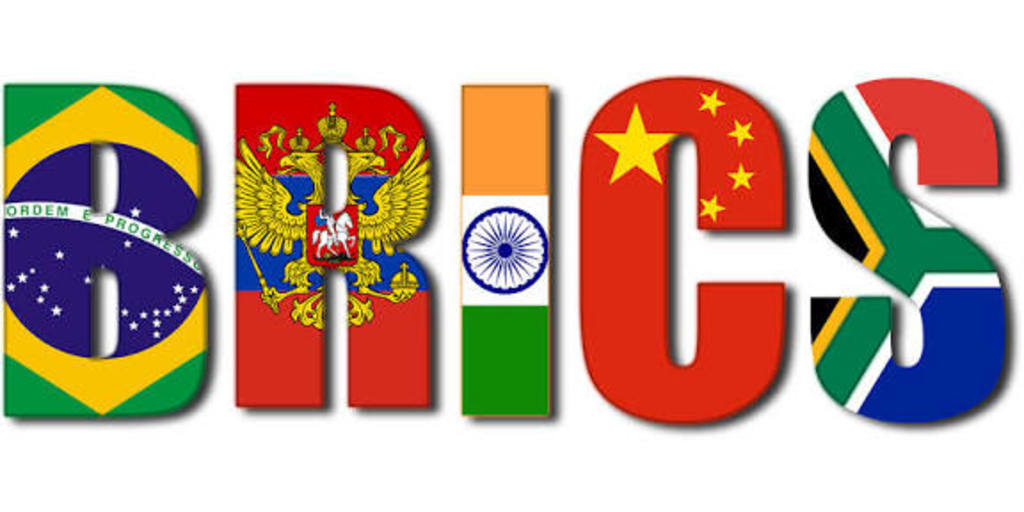
But as the 21st century advances, a quiet revolution is brewing. The BRICS alliance — Brazil, Russia, India, China, and South Africa — is now challenging the global financial order once thought unshakable.
What began as an economic cooperation platform has turned into a strategic movement for de-dollarization, seeking independence from the Western-controlled financial system.
💰 The Birth of BRICS: A Counterweight to the West
In 2009, at the height of the global financial crisis, the founding BRIC nations came together to discuss how the world’s developing economies could protect themselves from the instability caused by Western markets.
By 2010, South Africa joined, and BRICS was born — representing over 40% of the global population and nearly 30% of global GDP.
Their message was clear:
> “The world needs a new multipolar order — not one dictated by a single currency or country.”
This idea resonated deeply with countries in Asia, Africa, and Latin America that had long felt sidelined by institutions like the IMF and World Bank, both dominated by Western interests.
⚙️ How the Dollar Became a Weapon
After World War II, the Bretton Woods system made the dollar the backbone of global finance. Even after it ended in 1971, the “petrodollar system” kept the U.S. currency at the center of oil trade and reserves.
However, in recent decades, Washington’s growing use of economic sanctions has turned the dollar into what some economists call a “financial weapon.”
When countries like Russia, Iran, or Venezuela faced dollar restrictions, they began searching for alternatives.
And that’s when BRICS saw its opportunity.
🪙 De-Dollarization: From Vision to Action
The BRICS nations have steadily been working toward reducing their reliance on the U.S. dollar in trade settlements, energy contracts, and international reserves.
Some key steps include:
BRICS Bank (New Development Bank): Established to fund infrastructure projects without depending on Western institutions.
Local Currency Trade: China and Russia now settle over 70% of their bilateral trade in yuan and rubles.
Gold Reserves: Several BRICS nations are increasing their gold holdings as a hedge against dollar volatility.
New BRICS Currency Proposal: Discussions are ongoing for a common settlement currency, possibly backed by gold or commodities.
These initiatives signal a long-term strategy — not just to escape U.S. sanctions but to reshape how global trade itself functions.
⚔️ The U.S. Dollar’s Decline — Myth or Reality?
Despite BRICS’ growing influence, the U.S. dollar still dominates over 58% of global foreign exchange reserves and 80% of international trade settlements.
However, the trend is slowly shifting. According to the IMF, the dollar’s share has been declining steadily for the past two decades.
Countries such as Saudi Arabia, Egypt, and the UAE — traditional U.S. allies — are now joining or showing interest in BRICS discussions. That’s a symbolic blow to Washington’s financial dominance.
The dollar may not collapse overnight, but its era of unquestioned supremacy is clearly over.
🌐 The Global Power Shift: Beyond Economics
The rise of BRICS is not just an economic story — it’s a geopolitical transformation.
Russia seeks to weaken Western dominance and bypass sanctions.
China envisions a new Silk Road through the Belt and Road Initiative (BRI).
India balances relations between the West and the Global South.
Brazil and South Africa want fairer representation for emerging economies in global institutions.
In other words, BRICS is not just an alliance — it’s an alternative worldview where economic sovereignty matters more than Western approval.
📊 What Happens Next: A World of Many Currencies
Imagine a future where trade is conducted in multiple regional currencies — yuan for Asia, rupee for South Asia, ruble for Eurasia, and digital assets for cross-border transactions.
This multipolar financial world could reduce volatility and dependency on one single monetary system.
However, it also introduces new risks: competition, instability, and potential fragmentation of global markets.
The question is:
> Can the world manage the transition from one empire’s currency to a global balance of many?
🧭 Expert Insight: Why the Dollar Still Holds Power
Despite growing challenges, analysts agree that trust and stability keep the dollar strong.
The U.S. offers:
Deep, liquid capital markets
Political transparency (relative to many BRICS nations)
Global military presence securing trade routes
In contrast, BRICS countries face internal political rivalries, governance issues, and uneven development.
So, while BRICS is shaking the foundation, the Dollar Empire still stands — but it’s no longer unchallenged.
🔮 Conclusion: The Dawn of a New Era
The world is entering a new economic epoch — one not built on domination, but on diversification and balance.
The BRICS alliance may not dethrone the dollar tomorrow, but it has already rewritten the conversation about global power, sovereignty, and financial justice.
> “History is not about who rules forever — it’s about who adapts faster.”
And in this race for global financial relevance, the age of the dollar monopoly is fading into history.
💭 Reflective Questions for Readers
1. Do you believe BRICS can realistically replace the dollar as a global trade currency?
2. Is de-dollarization a step toward global equality or the beginning of new financial chaos?
3. Which country stands to gain the most — and which could lose — if the world shifts to a BRICS-led system?
✍️ Author’s Note
Written by Kareem Kochi — independent geopolitical observer and contributor to Ocl Media & Medium. Focused on world politics, economy, and digital-era diplomacy.
About the Creator
Filmon Ke Raaz | Movie Mysteries Explained
Filmon Ke Raaz is a storytelling platform where movies are explained in a simple and engaging way. We uncover hidden meanings, untold facts, and deep mysteries behind thriller, horror, and mystery films.
Keep reading
More stories from Filmon Ke Raaz | Movie Mysteries Explained and writers in The Swamp and other communities.
🇺🇲Donald Trump’s Call for Nuclear Testing: A New Shockwave in Global Politics
Introduction: The Return of a Dangerous Idea In a statement that sent shockwaves across the international community, former U.S. President Donald Trump recently hinted at the possibility of “testing America’s nuclear capabilities again if necessary.”
By Filmon Ke Raaz | Movie Mysteries Explained3 months ago in The Swamp
Awaken Thoughts: Unlocking the Power of Mindful Reflection
In a fast-paced world filled with distractions, our minds are often cluttered with endless streams of information, worries, and responsibilities. Awakening our thoughts means taking a deliberate pause to reflect, analyze, and gain clarity. It is a conscious effort to break free from autopilot thinking and engage deeply with our ideas, emotions, and values.
By Aarif Lashari4 days ago in The Swamp


Comments
There are no comments for this story
Be the first to respond and start the conversation.