
The Right’s Loud Romance With Violence and Fascism
The Right's General Love of Violence is Undeniable (and Unavoidable) at This Point


For decades, American conservatives have warned about the “moral decline” of the United States. Sometimes those warnings sounded sincere. I remember the Terri Schiavo case, when many conservatives framed the removal of a feeding tube as a profound moral failure. You could argue some of that outrage was politically convenient, but it was at least plausible that many of the people involved genuinely believed life was sacred and violence, broadly defined as merely ending a human life (even out of medical mercy), was wrong.
That makes the present moment harder to square with those earlier claims.
Over time, the moral language remained, but the restraint did not. What has increasingly animated the modern right is not a principled opposition to harm, but an indulgence in it. Violence is no longer a fringe feature of right-wing politics. It has become the most recurring aspect, sometimes rhetorical, sometimes physical, often winked at rather than condemned. All of this is done while continuing to bizarrely invoke Christianity, peace, and order.
You see this clearly in how right-wing activists talk about political opponents. College campus protests are a good example. There are, of course, unserious and self-aggrandizing figures on the left. Some activists chase attention more than justice, and history shows that a few of them eventually reinvent themselves as right-wing provocateurs. None of this is new.
What is new is how eagerly the right responds to these figures with open belligerence. The goal is no longer to argue, persuade, or even merely mock. It is to dominate and, increasingly, to fantasize about force, and then to take it from fantasy to reality.
A telling moment came at a Turning Point USA event in 2021, when a man asked Charlie Kirk, “When do we get to start using the guns?” Kirk semi-scolded him, but the question did not come from nowhere. It reflected years of rhetoric about enemies, traitors, and the supposed inevitability of violence. When you tell people often enough that their country has been stolen and that compromise is cowardice, someone will eventually ask when the shooting starts.
This mindset resembles how people justify brutality during war. Once everything is framed as an existential crisis, the “ends” can be stretched and redefined to excuse almost anything. Violence becomes not just acceptable, but cleansing. That logic is dangerous, and it is also unhinged.
Trump did not invent this dynamic, but he perfected it. He lacks the patience for sane politics, so he replaces it with grievance and threat. What is striking is how easily his supporters absorb the contradiction at the center of his posture. Trump claims to be a peacemaker while using language that invites chaos. He says he opposed the Iraq War, yet governs as someone comfortable with military strikes. He negotiated the withdrawal from Afghanistan, then attacked Biden for carrying it out. These positions openly conflict, but Trump rarely bothers to reconcile them. He simply moves on.
That incoherence is not accidental. For Trump, every principle is expendable. Violence, restraint, peace, and aggression are all props. What matters is whether they serve him in the moment.
This pattern has only intensified during his second term. Trump now governs with fewer restraints and a clearer sense that intimidation works. The language of law and order has hardened into something closer to punishment for its own sake. Nowhere is this clearer than in immigration enforcement.
By 2026, ICE has become a symbol of this shift. What began years ago as aggressive enforcement has curdled into something more openly extreme. Raids are staged as spectacles. Detainees are dehumanized in official statements. Accountability mechanisms are weakened or ignored. The message is not merely that the law will be enforced, but that suffering is part of the point. Supporters cheer this cruelty as strength, and critics are dismissed as traitors or accomplices.
This is violence dressed up as governance. It is not about safety or legality. It is about asserting dominance over a population that has been cast as an enemy.
To be fair, Trump is not the only politician to speak out of both sides of his mouth. Joe Biden has also presented himself as a peacemaker while overseeing violent policies, both abroad and at home. When defending the withdrawal from Afghanistan, Biden said that American troops should not die in a war Afghan forces would not fight for themselves. That statement was reasonable on its face. What often went unsaid is that the withdrawal plan was largely negotiated under Trump, including the release of Taliban leaders. Trump later attacked Biden for following through, a hypocrisy Democrats never effectively countered.
Still, there is a difference in degree and in tone. Biden’s contradictions come more from the logical limits of American power and political caution. Trump’s come from a willingness to use anything, including the threat of violence, as a tool.
This brings us back to the right’s obsession with moral decay. If morality means anything, it cannot coexist comfortably with casual calls for bloodshed. It cannot thrive alongside cheers for abuse, whether at Abu Ghraib years ago or in detention centers today. I still remember having twisted online debates with conservatives about prisoner abuse at Abu Ghraib in Iraq. At least one right-winger at the time argued to me (in so many words) that liberals/leftists should applaud someone getting assaulted with a broomstick, because isn't that the sort of moral depravity we engage in?
Back then, I thought such arguments were the fringe. Now, it seems like it would just be the norm.
On that note: The same instincts that led us into disasters like the Iraq War will not lead us out of our current crises.
Doubling down on force has never produced clarity or peace. It has only hardened divisions and justified further harm.
Trump understands something basic about American politics: many people are exhausted, angry, and scared. He exploits that fear by offering simple enemies and promising punishment. The tragedy is how many accept this as strength rather than recognize t as pathetic desperation.
Building a humane society under these conditions is impossible. But abandoning restraint entirely only guarantees the dangers spread out like snakes.
A desire for relative peace and sanity is not naïveté. It is a refusal to let violence become the organizing principle of political life. In an era when extremism is openly celebrated by those in power, that refusal may be one of the few remaining forms of sanity. Despite ICE's provocations, and my own understanding of the validity of self-defense, I believe there are still effective non-violent tactics that can prevent right-wing violence from growing. That being said, that requires not only hard work but luck...and luck is not always on our side.
About the Creator
Wade Wainio
Wade Wainio writes stuff for Pophorror.com, Vents Magazine and his podcast called Critical Wade Theory. He is also an artist, musician and college radio DJ for WMTU 91.9 FM Houghton.
Keep reading
More stories from Wade Wainio and writers in The Swamp and other communities.
Freedom in Tension: Between Anarchic Ideal and Fascistic Reality
The American anarchist and political economist Benjamin Tucker once called himself an adherent of “unterrified Jeffersonianism.” That phrase, half tongue-in-cheek and half serious, captures the contradiction at the heart of freedom: it is at once an ideal of perfection and a struggle against imperfection.
By Wade Wainio5 months ago in The Swamp
Maritime Safety at Risk as Hundreds of Vessels Face Daily Disruptions
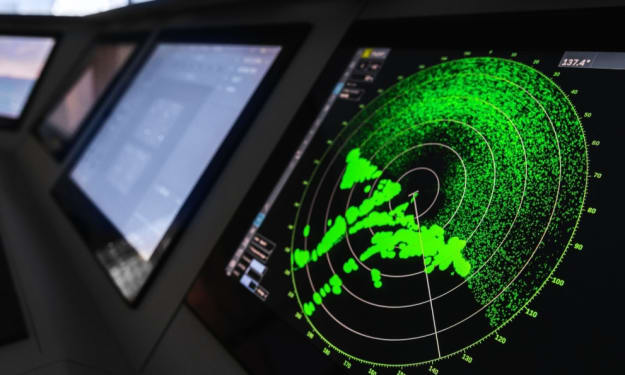
Alarming New Report on Maritime Disruption A recent analysis has revealed that hundreds of vessels worldwide are being affected daily by disruptions to GPS and other navigation systems, raising concerns about maritime safety and security. The report, conducted by [Research Institute/Maritime Authority], highlights the growing risks posed by electronic navigation failures, interference, and cyber threats to ships traversing busy international waters. The findings underline that disruptions are not isolated incidents; rather, they have become increasingly frequent and can affect cargo ships, passenger ferries, and fishing vessels alike. Maritime authorities warn that immediate action is required to mitigate potential accidents and economic consequences. How GPS and Navigation Disruptions Occur Modern maritime operations rely heavily on Global Positioning System (GPS) technology for accurate navigation, collision avoidance, and port docking procedures. Disruptions can occur due to: Electronic interference or jamming Cybersecurity attacks targeting navigation systems Technical malfunctions in onboard electronic equipment Natural phenomena affecting signal reception Even brief lapses in GPS guidance can result in collisions, groundings, or misrouting, particularly in high-traffic areas like the English Channel, Singapore Strait, and major shipping lanes in the Pacific and Atlantic Oceans. The Scale of the Problem According to the report, hundreds of ships are affected daily, with incidents reported across both commercial and recreational maritime sectors. Analysts estimate that disruptions are increasing year by year, in part due to the growing dependency on digital navigation systems and the complexity of modern shipping operations. Shipping companies have reported delays, rerouted vessels, and near-miss collisions linked to GPS inaccuracies. In addition to safety risks, such disruptions also pose financial challenges, including fuel wastage, port scheduling conflicts, and cargo delivery delays. Economic and Environmental Risks The implications of widespread navigation system disruption extend beyond safety. Experts note that incidents can trigger significant economic and environmental consequences: Cargo delays and logistical disruptions impacting global trade Increased fuel consumption due to inefficient routing Risk of oil spills or environmental damage in the event of collisions Financial losses for shipping companies and insurers Maritime insurers are increasingly concerned about the rising frequency of incidents, prompting calls for stricter safety regulations and investment in resilient navigation technologies. Impact on Mariners and Coastal Communities For crews and coastal communities, navigation failures create direct risks to human life and property. Mariners face challenges such as: Increased risk of collisions in busy ports Navigational uncertainty in open seas during poor visibility Delays in emergency response in case of accidents Coastal communities, particularly in densely trafficked or industrial port regions, may face higher risks of environmental contamination, property damage, and safety hazards. The report stresses the importance of training crews to respond to navigation failures effectively. Maritime Authorities and Industry Response Maritime authorities and industry stakeholders are taking several measures to address the problem: Redundant navigation systems: Ships are increasingly equipped with backup navigation methods, including radar, traditional charts, and inertial navigation systems. Cybersecurity protocols: Stricter standards are being implemented to protect GPS and electronic systems from malicious attacks. Monitoring and reporting: Authorities are improving incident reporting and analysis to track patterns of GPS disruption. Crew training programs: Mariners are receiving additional training on manual navigation, emergency procedures, and electronic troubleshooting. While these measures provide some protection, experts warn that the scale of modern shipping operations requires comprehensive global coordination. The Role of Technology and Innovation Technology can be part of both the problem and the solution. Advances in autonomous shipping, satellite monitoring, and AI-based navigation systems offer potential to reduce human error and improve real-time tracking. However, reliance on digital systems also increases vulnerability to signal jamming, cyberattacks, and technical failures. Researchers advocate for hybrid navigation systems that combine digital, satellite, and traditional methods, creating resilient and fail-safe solutions for maritime operations. Public Awareness and Community Engagement The risks of navigation disruption are not limited to shipping companies—they also affect fishing communities, ferry operators, and coastal residents. Public awareness campaigns and training initiatives are essential to ensure that smaller operators understand the risks and have access to safety protocols. Local communities can play a role by: Reporting anomalies or GPS interference near ports and coastlines Supporting training programs for local mariners Advocating for investment in resilient maritime infrastructure Community involvement strengthens the overall maritime safety ecosystem, ensuring that safety protocols extend beyond large commercial vessels. Looking Ahead The report concludes that urgent action is needed to prevent accidents, economic losses, and environmental damage. Recommendations include: Investing in redundant and resilient navigation systems Expanding international regulations and standards for maritime GPS and electronic safety Enhancing crew training programs and emergency preparedness Increasing coordination between shipping companies, authorities, and coastal communities By addressing both technological vulnerabilities and human factors, the maritime industry can protect lives, property, and global trade. Conclusion The revelation that hundreds of vessels are affected daily by GPS and navigation disruptions highlights a critical threat to maritime safety. Beyond economic and environmental impacts, the risks to human life and coastal communities are profound. The report serves as a call to action for governments, shipping companies, and local communities to collaborate on solutions, ensuring safe navigation, robust infrastructure, and vigilant maritime practices. As shipping continues to be a backbone of global trade, safeguarding vessels and crews is a responsibility that requires technology, regulation, and community engagement working hand-in-hand.
By Aarif Lashariabout 4 hours ago in The Swamp
48 Million Gmail Usernames and Passwords Leaked Online
Massive data breach raises fresh concerns over cybersecurity, password safety, and the growing threat to personal data A major cybersecurity scare has emerged after reports that 48 million Gmail usernames and passwords have been leaked online, sending shockwaves through users and digital security experts worldwide. The exposed credentials, allegedly compiled from multiple sources, have been circulating on dark web forums and file-sharing platforms, reigniting fears over how vulnerable personal online accounts remain despite years of warnings and technological improvements.
By Aarif Lashari3 days ago in The Swamp



Comments
There are no comments for this story
Be the first to respond and start the conversation.