
The Phone Notes That Reveal an Alleged Plan to Bait Kim Jong Un With Drones
How a Leaked Smartphone Exposed a High-Risk Strategy With Global Consequences

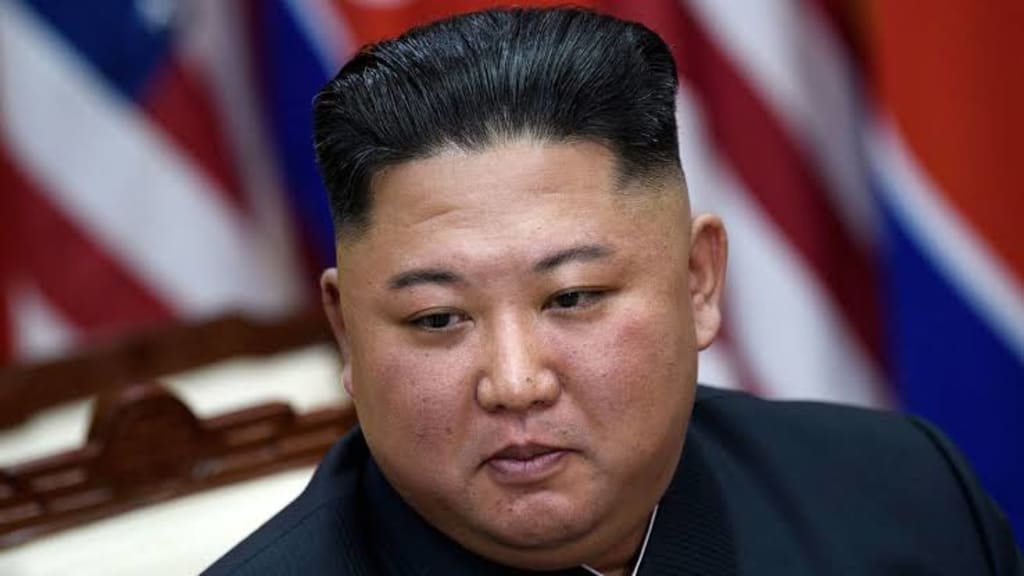
In an era where international tensions can escalate with a single misstep, the discovery of a set of phone notes outlining an alleged plan to “bait” North Korean leader Kim Jong Un with drones has generated shockwaves far beyond the Korean Peninsula. What began as a routine investigation reportedly turned into a geopolitical alarm bell—one that raises serious questions about covert strategy, political ethics, and the risks of miscalculation in one of the world’s most volatile regions.
According to early reports, the contents of the phone belonged to a mid-level security strategist involved in discussions about countering North Korea’s growing military capabilities. While the full authenticity of the document is still under scrutiny, the leaked notes allegedly describe a plan to provoke Kim Jong Un by flying unmanned aerial vehicles—drones—near sensitive North Korean installations. The goal, the notes say, was to trigger a reaction that could justify diplomatic pressure or military countermeasures.
Whether the strategy was ever officially adopted remains unclear. But the mere idea of provoking a leader known for unpredictable responses has drawn global concern.
A Strategy Built on Calculated Risks—or Dangerous Misjudgment?
North Korea’s missile program has expanded rapidly over the last decade. The country routinely conducts tests of ballistic missiles capable of reaching South Korea, Japan, and even parts of the United States. As tensions escalate, some nations have looked for ways to pressure Pyongyang without triggering open conflict.
The alleged drone plan appears to have emerged from this strategic dilemma. In the notes, the unnamed planner proposes using small, low-cost drones to enter airspace close enough to North Korean facilities to create uncertainty. North Korea, which often responds aggressively to perceived airspace violations, might react militarily.
Such a reaction could then be used, according to the notes, to “frame Pyongyang as the initiator of escalation,” allowing other nations to gain diplomatic and strategic leverage.
However, experts warn that such tactics can easily spiral out of control. A misinterpretation, a malfunctioning drone, or an overreaction from North Korea could lead to a dangerous chain of events.
Why Drones? The New Shadow Weapons of Modern Conflict
Drones have become the preferred tool of covert operations worldwide because they are versatile, hard to track, and inexpensive. They can surveil, provoke, or even carry payloads without risking a soldier’s life.
In this case, drones would have served as a psychological weapon—tools not of destruction, but of manipulation. If the reports are accurate, the plan reflects a growing trend: modern conflicts are increasingly fought in the shadows, with technology replacing direct confrontation.
From Ukraine to the Middle East, drones are rewriting the rules of warfare. Their use in a potential provocation against North Korea underscores how these inexpensive devices can reshape global security strategies.
The Danger of Misreading Kim Jong Un
Analysts agree on one thing: attempting to bait Kim Jong Un is an extraordinarily risky strategy.
The North Korean leader has responded forcefully to perceived threats in the past. In 2010, North Korea shelled South Korea’s Yeonpyeong Island after accusing Seoul of provocative military drills. In 2015, landmine explosions along the demilitarized zone led to a dangerous escalation of rhetoric and troop movements.
Kim’s government sees drone incursions as serious violations. In 2023, North Korea responded to a small drone entering its airspace by firing unspecified weapons and raising its military alert levels.
Trying to provoke such a leader could easily set off a chain reaction that nobody can fully control.
Political Fallout: Trust, Transparency, and Global Diplomacy
The leaked notes have already sparked political debate in multiple countries. Some policymakers argue that such a strategy, if real, is reckless and undermines long-term stability. Others insist that countering North Korea requires bold thinking, especially as diplomacy remains frozen.
International organizations have also reacted. Human rights groups worry that any escalation could worsen the already severe humanitarian situation in North Korea, where sanctions and isolation have strained food supplies and medical access.
If the alleged plan was indeed circulated among government officials, it raises questions about transparency and the ethics of covert provocation.
A Reminder of the Fragile Balance on the Korean Peninsula
Whether the drone-baiting plan was a serious proposal or merely brainstorming on a strategist’s smartphone, the incident highlights a sobering truth: peace in the region rests on a knife’s edge.
With nuclear weapons, unpredictable leadership, and a history of misinterpretation, even the smallest provocation can turn into a crisis with global consequences.
The leaked notes are more than just a scandal—they are a warning. In an age of drone warfare, digital leaks, and political brinkmanship, the world must tread carefully. The Korean Peninsula remains a flashpoint where one wrong move could reshape international history.
About the Creator
Fiaz Ahmed Brohi
I am a passionate writer with a love for exploring and creating content on trending topics. Always curious, always sharing stories that engage and inspire.
Keep reading
More stories from Fiaz Ahmed Brohi and writers in The Swamp and other communities.
Thousands Protest Against Government in Mexico as Clashes Leave 120 Injured
Mexico is once again witnessing a tense and emotional chapter in its political history. Over the past week, thousands of protesters flooded the streets across major cities, demonstrating against what they describe as growing government failures, increasing insecurity, and declining public trust. What began as a peaceful show of frustration quickly transformed into a dramatic scene of conflict, leaving at least 120 people injured as clashes erupted between demonstrators and security forces.
By Fiaz Ahmed Brohi2 months ago in The Swamp
Which Countries Do Business With Iran — and What Could US Tariffs Mean?
Iran’s Economy Under Persistent Pressure Iran has lived under varying degrees of US and international sanctions for decades, yet it has never been fully cut off from the global economy. Despite restrictions on banking, energy exports, shipping, and technology, Iran continues to trade with a network of countries willing—or able—to navigate sanctions. Now, with renewed discussion in Washington about expanding US tariffs and secondary trade penalties, questions are growing about which countries do business with Iran, how that trade works, and what tougher US measures could mean for global markets, regional stability, and ordinary people inside Iran. China: Iran’s Most Important Trading Partner China is by far Iran’s largest economic partner. It imports significant volumes of Iranian oil, often at discounted prices, and exports machinery, electronics, consumer goods, and industrial equipment to Iran. Much of this trade operates through indirect channels, rebranded shipments, and complex financial arrangements designed to avoid sanctions. Beijing officially opposes unilateral US sanctions, arguing they violate international norms. If the US were to impose broader tariffs or secondary penalties targeting countries that trade with Iran, China could face increased friction with Washington—but analysts note that China has historically been willing to absorb such pressure when strategic interests are at stake. Russia: Strategic and Economic Cooperation Russia and Iran have deepened ties in recent years, driven by shared opposition to US influence and overlapping interests in energy and security. Trade between the two includes energy cooperation, arms-related technology, agricultural goods, and industrial products. Western sanctions on Russia have pushed Moscow to seek alternative trade networks, making Iran a useful partner. Proposed US tariffs aimed at Iran-linked trade are unlikely to deter Russia significantly, given that Moscow already operates largely outside Western economic systems. However, expanded penalties could further harden global economic blocs, accelerating the shift toward non-dollar trade mechanisms. Turkey: Balancing Trade and Alliances Turkey occupies a complicated middle ground. As a NATO member, it maintains formal alignment with the US and Europe, yet it also trades extensively with Iran—particularly in energy, food, and consumer goods. Ankara has historically sought sanctions waivers to continue importing Iranian gas, arguing that energy security leaves it with limited alternatives. US tariffs targeting Iran-related trade could force Turkey into difficult choices between economic needs and alliance commitments. Any escalation would likely test already strained US-Turkey relations. India: Energy Needs and Strategic Caution India once relied heavily on Iranian oil and invested in infrastructure projects such as Iran’s Chabahar port. While New Delhi reduced trade after US sanctions intensified, it has not fully disengaged. India walks a careful line: maintaining relations with Iran for regional access and energy diversification, while avoiding direct confrontation with Washington. Broad US tariffs could further discourage Indian companies from re-engaging with Iran, reinforcing India’s gradual shift toward alternative suppliers. European Union: Limited but Symbolic Trade Official EU-Iran trade has declined sharply under US sanctions, particularly after Washington withdrew from the nuclear deal. What remains is largely humanitarian—food, medicine, and medical equipment—technically exempt from sanctions. European governments oppose US secondary sanctions in principle but often struggle to protect their companies from US financial pressure. Expanded tariffs could further chill even legal trade, reinforcing Europe’s limited economic footprint in Iran. Regional Partners: Iraq, UAE, and Neighbors Iran maintains significant trade with neighboring countries: Iraq imports Iranian electricity, gas, food, and construction materials United Arab Emirates, particularly Dubai, acts as a major re-export hub Afghanistan, Pakistan, and Central Asian states trade fuel, agriculture, and consumer goods US tariffs targeting Iran-linked trade could have ripple effects across the Middle East, especially for economies that rely on cross-border commerce and energy imports. Washington often grants limited waivers to avoid destabilizing allies like Iraq, but broader tariff regimes could complicate that approach. How Iran Moves Money Despite Sanctions Sanctions have forced Iran to rely on non-traditional financial channels, including barter systems, local currencies, cryptocurrency experiments, and informal money networks. Any new US tariff strategy would likely aim to disrupt these workarounds by penalizing intermediaries—shipping companies, insurers, ports, and banks—that facilitate Iran-related trade. However, experts warn that the more formal channels are closed, the more trade moves underground, reducing transparency and increasing corruption. What US Tariffs Could Mean in Practice If the US imposes new tariffs or secondary trade penalties linked to Iran, the effects could include: Higher costs for countries importing Iranian goods Increased risk for companies operating in gray markets Reduced access to consumer goods and medicine inside Iran Further isolation of Iran from global financial systems Supporters argue tariffs could strengthen leverage over Tehran without military action. Critics counter that economic pressure disproportionately harms civilians while entrenching hardliners. Impact on Ordinary Iranians Inside Iran, sanctions and trade restrictions have contributed to inflation, currency devaluation, unemployment, and shortages of imported goods. While the government often blames external pressure, public frustration remains high. Additional tariffs could worsen living conditions, even if humanitarian goods are technically exempt. Aid organizations warn that banking restrictions often block legal imports in practice, regardless of policy intent. A Global Test of Economic Power At its core, the debate over tariffs and Iran is about how much economic power the US can still project unilaterally. As more countries seek alternatives to dollar-based trade, Washington’s ability to enforce compliance is being tested. Yet the US financial system remains deeply influential, meaning many companies and governments will continue to err on the side of caution. Conclusion: Pressure, Trade, and Unintended Consequences Iran continues to do business with a diverse group of countries despite years of sanctions. China, Russia, regional neighbors, and cautious global players keep trade flowing—often quietly and indirectly. New US tariffs could tighten the economic vise, but they also risk reshaping global trade patterns, straining alliances, and deepening hardship for ordinary Iranians. Whether tariffs bring strategic leverage or unintended fallout will depend on how broadly—and how carefully—they are applied. One thing is certain: in a fragmented global economy, pressure on Iran does not stop at Iran’s borders.
By Aarif Lashari5 days ago in The Swamp


Comments
There are no comments for this story
Be the first to respond and start the conversation.