
The Persistent Challenge of a United Europe
From Poland’s PiS party and Viktor Orbán in Hungary to Giorgia Meloni in Italy, a growing division among European states and their national interests is creating increasing challenges for Brussels. This article examines the internal fractures that continue to hinder European unity.

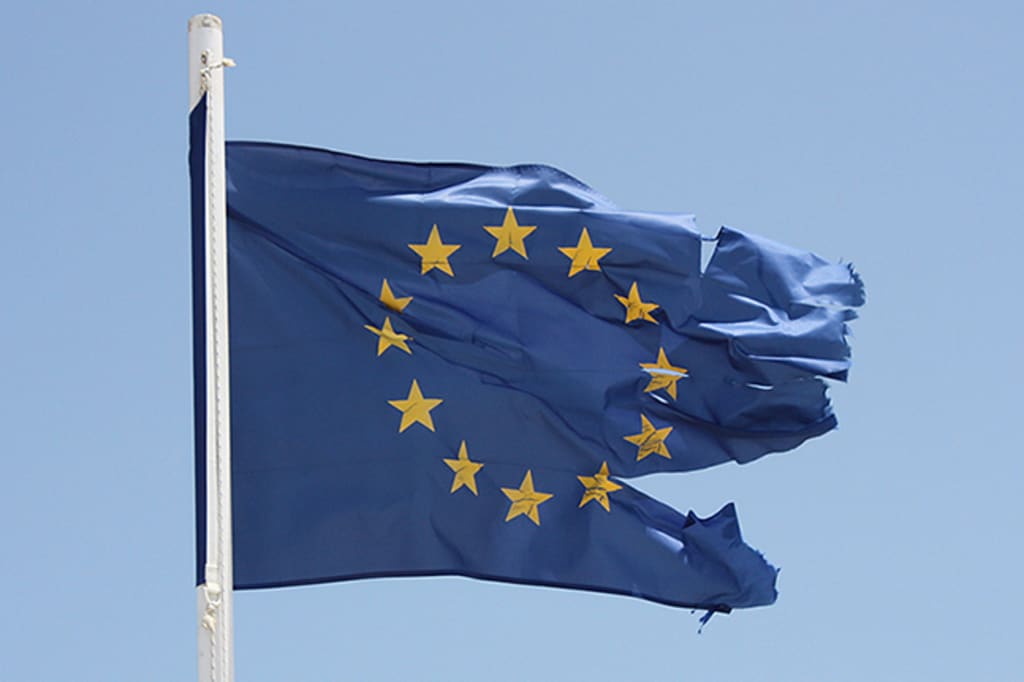
Poland and Hungary: A Democratic Dilemma
One of the most recent and pressing examples of political and democratic crises within EU member states has been the situation in Poland, exacerbated by Hungary’s veto power. The European Union was founded on principles of human rights protection and the separation of powers—not just as ideals but as mandatory criteria for membership. However, Poland’s trajectory has raised concerns about democratic backsliding since the right-wing, Catholic-conservative party PiS secured a parliamentary majority.
Following its victory, Poland witnessed significant political upheaval, including judicial overhauls, the dismissal of over 11,000 public servants for political reasons, and aggressive actions against independent media. In response, the EU initiated Article 7.1 to suspend Poland’s voting rights within the European Council. However, this measure reached an impasse due to the unanimity rule, which allowed Hungary—itself accused of similar democratic erosion under Viktor Orbán—to block any action against Poland.
This situation underscores a fundamental issue within the EU’s decision-making structure: the requirement for unanimous agreement among member states on crucial matters. Unlike the majority rule that defines most democratic institutions, this unanimity rule can paralyze European governance when national interests clash with collective EU values.
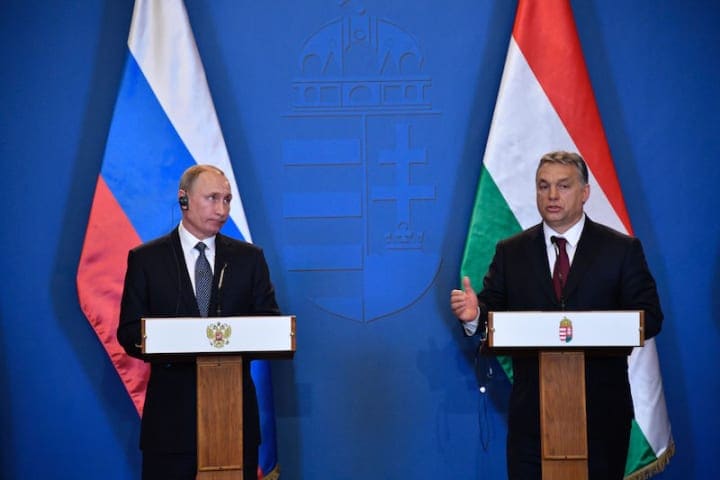
The Nation-State Dilemma: Can a European Demos Exist?
The Polish and Hungarian cases exemplify how national sovereignty often takes precedence over European unity, raising the question of whether the EU can function as a true democratic entity. Democracy traditionally thrives on a common political identity, yet the EU lacks a cohesive “demos”—a unified people who share an identity, political culture, and vision for governance.
Empirical studies reinforce this argument. Research cited by Bellamy (2012) and the European Commission indicates that only 10% of EU citizens strongly identify with the EU, while a mere 3% consider themselves exclusively European. Furthermore, only 7% prioritize their European identity over their national one. These figures suggest that the idea of an integrated European political identity remains largely aspirational rather than a present reality.
Electoral Disengagement: A Symptom of the No-Demos Argument
Low participation in European elections further reflects the EU’s democratic deficit. Turnout has historically hovered below 50%, with some countries reporting participation rates as low as 25%. While the 2019 European elections saw an increase to 50.56%, this still means that nearly half of eligible voters did not participate—a percentage that would be deemed alarming in national elections.
Some EU proponents argue that increased participation could foster European identity. However, the reverse is more likely: a lack of European identification leads to electoral disengagement, not the other way around. Without a strong emotional or cultural connection to the EU, many citizens perceive European elections as secondary to national politics.
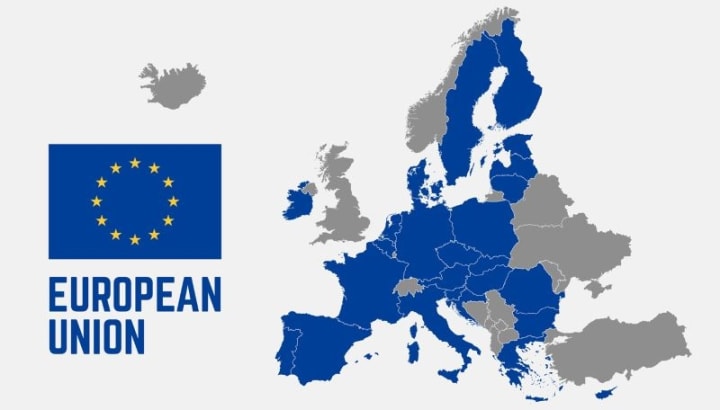
The Role of Language and Geography
Language barriers further hinder European unity. Despite English functioning as the EU’s de facto lingua franca, linguistic diversity complicates cross-border political discourse. Belgium serves as an illustrative example: linguistic and ethnic divisions have resulted in a weak central government and strong regional governments, a microcosm of the challenges facing the EU as a whole.
Geography also plays a role. Countries with EU institutions on their soil, such as Belgium, tend to have higher electoral engagement. In the 2019 European elections, Belgium’s voter turnout was 88.47%, compared to just 44.99% in Cyprus, a country geographically distant from EU power centers. This disparity underscores the influence of proximity on citizens’ engagement with EU politics.
Ideological Divides: A Unifying Factor?
Some scholars, like Hix (2008), argue that ideological divisions within the European Parliament—such as the left-right spectrum—can serve as unifying factors. However, ideological divisions exist in all democratic systems and do not inherently foster a collective European identity. The mere existence of leftist, centrist, and conservative factions within the EU does not resolve the fundamental issue of weak European identification among its citizens.
A Way Forward?
The lack of a shared European identity raises difficult questions about the future of the EU. Can the EU remain a purely intergovernmental organization, or must it strive for deeper integration to develop a truly transnational democracy?
One possible approach is the concept of “Demoi-cracy,” as proposed by Kalypso Nicolaïdis (2012), which envisions a political union based on multiple coexisting democratic identities rather than a single European demos. This model could provide a framework for balancing national sovereignty with European unity, ensuring that democratic values remain intact while respecting the diversity of member states.
Conclusion
The EU’s internal struggles, from Poland and Hungary’s democratic backsliding to low electoral participation and linguistic barriers, highlight the persistent challenges of fostering a truly unified Europe. While ideological divisions exist, they alone cannot bridge the gap between national and European identities. Until the EU addresses its fundamental structural and identity issues, its democratic deficit will remain a significant challenge.
Ultimately, the question remains: Can Europe transcend its nation-state framework to build a political entity that is democratic, cohesive, and resilient? The answer may determine the future of European integration in the years to come.
Written by Sergios Saropoulos
About the Creator
Sergios Saropoulos
As a Philosopher, Writer, Journalist and Educator. I bring a unique perspective to my writing, exploring how philosophical ideas intersect with cultural and social narratives, deepening our understanding of today's world.
Keep reading
More stories from Sergios Saropoulos and writers in The Swamp and other communities.
I Am Not a Dictator, I Just Have a Grumpy Face
The Legacy of Pinochet’s Rule The phrase in the title above is famously attributed to the Chilean dictator Augusto Pinochet, a leader whose reign was marked by brutal repression and sweeping economic reforms inspired by the Chicago School of Economics. Despite the widespread human rights violations under his rule, he was openly praised by figures such as Margaret Thatcher and Milton Friedman. Friedman, while acknowledging his general dislike for authoritarian regimes, described Chile as an economic success story and personally met with Pinochet to advise on economic reforms.
By Sergios Saropoulos3 years ago in The Swamp
Parallel Protests
I haven't written for quite some time, but I have A LOT of thoughts about yesterday's protest rally against our government's involvement and complicity in America's war on Iran, on the harbourside of my home city Bristol, and I need to put them somewhere. My gorgeous girlfriend is always a loving and listening ear and sharing it all with her will always be a healthy and happy way of processing the mental and emotional weight, but getting it straight in my brain to share means writing it all down in straight lines, so, here we are and thanks for being here.
By Steph Cole10 days ago in The Swamp
Seven Countries to Boycott Paralympics Ceremony Over Flag-Flying Russians
Tensions surrounding international sport and geopolitics have once again surfaced after seven countries announced plans to boycott the opening ceremony of the upcoming Paralympic Games in protest against the participation of Russian athletes under their national flag. The decision has intensified an already heated debate over how global sporting bodies should respond to ongoing conflicts and political disputes. Officials from the seven nations — including several European countries that have been strong supporters of Ukraine since Russia’s invasion in 2022 — said they would not attend the opening ceremony if Russian athletes are permitted to compete while displaying national symbols. While the countries did not withdraw entirely from the competition, their symbolic protest aims to pressure international sports authorities to reconsider their stance. The controversy stems from a decision by the International Paralympic Committee (IPC) that allows some Russian athletes to participate under certain conditions. Initially, Russian and Belarusian athletes were banned from many international sporting events following the invasion of Ukraine. However, as global sporting federations reconsidered blanket bans, some organizations began allowing athletes to compete as neutral participants. In this case, critics argue that permitting athletes to appear with national symbols such as the Russian flag undermines the principle of neutrality. They say the move risks politicizing the Paralympics and sending a message that ongoing military actions can be overlooked in the pursuit of sporting inclusivity. Supporters of the boycott say their decision is not directed at individual athletes but at the political symbolism involved. Government representatives from the protesting nations stated that while they respect the dedication and perseverance of Paralympic athletes, allowing Russian competitors to march under their national flag during the ceremony would be inappropriate given the current geopolitical situation. “This is about standing up for the values of international sport,” one official from a participating country said. “Athletes deserve respect, but so do the principles of peace and international law.” Ukraine has been among the most vocal critics of Russia’s participation in global sporting events since the war began. Ukrainian officials have repeatedly argued that Russian athletes should not compete internationally while the conflict continues. The country’s Paralympic committee also expressed disappointment with the IPC’s decision, saying it fails to acknowledge the suffering experienced by Ukrainian athletes and civilians during the war. For the International Paralympic Committee, the issue represents a delicate balancing act. The organization has emphasized that its primary mission is to promote inclusion and ensure that athletes with disabilities can compete at the highest level regardless of political circumstances. IPC officials argue that individual athletes should not be punished for decisions made by their governments. However, the committee also recognizes the sensitivity of the situation. To address concerns, officials introduced restrictions that limit political displays and require participating athletes to comply with rules designed to prevent propaganda or political messaging during the Games. Despite these measures, the boycott announcement demonstrates the deep divisions that continue to affect international sport. The Paralympics, which are traditionally seen as a celebration of resilience, diversity, and human achievement, now find themselves entangled in global political disputes. Sports analysts say the situation reflects a broader trend in which international competitions increasingly become arenas for political expression. From Olympic boycotts during the Cold War to modern disputes over human rights and geopolitical conflicts, sports have often mirrored the tensions of the wider world. Athletes themselves have expressed mixed reactions to the controversy. Some believe that politics should remain separate from sport and worry that boycotts undermine the spirit of international competition. Others argue that sporting organizations cannot ignore global realities, especially when conflicts directly affect athletes and their families. As the Paralympic Games approach, the dispute has created uncertainty about the atmosphere surrounding the opening ceremony. While competitions will proceed as scheduled, the absence of several delegations from the ceremonial event is likely to draw global attention. Ultimately, the controversy highlights the difficult choices facing international sporting organizations. Balancing inclusivity, fairness, and political realities is never simple, particularly during times of global conflict. Whether the boycott leads to policy changes remains unclear, but it underscores how closely the world of sport is tied to the broader geopolitical environment.
By Fiaz Ahmed 7 days ago in The Swamp
Hottest in the Office
Dear Rafi, You’re very distracting to work around. For the first second I saw you the other day, I thought you were some type of executive. It took a moment to realize no, you were just the new guy, dressed up for the job he wants. Be still, my heart.
By Gabriel Shames2 days ago in Pride


Comments
There are no comments for this story
Be the first to respond and start the conversation.