
The Nimitz-Class Aircraft Carrier: The Powerhouse of the U.S. Navy
Inside the Legacy, Technology, and Global Impact of America’s Floating Fortress

Introduction
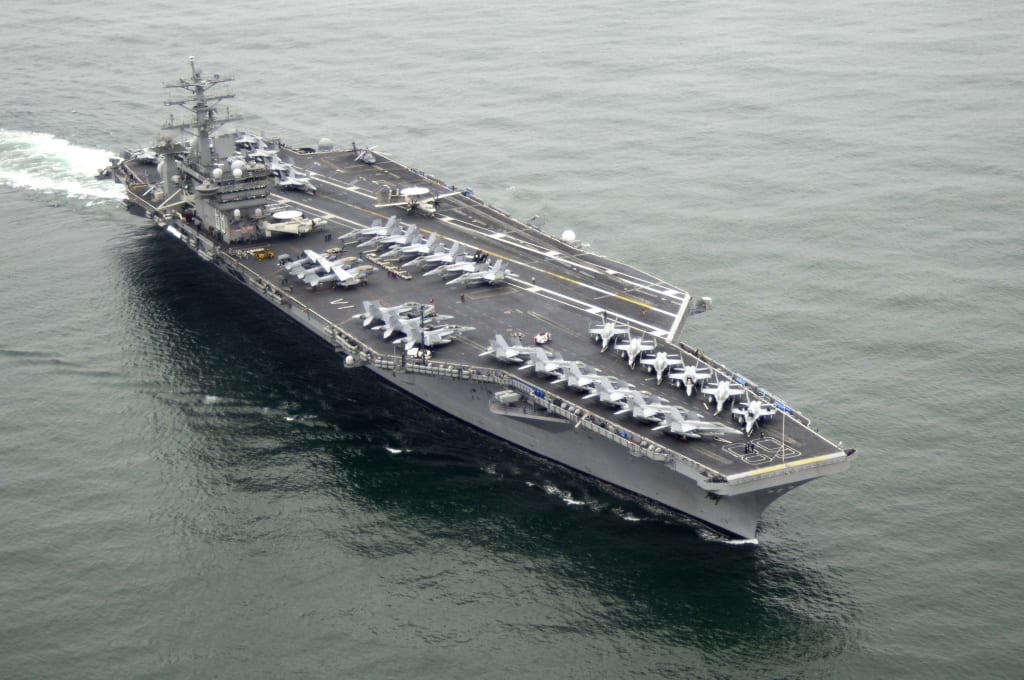
When it comes to naval dominance, few symbols are as powerful and awe-inspiring as the Nimitz-class aircraft carrier. Named after Fleet Admiral Chester W. Nimitz, a hero of World War II, this massive warship stands as a floating city — capable of projecting American military power anywhere in the world.
These carriers are not just war machines; they’re mobile airbases, humanitarian platforms, and global ambassadors of peace and deterrence. With more than four decades of service, the Nimitz-class remains a cornerstone of the United States Navy’s maritime strategy, combining speed, endurance, and technological excellence.
A Brief History of the Nimitz-Class
The USS Nimitz (CVN-68) was commissioned in 1975, marking the beginning of a new era in naval engineering. Built by Newport News Shipbuilding, the Nimitz was designed to replace earlier carrier classes that had limited nuclear capabilities.
Over the years, ten Nimitz-class carriers were constructed, each improving upon the last:
USS Nimitz (CVN-68)
USS Dwight D. Eisenhower (CVN-69)
USS Carl Vinson (CVN-70)
USS Theodore Roosevelt (CVN-71)
USS Abraham Lincoln (CVN-72)
USS George Washington (CVN-73)
USS John C. Stennis (CVN-74)
USS Harry S. Truman (CVN-75)
USS Ronald Reagan (CVN-76)
USS George H.W. Bush (CVN-77)
Together, these ships have served in nearly every major U.S. military operation since the late 20th century — from the Gulf War to Operation Enduring Freedom — providing unmatched global reach and flexibility.
Design and Specifications
A Nimitz-class aircraft carrier is a technological marvel. Measuring 1,092 feet (333 meters) in length and displacing over 100,000 tons, it’s one of the largest warships ever built. It carries a crew of nearly 5,000 personnel, including sailors, pilots, and support staff — essentially functioning as a floating city at sea.
The most defining feature is its nuclear propulsion system. Powered by two A4W nuclear reactors, each carrier can operate for more than 20 years without refueling, giving it extraordinary endurance and operational range. The ship can cruise at speeds exceeding 30 knots (around 35 mph) despite its enormous size.
Air Wing and Combat Capabilities
The Nimitz-class is built to serve as the centerpiece of a Carrier Strike Group (CSG) — a formidable formation that includes destroyers, cruisers, submarines, and supply ships.
Each carrier hosts a Carrier Air Wing (CVW) of about 60–70 aircraft, including:
F/A-18 Super Hornets – Multirole fighter jets for air combat and ground attack.
E-2 Hawkeye – Early warning and surveillance aircraft.
EA-18G Growler – Electronic warfare aircraft for jamming enemy radar and communications.
MH-60 Seahawk helicopters – For search and rescue, anti-submarine warfare, and transport.
This air fleet enables the Nimitz-class to strike targets hundreds of miles away, control airspace, and support ground operations anywhere in the world.
Life Aboard the Carrier
Life on a Nimitz-class carrier is unlike anywhere else. With up to 5,000 personnel living onboard for months at a time, the ship functions as a self-contained city. It has everything — cafeterias, gyms, medical facilities, stores, and even a chapel.
Daily operations are tightly coordinated, from flight deck launches to maintenance and navigation. The flight deck, often described as one of the most dangerous workplaces in the world, is a hub of constant activity — with aircraft taking off and landing every few minutes. Precision, teamwork, and communication are critical to ensure safety and efficiency.
Humanitarian and Diplomatic Missions
While Nimitz-class carriers are primarily designed for combat, they also play vital roles in humanitarian aid and disaster relief. After natural disasters like tsunamis and earthquakes, these carriers serve as mobile relief bases — providing food, medical assistance, and clean water.
Additionally, carrier visits to foreign ports often serve diplomatic purposes, strengthening alliances and demonstrating the United States’ commitment to maintaining global peace and stability.
Technological Evolution and Future Replacement
As impressive as the Nimitz-class is, the U.S. Navy is now transitioning to its successor — the Gerald R. Ford-class aircraft carriers. These new carriers incorporate electromagnetic launch systems, reduced crew requirements, and advanced radar technology.
However, the Nimitz-class will continue to serve for decades, thanks to mid-life refueling and complex overhauls (RCOH) that modernize their systems. The oldest carrier, USS Nimitz, is expected to retire around 2026 after more than 50 years of service — a testament to its durability and engineering brilliance.
Strategic Importance
Nimitz-class carriers represent American power projection. They can operate in any ocean, deliver rapid air strikes, and deter adversaries — often serving as the first line of response during crises. Their presence alone can influence global diplomacy and security.
With each carrier capable of launching hundreds of sorties daily, they remain unmatched in their ability to control the skies and seas, making them the backbone of modern naval warfare.
Conclusion
The Nimitz-class aircraft carrier stands as one of humanity’s greatest engineering feats — a perfect blend of power, technology, and purpose. For nearly half a century, these vessels have symbolized freedom, deterrence, and the strength of the U.S. Navy.
As the world moves into a new era of defense innovation, the Nimitz-class continues to remind us that true power lies not just in weapons, but in the ability to respond, protect, and lead — anywhere on Earth, at any time.
About the Creator
Asad Ali
I'm Asad Ali, a passionate blogger with 3 years of experience creating engaging and informative content across various niches. I specialize in crafting SEO-friendly articles that drive traffic and deliver value to readers.
Markets Fall and Gold and Silver Hit New Highs After Trump’s Latest Tariff Threat
Global markets were rocked after U.S. President Donald Trump’s latest tariff threats against European nations tied to Greenland. Stocks tumbled, while investors rushed into safe-haven assets like gold and silver, pushing their prices to record highs. The developments highlight the delicate balance between geopolitics and financial markets, showing how political decisions can quickly ripple through the global economy.
By Aarif Lashariabout 8 hours ago in The Swamp




Comments
There are no comments for this story
Be the first to respond and start the conversation.