
The Melungeons a tri-racial people of early Virginia
Ignored in the history books and shrouded in secrecy, these individuals deserve recognition.
American school children are taught that Europeans discoverd America and that Africans were brought over on slave ships. In recent years evidence continues to surface that suggests that there were some black people living in the United States prior to slavery. When it comes to race, in early America the mother was the deciding factor regarding which ethnicity her children associated with. According to the principle of partus sequitur ventrem, which was incorporated into Virginia law in 1662, children born in the colonies were assigned the race and social status of their mother. The father's ethnicity or citizenship did not matter.
This meant the children of enslaved African or African-American women were born into slavery even if their fathers were white. This may be why planatation owners did not acknowledge the children they sired with their female slaves. Being the son or daughter of the master made no difference. This law also meant the children of free white or mulatto women, were born free even if the father was a slave. The free descendants of these types of unions formed the majority of ancestors of free families of color that were listed in the 1790 and 1810 US censuses.
In the book, Jubilee, the author Margaret Walker chronicles the life of her maternal grandmother Elvira Dutton who was a slave in Georgia. At one point the master, James Dutton who is Vyry's biological father has a conversation with his wife. Vyry has asked to be set free so she can marry a free Negro who is the father of her children. The Dutton's acknowledge that as a mulatto whose "husband" is a free man who was never a slave, Vyry is already free. Even so, they do not allow her to leave the plantation.
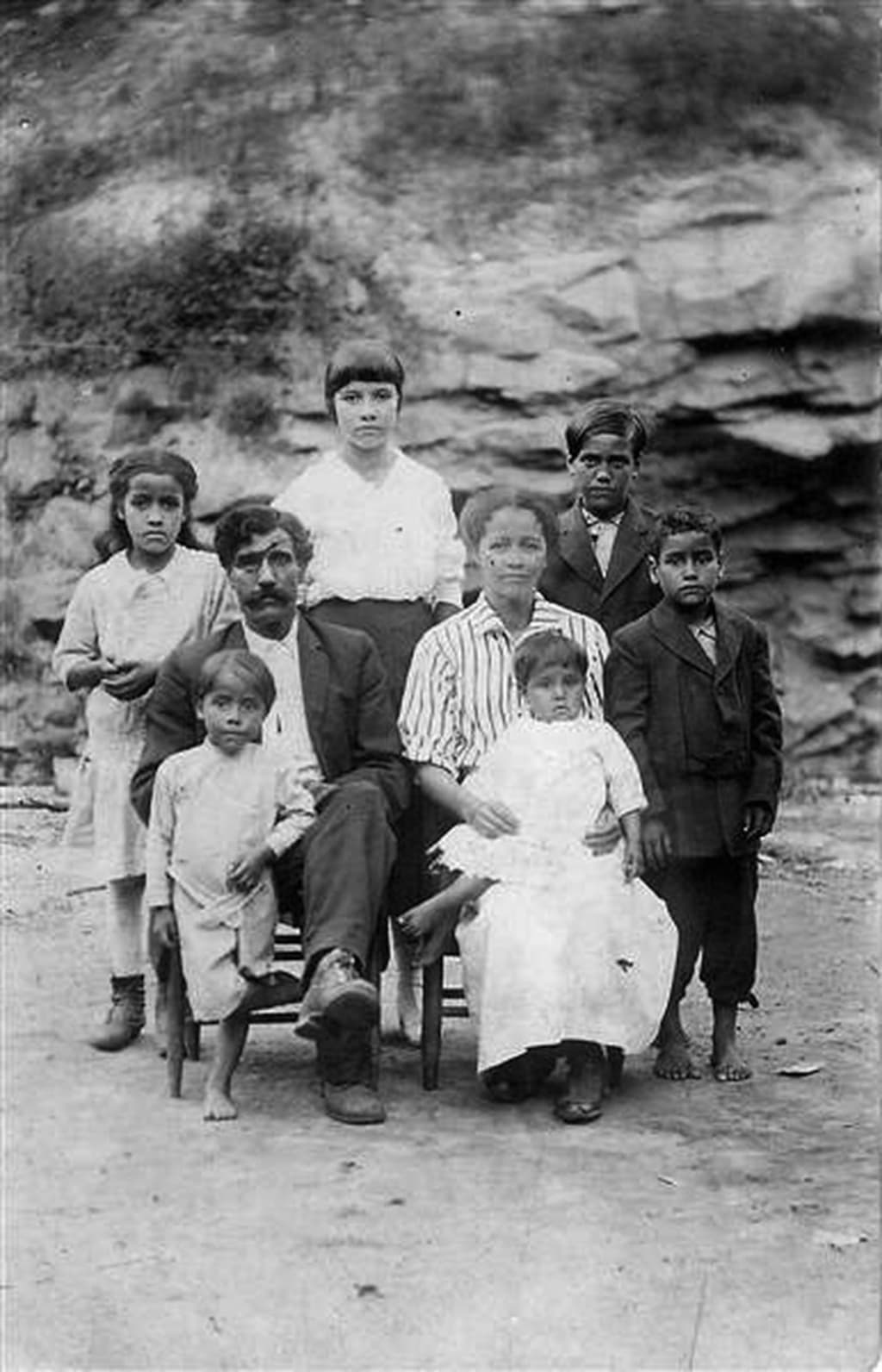
Although the information about the Melungeon's was not incorporated in the history books it indicates that early colonial Virginia was a "melting pot" prior to slavery. At that time, black and white working-class people often lived and worked in close proximity and formed relationships and also intermarried. Native Americans also married whites and blacks and the descendants became known as the Melungeons. These individuals were said to live in Southwest Virginia, North Carolina, Tennessee, and West Virginia. Speculation regarding the ancestry of these mountain people has brought forth many theories.
It's been said that the Melungeons are the descendants of the Lost Colony of Roanoke who fled into the hills, of the Appalachian Mountains. Another theory is that they are descendants of Portuguese sailors who survived a shipwreck. These men were said to have married escaped slaves as well Native America women. There are also claims that Melungeon ancestry goes back to the Powhatan Indians and the Black Dutch. Mixed-race European-Native American and sometimes full blood Native American families who resided in the South adopted the term "Black Dutch" for their own use. At times they used the phrase "Black Irish." This first took place in Virginia, Tennessee, and North Carolina.
Research done during the late 20th century indicates that these tri-racial Americans had ancestors who were Turkish and also Iberian Sephardi Jews who relocated to North America during the Inquisition period. In 2012, genealogist Roberta Estes and her fellow researchers revealed that the Melungeon lines more than likely originated from the unions of black and white indentured servants who were living in Virginia during the mid-1600s. This would have been long before slavery became popular in the Commonwealth. Estes and her group concluded that when laws were implemented to prevent race mixing, the tr-racial families intermarried with each other, thereby creating an endogamous group of people.
Virginia history books emphasize the Pilgrims and those who settled in Jamestown, but it's looking as if they were not the only revolutionary pioneers to settle early America. As explorers made their way inland from the coastal settlements of Virginia, and colonies were formed there were communities discovered with people already living in the wilderness of Appalachia. This would have been where modern day Tennesse, Virginia, and North Carolina meet. The people living in these areas were marked by distinct physical characteristics and referred to themselves the Melungeons. They were neither Native American, nor black, nor white.
They appeared to be a combination of all three races and spoke in a very distinct manner. They utilized broken English, Elizabethan English, and also a mixture of Indian dialects. Most had dark skin and hair, but others had red hair and beards, along with blue or green eyes. The history of these early Americans was never revealed and their ancestral roots have been shrouded in mystery because the racial segregation of the early south kept them secluded and hidden far away from recorded history.
About the Creator
Cheryl E Preston
Cheryl is currently pursuing a Bachelor of Science in Psychology. She enjoys writing about current events, history and baby boomer nostalgia. Tips are greatly appreciated.
Keep reading
More stories from Cheryl E Preston and writers in The Swamp and other communities.
Prince Edward the unsung Royal without scandal
Prince Charles and Princess Diana had a troubled marriage that ended in divorce and later her untimely death. Prince Andrew made headlines with soft porn star Koo Stark and now is involved with the Jeffrey Epstein debacle. Prince William is in the spotlight as the man who would be king and Prince Harry is causing a stir because of his wife and their move to America. One Royal, however, is showing himself to be doing things in a different manner and all the while keeping a low profile. Prince Edward the Earl of Wessex and his wife Sofie Rhys Jones met in 1994 and the couple married on June 19, 1999.
By Cheryl E Preston6 years ago in The Swamp
The Forsyth House Fire
Since 1851, Forsyth House has stood on the corner of Union Street and Gordon Street in the heart of Glasgow. Its iconic, or was... because on Sunday 8th of March, 2026, a fire broke out in a small, seemingly un-named shop in the building and tore all that history down. As I write, the rubble is still unsettled and the street is still blocked off. Central Station is quiet on the upper level, and around 30 small businesses have quite literally gone up in smoke.
By S. A. Crawford3 days ago in The Swamp
How the Special Election to Replace Marjorie Taylor Greene Is Testing the Power of Trump’s Endorsement
The upcoming special election to replace U.S. Representative Marjorie Taylor Greene is shaping up as a high-stakes contest that could reveal the true weight of former President Donald Trump’s endorsement in Republican politics. Greene, a polarizing figure known for her outspoken support of Trump and far-right positions, resigned her seat under circumstances that have intensified scrutiny on her district and the candidates vying to succeed her. As contenders align themselves either with or against Trump’s influence, political observers are closely watching how much his backing will actually sway voters in a shifting electoral landscape.
By Jameel Jamali6 days ago in The Swamp


Comments
There are no comments for this story
Be the first to respond and start the conversation.