
The Israel-Iran Conflict: Global Powers, Regional Risks, and Rising Tensions
How U.S. and China Influence the War—and What It Means for the Middle East and Europe

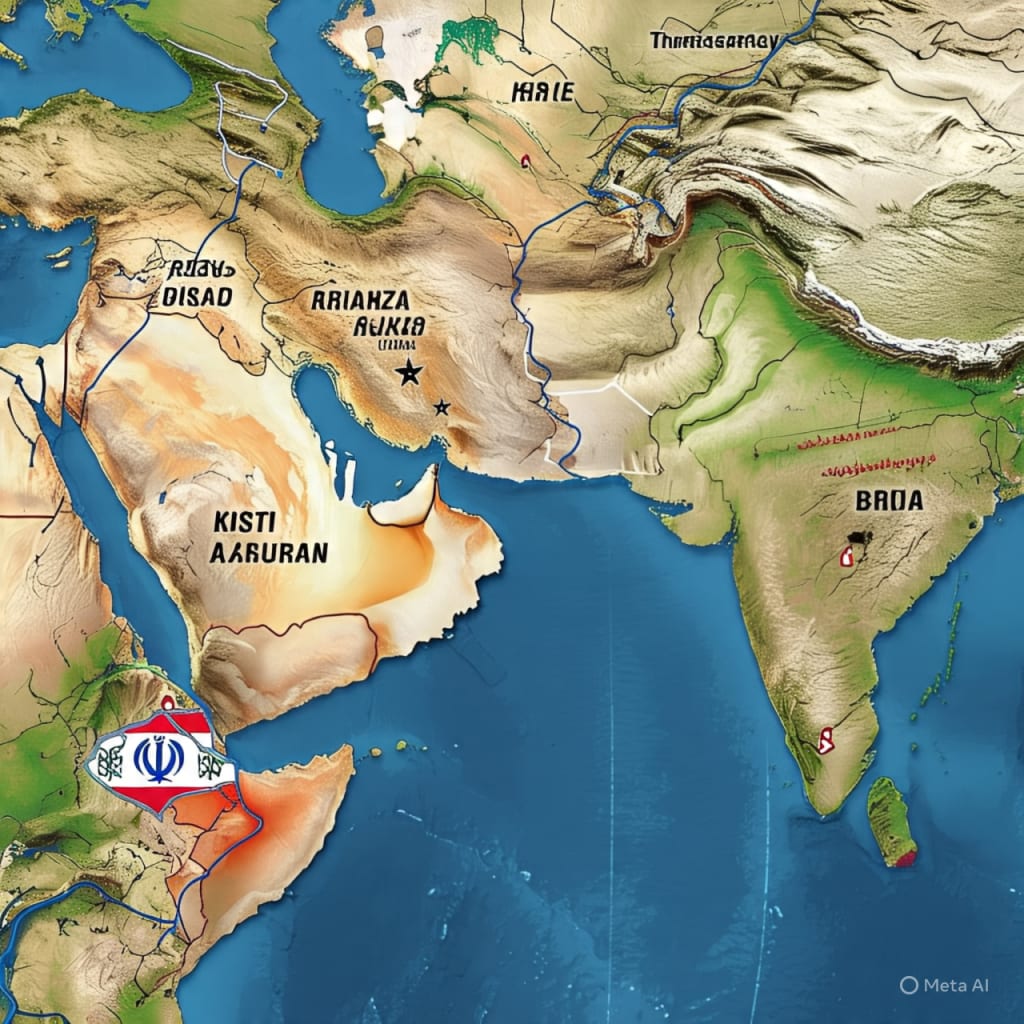
The Israel-Iran Conflict: Global Powers, Regional Risks, and Rising Tensions
The conflict between Israel and Iran has moved beyond words and threats. In recent months, tensions have turned into direct military action. This war, rooted in years of political, religious, and territorial disputes, has pulled in global powers like the United States and China, raising concerns of a much larger crisis.
This article explores the causes of the war, the roles played by the U.S. and China, and the wider impact it could have on the Middle East and Europe.
How the War Started
Tensions between Iran and Israel have existed for decades. Israel sees Iran’s support for militant groups like Hezbollah and Hamas as a major threat to its security. Iran, on the other hand, views Israel as an enemy occupying Palestinian lands and trying to dominate the region.
Things escalated in 2024 and early 2025 when Israel launched airstrikes on Iranian military sites in Syria, and Iran responded with missile attacks. What began as indirect conflict quickly turned into a direct war when Iranian drones entered Israeli airspace and hit military targets.
The U.S. Role in the Conflict
The United States is one of Israel’s strongest allies. Since the beginning of the conflict, the U.S. has provided military aid, intelligence support, and diplomatic backing. American warships have moved closer to the region, and U.S. fighter jets have been seen in joint exercises with Israeli forces.
President Joe Biden has called on Iran to stop its attacks and warned of "serious consequences" if the war expands. The U.S. has also increased sanctions on Iran, targeting its defense and oil industries.
However, Washington has not entered the war directly, possibly to avoid sparking a larger international crisis. Still, U.S. involvement keeps the situation tense and unpredictable.
China’s Response: Strategic and Silent
Unlike the U.S., China has taken a more cautious approach. China has deep economic ties with Iran, especially in the oil and gas sector. It also wants to keep good relations with Israel, with whom it shares trade interests and tech cooperation.
Beijing has called for peace talks and a ceasefire, positioning itself as a neutral mediator. At the same time, Chinese naval ships have been spotted near the Gulf, a sign that China is watching the situation closely.
China’s main concern is energy security. A war in the Middle East could disrupt oil routes, raise global prices, and harm its economy.
Impact on the Middle East
The war has already affected the Middle East in serious ways:
Oil prices have surged due to the threat of supply chain disruption in the Persian Gulf.
Countries like Lebanon, Syria, and Iraq face new waves of instability as fighting spreads near their borders.
Millions of civilians in Israel and Iran are under the constant threat of airstrikes, drone attacks, and power cuts.
Refugee flows are increasing as families flee the war zones in fear of a broader regional collapse.
Regional powers like Saudi Arabia, Turkey, and Egypt are trying to balance their alliances while preparing for possible fallout.
Europe’s Growing Concern
Europe may be far away, but it cannot escape the effects of this conflict:
Gas supplies from the region are under threat, especially as many European countries already struggle after the Russia-Ukraine war.
Refugees from the Middle East are heading toward Europe, creating pressure on borders, housing, and humanitarian services.
Rising military tensions could lead to new NATO debates on whether European countries should support Israel or remain neutral.
Cyberattacks linked to the conflict have hit European infrastructure, raising alarms about digital warfare.
European leaders are calling for peace negotiations, fearing a chain reaction that could spill over into global warfare.
A War Bigger Than Two Countries
The Israel-Iran war is more than just a battle between two nations. It is a global test of power, diplomacy, and stability. The U.S. and China play huge roles in how this crisis will end—or how far it could go.
As the world watches, one thing is clear: The impact of this war goes far beyond missiles and borders. It is changing the future of global politics, economies, and security for millions of people.
Final Thoughts
The war between Israel and Iran is a dangerous reminder of how quickly regional tensions can become global threats. With major powers like the U.S. and China involved, the decisions made in the coming weeks will shape the future of not just the Middle East, but the world.
Whether through diplomacy or force, the world must act wisely—because the cost of failure will be too high for everyone.
About the Creator
Saad
I’m Saad. I’m a passionate writer who loves exploring trending news topics, sharing insights, and keeping readers updated on what’s happening around the world.
German Troops Deploy to Greenland: What This Means for Arctic Security
Germany is preparing to send military personnel to Greenland, a move that has captured attention across Europe and the Arctic region. While Greenland is an autonomous territory of Denmark, its strategic location in the Arctic has made it a focus of international interest. With climate change opening new shipping routes and nations eyeing untapped natural resources, the Arctic has transformed from a remote, frozen frontier into a geopolitical hotspot. Germany’s deployment signals a significant step in NATO’s Arctic strategy and raises questions about the purpose and implications of military activity in this once-quiet region. Why Greenland Matters Greenland is the world’s largest island, strategically positioned between North America and Europe. Its location makes it vital for transatlantic security, satellite monitoring, and potential shipping lanes that are increasingly accessible due to melting Arctic ice. The region is rich in natural resources, including rare earth minerals, oil, and gas. As global demand for these resources grows, nations are investing in Arctic presence to protect economic and strategic interests. Greenland’s vast ice sheets also make it an important area for scientific research and environmental monitoring. Germany’s Arctic Strategy Germany’s deployment of military personnel to Greenland is part of a broader NATO-led strategy to strengthen Arctic defense capabilities. While Germany does not have territorial claims in the region, its participation reflects concern over growing Russian and Chinese influence in the Arctic. Russia has long maintained a military presence along the Arctic coast, while China has invested in Arctic infrastructure and shipping routes under its “Polar Silk Road” initiative. By stationing troops in Greenland, Germany aims to: Enhance NATO Cooperation: Strengthening ties with Denmark and other NATO members ensures a coordinated defense posture in the Arctic. Joint training exercises and shared resources improve readiness for potential emergencies. Monitor Strategic Areas: Greenland is home to vital radar installations and early warning systems that are crucial for monitoring missile activity and airspace in the North Atlantic. German personnel can contribute to these operations, improving surveillance and intelligence sharing. Support Environmental and Scientific Missions: Military personnel often assist with logistical support for scientific research, providing expertise in remote operations, transportation, and communications in harsh Arctic conditions. Geopolitical Implications Germany’s move comes at a time of increasing tension and competition in the Arctic. With ice sheets melting faster than expected, new shipping routes like the Northwest Passage and the Northern Sea Route are becoming navigable for longer periods each year. This opens opportunities for international trade but also raises security concerns, including territorial disputes and the protection of critical infrastructure. The presence of German troops underscores the importance NATO places on collective security in the Arctic. It also signals to other global powers, particularly Russia and China, that European nations are committed to maintaining influence and stability in the region. Cooperation or Competition? While the deployment emphasizes defense, it also highlights opportunities for international cooperation. Arctic nations, including the U.S., Canada, Norway, and Denmark, have traditionally collaborated on scientific research, environmental protection, and maritime safety. Germany’s arrival could support these efforts, demonstrating that military presence does not necessarily mean conflict but can enhance shared operational capabilities. However, the deployment may also intensify geopolitical competition, especially if more countries begin stationing forces or conducting exercises in the Arctic. Observers note that maintaining a balance between security and cooperation will be key to avoiding tensions in a sensitive environment. Challenges of Arctic Deployment Stationing military personnel in Greenland is not without difficulties. The Arctic presents extreme weather conditions, logistical challenges, and limited infrastructure. German troops will need specialized training in cold-weather operations, survival skills, and mobility across ice and snow-covered terrain. Maintaining supply lines is another significant challenge. Remote bases in Greenland require careful planning for food, fuel, and equipment transport. Communication can also be difficult due to limited satellite coverage and harsh environmental conditions. Despite these challenges, Germany’s military has invested in Arctic training programs and has experience participating in NATO exercises in cold climates, ensuring that personnel are prepared for the operational demands of Greenland. Environmental Considerations Military activity in Greenland must also consider environmental impacts. The Arctic ecosystem is fragile, and increased human presence could affect wildlife, ice integrity, and local communities. German and NATO forces are expected to follow strict environmental guidelines to minimize their footprint and ensure that operations align with sustainability goals. What This Means for Local Communities Greenland’s local population, primarily Inuit, has expressed mixed reactions to increased foreign military presence. While some see it as a source of economic opportunities and infrastructure development, others are concerned about sovereignty, cultural impacts, and environmental risks. Danish authorities, in collaboration with Greenland’s government, aim to ensure that foreign deployments respect local laws and traditions while providing security and economic benefits. Conclusion Germany’s planned deployment of military personnel to Greenland reflects the growing importance of the Arctic in global geopolitics, environmental monitoring, and strategic security. While challenges in extreme conditions and environmental concerns must be addressed, the move underscores NATO’s commitment to collective defense and international cooperation in a rapidly changing region. As the Arctic continues to warm and new shipping routes emerge, nations will increasingly need to balance security, science, and sustainability. Germany’s presence in Greenland represents not just a military strategy but a signal that the Arctic is becoming a central arena for international collaboration and competition. The arrival of German troops in Greenland is more than a deployment—it’s a statement about the future of the Arctic, global security priorities, and the growing interconnection between climate, technology, and defense. How nations navigate this sensitive frontier will shape geopolitical and environmental outcomes for decades to come.
By Muhammad Hassan3 days ago in The Swamp


Comments (1)
The Israel-Iran conflict is complex. Tensions have flared up recently. The U.S. is deeply involved, while China's cautious stance makes sense given its economic ties.