
The Hair Dance in Qatar: What Does It Mean?
When a Qatari Politician’s Bizarre Dance for Trump Goes Viral—Is It a Cultural Tradition, Political Symbolism, or Something More? Let’s Unpack the Meanings, Reactions, and Islamic Perspectives Behind the Controversy.

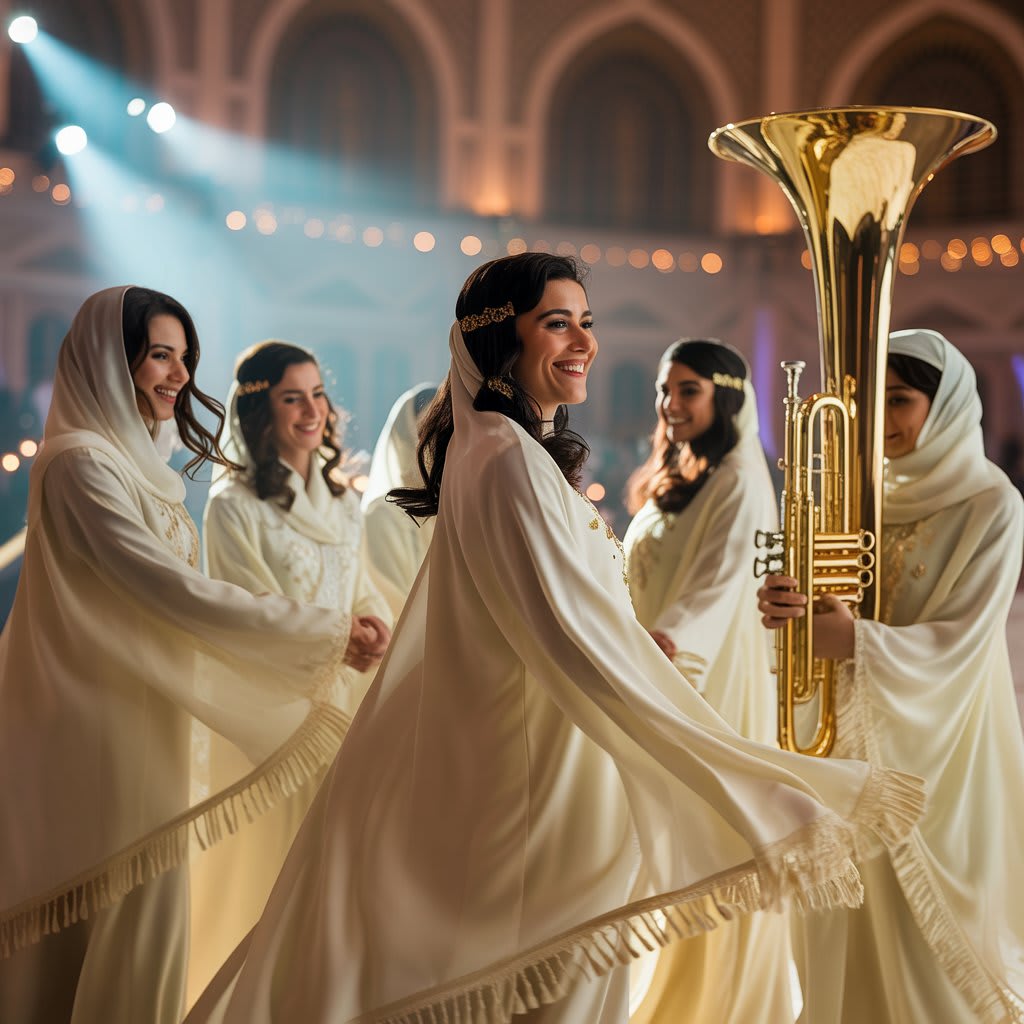
In a world of social media virality, political symbolism, and cultural ambiguity, one short video clip can stir up global curiosity, criticism, or even laughter. This is exactly what happened when a video from Qatar went viral online—showing a high-profile Qatari politician performing what many have labeled a “hair dance” in honor of Donald Trump. As the camera zooms in on his animated head movements and hair shaking, viewers are left baffled. What is this act? A gesture of hospitality? A satire? Or something else altogether?
This seemingly spontaneous yet theatrical performance has opened up a floodgate of questions: Is this a traditional Qatari custom? Was it done for humor, for flattery, or perhaps as a gesture of deep appreciation? What could such a peculiar act mean on the international political stage, and how does it align—or conflict—with Islamic cultural values?
Let’s break it down and look at this moment through several lenses: cultural, political, and religious.
What Exactly Happened?
In the video, a Qatari politician—clad in traditional thobe and headgear—is seen performing an exaggerated dance, shaking his head vigorously in a rhythmic style that causes his headscarf to flutter. Reportedly, this was done to “honor” or “entertain” former U.S. President Donald Trump during a diplomatic meeting or reception. The footage spread rapidly online, drawing a mix of amusement, confusion, and criticism from viewers around the world.
Some saw it as comic relief. Others viewed it as an embarrassing overreach of hospitality. Many questioned the dignity and message behind the action, especially given the formal, reserved norms that usually define Gulf Arab diplomacy.
Is This a Custom?
To begin with, let’s address the most commonly asked question: Is this a traditional Qatari or Arab dance?
The short answer is: no, not in the way it was portrayed. While dance and expressive gestures are indeed part of many Gulf and Bedouin traditions—such as the “ardha”, a war dance performed with swords and rhythmic chanting—what was seen in the video doesn’t align with any known Qatari or Gulf Arab ceremonial tradition.
Rather, it seemed improvised, almost theatrical, possibly done in a spirit of exaggerated hospitality or as a form of entertainment. Some experts in Middle Eastern culture argue that the dance may have been a humorous or symbolic expression, a non-verbal way of saying, “Look how much we honor you”. But it is not representative of Arab etiquette or protocol.
This leads us to consider: was the action driven more by politics than by tradition?
Political Symbolism or Personal Praise?
In diplomacy, body language and public gestures often carry deeper meaning. A bow, a hand over the heart, or a specific welcome can be politically charged. The so-called “hair dance” could be interpreted as a personal tribute to Donald Trump, perhaps acknowledging his support of Gulf interests during his presidency, including arms deals and siding with Qatar in certain regional disputes.
However, such an exaggerated and dramatic gesture also risks misinterpretation. Was it sincere? Was it sarcastic? Was it aimed at entertaining Trump or winning political favor? These interpretations depend on one’s viewpoint.
What is clear is that it sparked global conversation. Some commentators described it as humiliating, suggesting that the act reduced the dignity of a political leader in favor of flattering a foreign president. Others said it shows just how far leaders in the region sometimes go to maintain strategic alliances with Western powers.
Islamic Perspective on Such Acts
When discussing this event through an Islamic lens, the reactions take a more serious turn. Islam places a strong emphasis on dignity, modesty, and balance in personal and public conduct—especially for leaders and individuals in positions of power.
According to various scholars, public dances or exaggerated gestures—particularly in the presence of non-mahram individuals or in a mixed-gender setting—are generally discouraged or even forbidden in Islam, depending on the context and intention behind them.
Moreover, in Islam, flattery that borders on insincerity or self-humiliation is frowned upon. The Prophet Muhammad (peace be upon him) warned against excessive praise, stating:
“When you see those who shower others with excessive praise, throw dust in their faces.”[Sahih Muslim]
Islam teaches that leaders should carry themselves with izzah (dignity), showing respect for themselves and their nation. Any act that compromises this, especially for the sake of worldly gain or favor from a foreign power, is problematic from an Islamic standpoint.
So, if the “hair dance” was done to impress or win favor, it may be seen as violating the Islamic principles of humility and self-respect.
Global Reactions: Laughter, Shame, and Reflection
Online, reactions have been diverse and emotionally charged. Many laughed, sharing memes and joking about the “new Qatari TikTok trend.” Others felt secondhand embarrassment, especially Muslims and Arabs who feared the act misrepresents their culture and religion.
Still, a smaller group defended the politician, saying his dance might have been a misunderstood cultural gesture or simply an attempt to break the ice with a controversial but powerful guest.
Either way, it raises serious questions about the balance between diplomacy and dignity, custom and creativity, and honor and humiliation.
What Does It Really Mean?
At the end of the day, the “hair dance” in Qatar is more than just a viral video. It’s a moment that encapsulates deeper issues:
How should Muslim leaders conduct themselves on the global stage?
Where is the line between hospitality and self-compromise?
How do cultural expressions align—or clash—with Islamic principles?
Whether the dance was intentional praise, satire, or an unfortunate misunderstanding, it certainly got people talking. And perhaps that, in itself, is part of its purpose—to force us to reflect on how image, culture, and faith intersect in today’s hyper-connected, highly political world.
What do you think it meant?
About the Creator
Keramatullah Wardak
I write practical, science-backed content on health, productivity, and self-improvement. Passionate about helping you eat smarter, think clearer, and live better—one article at a time.
Keep reading
More stories from Keramatullah Wardak and writers in The Swamp and other communities.
How Pakistan and India Ceased Fire by U.S.?
In one of the most historic moments of South Asian diplomacy, the decades-long tension between India and Pakistan found a sudden pause with a surprising but decisive intervention by the United States. On May 10, 2025, an immediate ceasefire was declared between the two nuclear-armed nations after a night of high-level negotiations. This article explores how the United States orchestrated peace talks between these long-standing rivals and the implications for the region and the world.
By Keramatullah Wardak10 months ago in The Swamp
Parallel Protests
I haven't written for quite some time, but I have A LOT of thoughts about yesterday's protest rally against our government's involvement and complicity in America's war on Iran, on the harbourside of my home city Bristol, and I need to put them somewhere. My gorgeous girlfriend is always a loving and listening ear and sharing it all with her will always be a healthy and happy way of processing the mental and emotional weight, but getting it straight in my brain to share means writing it all down in straight lines, so, here we are and thanks for being here.
By Steph Cole6 days ago in The Swamp
Middle East crisis live: Israel launches new attacks on ‘heart of Tehran’; US fighter planes mistakenly shot down in Kuwait
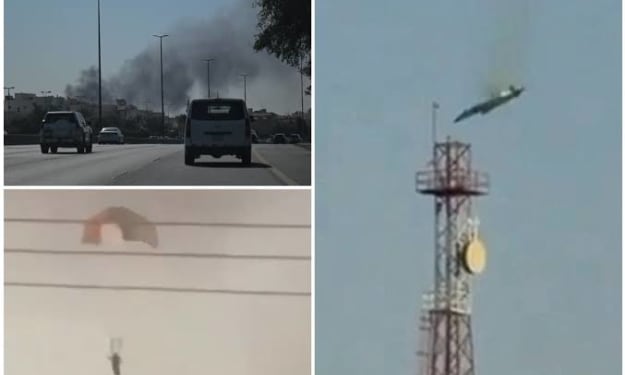
The Middle East is engulfed in a rapidly escalating conflict as joint Israel and United States military operations against Iran have expanded across the region, drawing in Gulf states and triggering chaotic engagements that include a rare friendly‑fire incident involving U.S. jets in Kuwait. The conflict, which began with large‑scale combined strikes on Iran’s military infrastructure and government targets, has entered a third day of intense violence. The Israeli Defense Forces (IDF) and U.S. forces have reportedly launched fresh attacks deep into Tehran, with explosions reported in multiple districts of the Iranian capital and Iran vowing to retaliate “regardless of the cost.” Israeli‑U.S. Strikes Deep in Tehran Israeli military sources said their air force carried out “broad wave” airstrikes targeting key strategic positions in the “heart of Tehran,” intensifying a campaign that began with a coordinated offensive involving hundreds of aircraft and missile launches. The joint operation aims at degrading Iran’s air defenses and military command structures after initial strikes reportedly killed high‑ranking officials. The strikes have been followed by repeated explosions across Tehran, underscoring the scale of the operation. While independent verification remains limited due to restricted access, multiple reports indicate that central districts of the capital have been rocked by heavy bombardment. Iran’s Regional Retaliation In response to the offensive, Iran has unleashed successive waves of missile and drone attacks aimed at Israeli territory, U.S. bases, and allied Gulf states. Explosions have been reported not only in Israel but also in other countries hosting American military assets, including Bahrain, Qatar, the United Arab Emirates, and Kuwait itself. The Iranian Islamic Revolutionary Guard Corps (IRGC) has described its actions as a legitimate defense against what it calls an aggressive campaign, asserting that all U.S. and Israeli targets across the region are legitimate military objectives and vowing to continue operations until its stated goals are met. Friendly‑Fire Incident in Kuwait Amid the swirl of attacks, a grave and unusual incident occurred in Kuwait when its air defense forces mistakenly shot down three U.S. fighter jets. According to United States Central Command, the aircraft—identified as F‑15E Strike Eagles—were downed when Kuwaiti defenses misidentified them as hostile while they were supporting coalition operations. All six aircrew ejected safely and were recovered in stable condition. Kuwaiti authorities have acknowledged the friendly‑fire mistake and are cooperating with U.S. military investigators to review procedures and prevent future errors. The incident, though non‑fatal, illustrates the confusion and heightened alertness sweeping across allied forces as the regional crisis unfolds. Regional Impacts and Civilian Consequences The conflict’s spillover has affected civilian populations and infrastructure beyond battlefields. Major cities across the Gulf region have reported explosions and air defense activations as Iranian missiles and drones targeted facilities and bases. Flights in and out of key hubs such as Dubai and Doha have been suspended due to airspace closures and safety concerns. Global markets have reacted sharply as well, with oil prices surging amid fears of broader disruption to energy exports through key transit routes like the Strait of Hormuz. Concerns over the safety of shipping lines and regional economic stability have sent shockwaves through international financial markets. Meanwhile, international leaders have urged restraint and called for diplomatic engagement to prevent further escalation. The United Nations, along with major powers worldwide, has expressed deep concern about the widening conflict and the risk of a broader regional war. Looking Ahead As fighting continues with no immediate sign of de‑escalation, military analysts warn that the dynamics of the conflict could evolve rapidly, with regional actors and global powers closely monitoring developments. The friendly‑fire episode in Kuwait highlights the risk of miscalculation amidst complex multinational operations, while repeated strikes in Tehran underscore the intensity of the U.S.–Israel campaign. For civilians across the Middle East, the escalation has brought renewed fear and disruption to daily life. Emergency services in multiple countries are on high alert, warning residents to seek shelter and stay informed amid intermittent missile alerts and explosions. The conflict’s trajectory remains uncertain, with world leaders pushing for urgent talks even as military actions continue unabated. As the crisis enters another critical phase, the international community watches anxiously, hopeful that diplomatic channels can avert a larger conflagration.
By Fiaz Ahmed 7 days ago in The Swamp
Guard Your Battery
Why are some people so attractive just by standing there? It’s not because they are "likable," but because they don’t need everyone to like them. I realized later that truly charismatic people allow themselves to be criticized, but they never criticize themselves. They never try to please the world; instead, the world stops to watch them.
By Emily Chan - Life and love sharing5 days ago in Poets


Comments
There are no comments for this story
Be the first to respond and start the conversation.