
The future of policing?
Policy debates of the BLM movement, explained

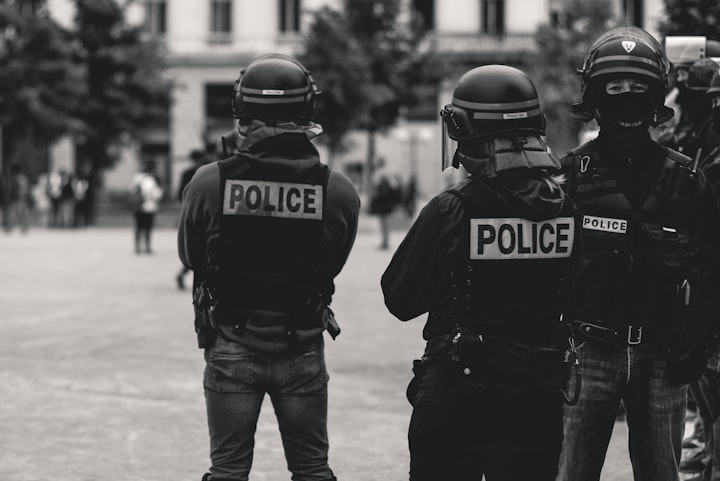
BLM protests across the world -50 states and 18 countries- must result in meaningful policy change.
Education is key to allyship. I wrote this to help myself - and hopefully others - make sense of ongoing policy reform discussions.
Most policy proposals fall into the following three categories: internal reforms, reforms to defund traditional policing, and abolition of traditional policing.
Internal reform?
Internal reform arguments have many variants such as increased diversity of police officers, proper justice for victims of police violence, an end to racial profiling, more transparency and better police training.
UK protestors have internal reform demands such as stopping the sale of riot gear to US police, establishing a race equality commission and then implementing their recommendations.
One well publicised internal reform argument revolves around Stop and Search in the UK, and Stop and Frisk in the US. For years, protestors on both sides of the Atlantic have been calling out the racial profiling that the policy is now infamous for.
Another argument that made it into a list of protest demands in America, was a proposal to have community boards who can hire and fire police officers. It's easy to see how this could have a good impact on policing, and many certainly welcome the premise that the police should be more democratically controlled.
However, the implication that simply having a more diverse police staff will significantly reduce discrimination, is - counter-intuitively - weak. Studies actually suggested that BAME police officers are just as likely to behave inappropriately as their white counterparts. This assimilation points towards police culture and structure themselves being a problem, not just racist individuals or 'bad apples' who exist within it.
For many, especially those who are new to the movement, this level of reform is the most popular, or the least controversial. However, if you accept that police culture itself is part of the problem, accepting these policies as any more than a good starting point becomes impossible: it cannot be enough to punish those police who act badly, leaving in tact the culture that permitted their behaviour.
Similarly, if you believe that the policing system isn't 'broken' - that it works as intended, via systemic oppression - this level of reform cannot be sufficient. People reasonably doubt that internal reforms will do any more than paper over the cracks.
Defund the police?
Defund the police, and the state is less complicit in their violence. Your tax money isn't contributing to brutality as much. Traditional policing can be restricted to serious crime. The money saved from the police budget can be spent on addressing the needs of long neglected communities. I'll focus on this category the most, as its where most protest demands have been centred, particularly in the US context.
I'll lead with the biggest risk. Reduce public funding for the police, and you could risk police institutions compensating for that government funding deficit by accepting more money from the private sector. If so, police institutions could be more accountable to market interests than to states - making the institutions we're critiquing even less democratically controlled. It's worth noting here that privatisation is increasingly normal in prisons already, and in the US even police forces have been privatised.
It's perfectly rational then, that many arguments for defunding the police, have at their centre a commitment to building community services to help the police operate. That funding cut from the police in the rolling back of their remit, it is argued, must be reallocated to other public health and safety bodies. But who can guarantee responsible management of these institutions either?
These community services would be built around crime management but also crime prevention. Police funding could be reallocated for instance towards: community outreach, night classes, crisis staff trained in de-escalation, womens' shelters, counsellors, therapists, rehab, family planning, social workers etc.
By building community services to address the causes of crime as well as the acts themselves, it is theorised that crime rates would continue to fall, as would reoffending rates. Paradoxically, this would mean less police on the streets and less police funding potentially leading to less crime.
Therefore you could continue gradually reallocating funding, as these rates continued to fall, bringing an end to the oh-so-familiar complaints that poor neighbourhoods are over policed and under protected.
This allows police to function more effectively, addresses structural issues with law enforcement, and prevents public resources from being wasted. It also simplifies the job of officers, by tackling the question of why we expect police to be social science experts, addiction experts and law experts all at once. Why aren't these roles more distinct?
For some, this community service building goes hand in hand with decriminalisations of: homelessness, non violent or minor offences, drug use, and sex work.
Abolish the police?
Abolitionists fall onto the radical end of the defunding spectrum, believing that we must eventually phase out all policing institutions as we know them today. Abolition of policing in this sense would obviously not mean crime management would cease. Instead, it would mean that crimes would be dealt with by community services outside the parameters of traditional policing. Like the defund arguments, this rests on the premise that policing's history and culture makes it structurally inept, incapable of sufficient internal reforms to be effective at managing crime.
The assertion is that there are few types of crime that current policing is particularly effective fixing, and even fewer that it is effective in preventing. If you accept the terms, then why continue to sanction state violence at all? Especially if holistic alternatives to crime management, when reallocated funding from policing, are found to be more effective.
If this is taken as true, then it makes sense to heavily focus on addressing these commonalities of crime: poverty, lack of opportunity and abuse. A much more well rounded approach to crime prevention, abolitionists will argue, removes the 'need' for violent law enforcement.
Radical agendas like abolition only become plausible after years of defund the police policies, and in conjunction with building community services strong enough to take over the police's role. This is of course based on the assumption that reducing crime is the sole aim of modern policing. If you believe that race & class discrimination within the police are features of the system and not bugs, then reform can look futile.
Many will view abolishing traditional policing as too idealistic - though as it would be a gradual process, there is arguably no big 'leap of faith' moment to fear. The future could well include the end of traditional policing, but it certainly wouldn't happen overnight. And it certainly wouldn't mean the lawless anarchy that many are right to fear.
Books I used to write this:
- Policing the Planet: Why the Policing Crisis Led to Black Lives Matter
- The End of Policing
- Police: A Field Guide
About the Creator
Dayna Latham
Freelance writer in the UK, fumbling my way through life one story at a time.
Keep reading
More stories from Dayna Latham and writers in The Swamp and other communities.
Covid makes a clear case for UBI
Discussions over Universal Basic Income are anything but new. Though this pandemic has demonstrated just how frail our global economy is. Leaving millions unemployed - for potentially the first time - thus victimised first by markets and then by a creaking 20th century welfare state.
By Dayna Latham6 years ago in The Swamp



Comments
There are no comments for this story
Be the first to respond and start the conversation.