
The Future of Energy: How U.S. Policy and Offshore Wind Are Changing the Power Landscape
America’s shift toward clean energy is gaining speed, but the path forward depends on policy choices, public support, and technological progress.


Understanding Energy Policy
Energy policy decides how a country produces and uses power. It influences the price of electricity, the kind of fuel that keeps cars moving, and how businesses manage their costs. In the U.S., energy policy is shaped by Congress, the White House, and agencies like the Department of Energy (DOE) and the Environmental Protection Agency (EPA).
This year, debates about clean energy have grown louder. Some Americans see renewable power as a way to reduce pollution and create jobs. Others worry about costs, subsidies, and how quickly fossil fuels can be replaced. These disagreements have turned energy into a central political issue that affects every household and business.
The Push Toward Clean Energy
Clean energy refers to power sources that produce little or no pollution, such as wind, solar, hydroelectric, and geothermal energy. The U.S. government has increased its investment in these areas, aiming to reduce greenhouse gas emissions and cut reliance on oil and gas.
Federal and state incentives have helped renewable energy expand. Tax credits for solar panels, electric vehicles, and wind projects make it easier for companies and homeowners to invest. However, these incentives also draw criticism from some lawmakers who argue that subsidies distort the market or cost too much in public funds.
Still, the long-term goal remains the same: build a power system that is cleaner, cheaper to maintain, and less vulnerable to fuel shortages or foreign supply shocks.
Offshore Wind: A New Frontier
Among all forms of clean energy, offshore wind has captured growing attention. Offshore wind farms use turbines placed in ocean waters to capture strong, steady winds that generate electricity.
The idea is not new, but recent advances in turbine technology and floating platforms have made it more realistic for large-scale use. The Biden administration has set targets to deploy several gigawatts of offshore wind capacity along both U.S. coasts by 2030.
These projects can supply power to millions of homes, support coastal economies, and create manufacturing jobs for turbine parts and cables. But they also face challenges — including local opposition, high startup costs, and environmental reviews that take years to complete.
Why Offshore Wind Matters
Offshore wind could play a key role in reducing carbon emissions from the power sector. Unlike fossil fuels, wind energy does not release carbon dioxide or other greenhouse gases. It also complements solar energy, which produces electricity during the day, while wind farms can often generate power at night.
By expanding offshore wind, the U.S. can diversify its energy mix, strengthen its electric grid, and reduce dependence on imported oil and gas. This makes the nation more energy-secure, especially during international crises or price spikes.
However, progress depends heavily on policy stability. Investors and developers need confidence that regulations, tax credits, and permitting rules will not change abruptly. Without clear direction, projects may stall before reaching completion.
Regulatory Challenges
Developing offshore wind is not as simple as placing turbines in the ocean. Projects must meet strict environmental standards, pass safety inspections, and coordinate with multiple federal and state agencies. The Bureau of Ocean Energy Management (BOEM) oversees the leasing process for offshore sites, while the EPA monitors environmental impacts.
Local communities sometimes raise concerns about visual impact, marine ecosystems, or fishing zones. Balancing these interests takes time and negotiation. As a result, even when political leaders support clean energy, regulatory complexity can slow progress.
Streamlining these processes without cutting corners remains one of the biggest challenges in building a clean energy economy.
Economic and Job Impacts
Clean energy, including offshore wind, brings both opportunities and disruptions. On one hand, renewable industries create new jobs in construction, maintenance, and research. On the other hand, traditional fossil fuel sectors — coal, oil, and natural gas — face decline as demand changes.
To manage this transition, policymakers often focus on “just transition” programs that help workers retrain for new roles. Port cities and manufacturing hubs can benefit from producing turbine components or undersea cables, while inland areas can support transmission networks and logistics.
The clean energy transition is not just an environmental issue — it’s an economic one. The future workforce will likely depend on how effectively the U.S. supports both innovation and adaptation.
Public Opinion and Politics
Energy debates often reflect broader political divides. Some Americans support aggressive climate action and are willing to invest public funds to speed up the shift to renewables. Others prefer a slower approach, emphasizing energy independence through domestic oil and gas production.
Public opinion can also vary by region. Coastal states like Massachusetts, New York, and California tend to lead in offshore wind development, while others prioritize fossil fuel jobs. This regional tension shapes national policy and the direction of future energy laws.
Environmental and Social Concerns
While clean energy reduces emissions, it still has environmental impacts that must be managed carefully. Offshore wind farms can affect marine life and bird migration. Environmental groups push for detailed studies and monitoring to protect ecosystems.
At the same time, communities want assurance that clean energy projects bring local benefits — such as jobs, revenue, and infrastructure improvements — instead of just higher electricity rates. Building public trust is essential to long-term success.
The Global Picture
The U.S. is not alone in expanding offshore wind. Europe has led the way for over a decade, with the United Kingdom, Denmark, and Germany hosting massive offshore farms. Asian countries like Japan and South Korea are now investing heavily as well.
By learning from international experiences, the U.S. can avoid costly mistakes and build more efficient systems. Cooperation in technology and research could also accelerate innovation worldwide.
The Road Ahead
Energy policy is never just about electricity — it’s about national priorities. The choices made today will determine how affordable, reliable, and sustainable power will be for decades to come.
Offshore wind is a symbol of that future: powerful, renewable, and still in development. Success will depend on practical policymaking, long-term investment, and public support.
The U.S. has an opportunity to lead in clean energy, reduce emissions, and create new industries. But to get there, the country must bridge political divides and design a strategy that works for both people and the planet.
About the Creator
Saad
I’m Saad. I’m a passionate writer who loves exploring trending news topics, sharing insights, and keeping readers updated on what’s happening around the world.
EU and Mercosur Seal Historic Trade Deal
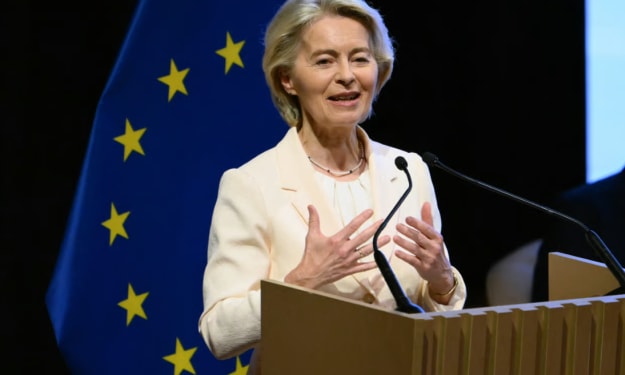
After more than two decades of negotiations, delays, political resistance, and diplomatic resets, the European Union and the Mercosur bloc have finally sealed a historic trade deal. The agreement, hailed by supporters as one of the most ambitious trade pacts ever negotiated, promises to reshape economic ties between Europe and South America while redefining how global trade aligns with climate goals, labor standards, and geopolitical realities. The deal links the EU — one of the world’s largest single markets — with Mercosur, a South American trade bloc comprising Brazil, Argentina, Uruguay, and Paraguay, representing a combined population of over 780 million people. Together, they form a massive economic zone with the potential to influence global supply chains, agricultural markets, and industrial trade for decades to come. What Is the EU–Mercosur Trade Deal? At its core, the EU–Mercosur agreement is designed to reduce or eliminate tariffs on a wide range of goods and services, making trade between the two regions cheaper and more efficient. For European exporters, the deal opens access to South American markets for products such as cars, machinery, pharmaceuticals, chemicals, and industrial equipment — many of which currently face high import duties. For Mercosur countries, the agreement improves access to the EU market for agricultural products, including beef, poultry, sugar, ethanol, soy, and coffee. The European Commission estimates that the deal could save European companies billions of euros annually in tariffs, while boosting economic growth and strengthening strategic ties between the two regions. Why This Deal Took So Long Negotiations between the EU and Mercosur began in 1999, but progress was repeatedly stalled by disagreements over agriculture, environmental protection, labor rights, and political shifts on both sides of the Atlantic. European farmers, particularly in France and Ireland, have long opposed the deal, fearing competition from cheaper South American agricultural imports. Environmental groups raised alarms about deforestation in the Amazon, arguing that increased beef and soy exports could accelerate forest loss. On the Mercosur side, concerns centered on protecting domestic industries and ensuring fair access to European markets without being overwhelmed by EU industrial powerhouses. Only in recent years — amid rising global trade tensions, supply chain disruptions, and geopolitical competition — did momentum return. Both blocs increasingly saw strategic value in diversifying partnerships beyond China and the United States. Economic Impact: Who Stands to Gain? Supporters argue that the agreement is a win-win for both regions. For the European Union, the deal strengthens export opportunities for manufacturers and service providers while reinforcing Europe’s role as a global trade leader. European carmakers, engineering firms, and pharmaceutical companies are expected to benefit significantly. For Mercosur countries, the agreement provides stable access to one of the world’s wealthiest consumer markets. Agricultural exporters, in particular, stand to gain from reduced tariffs and predictable trade rules. Supporters say the deal could stimulate investment, create jobs, and modernize industries across South America. Economists also highlight that the agreement sends a strong signal in favor of rules-based international trade at a time when protectionism is rising globally. Environmental and Climate Concerns Despite the economic promise, the deal remains controversial — especially in Europe. Environmental organizations warn that increased agricultural exports from South America could intensify deforestation, biodiversity loss, and carbon emissions, particularly in Brazil’s Amazon region. Critics argue that previous environmental commitments have not been adequately enforced and fear the trade deal could undermine the EU’s climate leadership. In response, the European Commission has emphasized that the final agreement includes binding sustainability provisions, commitments to the Paris Climate Agreement, and mechanisms to address environmental violations. Supporters argue that engagement — rather than isolation — gives the EU more leverage to promote sustainable practices. Still, skepticism remains strong among green groups and some EU lawmakers, who insist that enforcement will be key. Political Resistance Inside the EU Even after sealing the deal, ratification is far from guaranteed. Several EU member states, including France, Austria, and Ireland, have expressed strong reservations. Farmers’ unions worry about unfair competition, while political leaders face domestic pressure to protect local agriculture and environmental standards. Because the agreement requires approval from all EU member states and the European Parliament, even a small number of dissenting countries could delay or derail implementation. This political reality means that while the deal has been sealed at the diplomatic level, its future still depends on intense political negotiation within Europe. Why the Deal Matters Globally Beyond trade volumes and tariff reductions, the EU–Mercosur agreement carries geopolitical significance. It strengthens ties between Europe and South America at a time when global power dynamics are shifting. China has significantly expanded its economic footprint in Latin America, and the EU sees the deal as a way to remain relevant and competitive in the region. The agreement also reinforces the EU’s ambition to shape global trade rules around sustainability, labor rights, and environmental standards, even if critics question how effective those safeguards will be in practice. In a world marked by trade wars, sanctions, and fragmented supply chains, the deal stands as a rare example of multilateral cooperation. What Happens Next? The next phase involves legal review, translation into all EU languages, and the ratification process across member states. This could take several years, and political opposition may still reshape or delay parts of the agreement. Meanwhile, businesses on both sides are already preparing for potential opportunities, assessing new markets, and planning long-term strategies around the expected changes. Whether the deal ultimately fulfills its promise will depend not only on economic performance but also on enforcement, transparency, and political will. A Turning Point for Trade Relations The EU–Mercosur trade deal marks a historic turning point in relations between Europe and South America. It reflects a growing recognition that global challenges — from climate change to economic resilience — require cooperation across continents. Yet the agreement also highlights the tensions between economic growth and environmental responsibility, free trade and local protection, ambition and accountability. As the world watches the ratification process unfold, one thing is clear: this deal is more than a trade agreement. It is a test of how global partnerships can evolve in an increasingly complex and divided world.
By Muhammad Hassana day ago in The Swamp
Ludacris and Nelly draw backlash over bookings at MAGA-coded music festival
Ludacris and Nelly headlining a mostly right-wing event is good for them. It’s also great for the genre of hip hop. The two rap veterans have showcased their talents on other stages. Why can’t they perform for mostly MAGA folks and grab that bag?
By Skyler Saunders4 days ago in Beat



Comments
There are no comments for this story
Be the first to respond and start the conversation.