
The Foreign Policy of America in Afghanistan
A Legacy of Intervention, Withdrawal, and the Struggle for Peace

The foreign policy of the United States in Afghanistan spans decades, shaped by war, diplomacy, and shifting global priorities. From covert operations in the Cold War to the sudden withdrawal in 2021, America’s involvement in Afghanistan has left a deep mark on both nations — politically, socially, and historically.
The roots of U.S. involvement in Afghanistan stretch back to the late 1970s. In 1979, after the Soviet Union invaded Afghanistan, the U.S. responded through a covert campaign to support Afghan mujahideen fighters. This support, conducted largely through the CIA’s Operation Cyclone, was intended to counter Soviet expansion. Billions of dollars in weapons and training were funneled to rebel groups, including those that would later evolve into the Taliban and al-Qaeda. The United States didn't have a long-term plan beyond Soviet containment, and once the Soviet Union withdrew in 1989, America’s attention quickly shifted elsewhere.
The 1990s saw Afghanistan fall into civil war and chaos. The U.S. mostly disengaged, leaving a vacuum that was eventually filled by the Taliban, who seized power in 1996. Their rule was marked by severe human rights violations, particularly against women, and a rigid interpretation of Islamic law. During this period, al-Qaeda established a safe haven in Afghanistan, using it as a base for planning international terrorist attacks.
It wasn't until the September 11, 2001 attacks that America re-engaged directly. Within weeks, the U.S. launched Operation Enduring Freedom, targeting al-Qaeda and toppling the Taliban regime. The initial military success was swift. But what followed was a prolonged attempt at nation-building, one that spanned four presidential administrations — Bush, Obama, Trump, and Biden.
Despite the U.S. investing trillions of dollars and deploying hundreds of thousands of troops, stability remained elusive. Corruption plagued the Afghan government. The Taliban regrouped in neighboring Pakistan, launching a resilient insurgency. While the U.S. helped build infrastructure, schools, and hospitals, it struggled to gain lasting trust among the rural population, where tribal loyalties and local dynamics outweighed national politics.
The Obama administration tried a surge strategy in 2009, sending tens of thousands of additional troops to secure key provinces and train Afghan forces. However, progress remained uneven. While urban centers like Kabul saw development and a growing middle class, many rural areas remained under Taliban influence. The American public grew weary of the "forever war," leading to growing pressure to end the conflict.
President Trump began negotiations with the Taliban in 2020, resulting in the Doha Agreement. The U.S. promised to withdraw troops in exchange for Taliban guarantees — promises that were widely criticized as vague and unenforceable. When President Biden assumed office in 2021, he upheld the agreement, announcing a full military withdrawal by September of that year.
The consequences of that decision were swift and tragic. In August 2021, as U.S. forces left, the Taliban swept across the country and retook Kabul with little resistance. The Afghan army, despite years of training and funding, collapsed. The world watched in shock as desperate Afghans clung to departing U.S. planes, and thousands tried to flee the country.
For many, the withdrawal represented not just a military failure, but a moral one. Women who had become judges, journalists, and students saw their freedoms erased overnight. Allies who had supported the U.S. mission were left behind. While American leaders defended the exit as necessary and overdue, the human cost was undeniable.
Today, America’s foreign policy in Afghanistan is viewed through a lens of both strategic miscalculation and unintended consequence. Some argue the initial goals — defeating al-Qaeda and disrupting terrorism — were achieved. Others believe that the mission expanded beyond what was realistic or sustainable.
Afghanistan now stands at a crossroads. Under Taliban rule once again, its people face uncertain futures. Meanwhile, the United States grapples with how to support the Afghan people from afar — through humanitarian aid, diplomacy, and pressure — without re-entering a costly war.
The story of America’s foreign policy in Afghanistan is not just one of conflict, but of lessons. It raises questions about the limits of military power, the complexity of nation-building, and the long-term effects of intervention. It also highlights the importance of listening to local voices, understanding cultural dynamics, and planning for what comes after the war ends.
In the end, Afghanistan has taught the world that foreign policy isn’t just about strategy or security — it’s about people. And those people, whether American or Afghan, deserve policies rooted not only in power but in purpose and humanity
About the Creator
Keep reading
More stories from Muhammad Adeel and writers in The Swamp and other communities.
Fuck Life
I was fourteen when I first heard someone say it with full chest: “Man, f*ck life.” It wasn’t in a song or a movie. It was Marcus, my older cousin, sitting on the hood of his car, staring at the night like it had betrayed him. The words came out flat. Not angry. Not loud. Just... finished.
By Muhammad Adeel7 months ago in Humans
The Finest in the World: Why the US is Buying Icebreakers from Finland
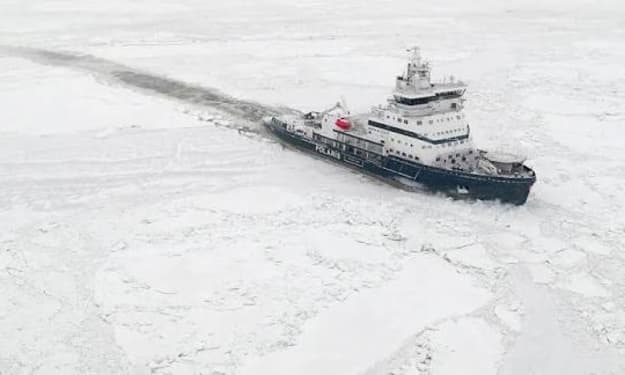
In a world increasingly defined by shifting geopolitical landscapes and extreme climates, the United States is turning to Finland for a fleet of icebreakers, widely regarded as the finest in the world. This strategic move underscores both the rising importance of the Arctic region and the growing need for advanced maritime technology capable of navigating the icy waters at the top of the globe. Finland’s Icebreaking Legacy Finland has long been a global leader in icebreaker technology. With harsh winters and a northern coastline that stretches into the Arctic Circle, the country has mastered the art of building vessels that can navigate through thick sea ice efficiently and safely. Finnish icebreakers are renowned not just for their raw power, but also for their precision, durability, and technological sophistication. They can cut through ice up to several meters thick, maintain stability in freezing conditions, and even support supply missions in the most remote and hostile environments. This expertise has made Finnish icebreakers a gold standard, sought after by nations that require reliable access to icy waters. While the United States has historically relied on a small fleet of icebreakers, many of these vessels are aging, and the current fleet cannot meet the increasing demands of Arctic operations. By partnering with Finland, the US is gaining access to vessels designed with decades of experience, cutting-edge engineering, and proven operational performance. Strategic Importance of the Arctic The Arctic has emerged as a region of growing strategic importance. Climate change has led to melting ice, opening new maritime routes that were previously impassable for most of the year. This has not only created opportunities for trade but also heightened the need for territorial defense, environmental monitoring, and search-and-rescue operations. The US sees its icebreaker fleet as a key asset in maintaining influence in this rapidly changing region. Having Finnish-built icebreakers allows the United States to expand its operational capabilities. These vessels can escort commercial ships through icy waters, conduct scientific research, and respond to emergencies in the Arctic. The decision to procure icebreakers from Finland is therefore as much about strategic positioning as it is about maritime capability. Technological Edge Finnish icebreakers are equipped with some of the most advanced maritime technology in the world. From hull designs that minimize ice resistance to propulsion systems that combine efficiency with immense power, these vessels are built to perform in conditions that would ground most ships. Many of them also include sophisticated navigation and communication systems, enabling crews to operate safely in regions where conventional navigation is challenging due to ice coverage and limited satellite connectivity. The US will benefit from these technologies, particularly as Arctic operations require not only strength but also precision. Whether escorting supply ships, conducting military exercises, or supporting scientific missions, Finnish icebreakers offer reliability that aging US vessels cannot match. Economic and Diplomatic Considerations Beyond technical superiority, the procurement of icebreakers from Finland also reflects broader economic and diplomatic considerations. By engaging Finnish shipbuilders, the US strengthens its ties with a country that is strategically positioned between the North Atlantic and the Arctic. This cooperation could pave the way for future partnerships in maritime technology, Arctic research, and regional security initiatives. Moreover, the deal highlights the United States’ willingness to invest in specialized, high-quality vessels rather than attempting to build everything domestically. While domestic shipbuilding has its merits, Finland’s decades of expertise provide a shortcut to operational readiness, ensuring that the US maintains a competitive edge in Arctic waters without the delays and costs associated with developing such vessels from scratch. Looking Ahead As the Arctic continues to transform, the importance of icebreakers will only increase. With Finland’s cutting-edge technology at their disposal, the United States is positioning itself to navigate both the literal and geopolitical ice of the north. These vessels are more than ships; they are symbols of preparedness, technological prowess, and strategic foresight. In a region where every meter of ice matters and every decision has global ramifications, having the finest icebreakers in the world is no longer a luxury—it is a necessity. By looking to Finland, the US is ensuring that it remains capable, competitive, and ready for the challenges and opportunities of the Arctic.
By Fiaz Ahmed Brohi5 days ago in The Swamp
As Spain Mourns Train Crash Victims, Investigators Focus on Track
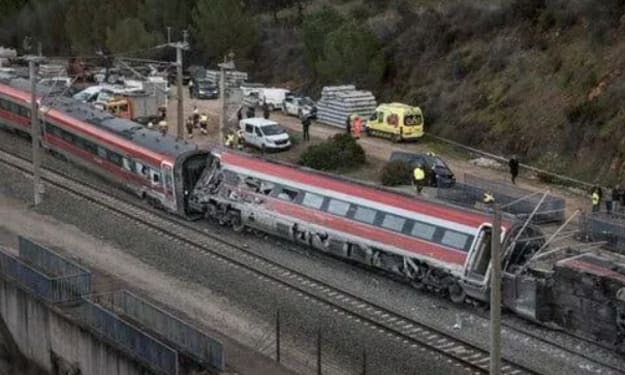
Spain is in shock. A high-speed train collision near Adamuz, Córdoba has claimed at least 40 lives and injured over 120 people, marking one of the deadliest rail disasters in recent European history. Families, communities, and an entire nation are grappling with grief, while investigators scramble to find answers.
By Aqib Hussain4 days ago in The Swamp


Comments
There are no comments for this story
Be the first to respond and start the conversation.