
The ever-increasing fuel prices in India.
The story behind it.
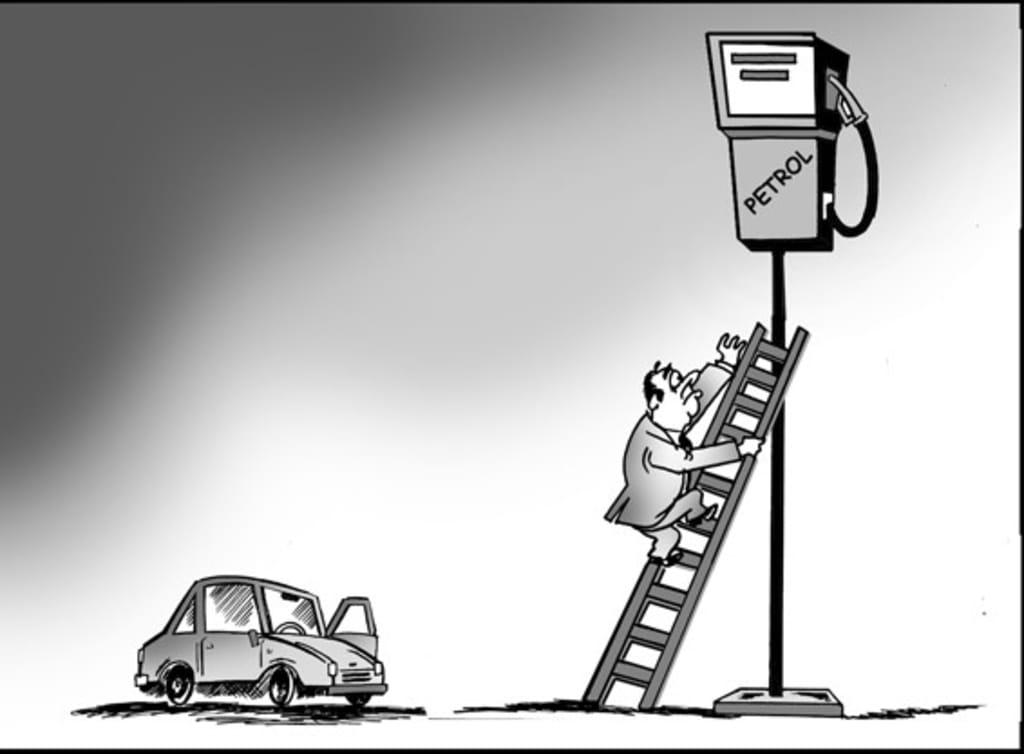
India is not new to inflation, especially when it comes to fuel prices. The ever-increasing petroleum and diesel prices are taking a steep upward ride in recent times. Currently, petroleum and diesel prices stand above Rs.100/L in almost all the states. It’s well above 100/L in all the metropolitan cities. As of 1st November 2021, the oil prices have increased for the sixth consecutive day. Diesel prices have gone up 30 times in the last 38 days. Every 6 a.m. in the morning new prices become applicable and it changes every day. The increase in recent times is almost frightening.
Now the question arises, why such high prices?
Well, a part of it is out of our hands i.e.the prices of crude oil in the international market. The jump in crude oil prices in the international market and the fact that 80% of the oil we consume has to be imported, are some of the major reasons behind the rise in fuel prices in India. Then there are other factors as well, like the domestic demand for fuel and the exchange rate. The demand for fuel in India is quite high, resulting in high prices. There’s also the exchange rate, the price of the dollar is always increasing against the Indian rupee, so does the price of fuel.
Now comes the prime reason behind the price hike in India which is the central and state taxes. In the case of petrol, almost 60% of the prices can be attributed to taxes that are levied on the item and in case of diesel it’s nearly 55% of the price. Then there’s the dealer’s commission and freight charges. Adding all these up makes the retail price almost double the base price (price in the international market). On October 16, petrol prices in Delhi were Rs. 105.55. A little break up of the price showed that 58% of the retail price goes towards taxes and dealers’ commission.
Coming to an economy where the average income of most households is low, such inflation puts a heavy burden on their lives. This tremendous hike in fuel prices has adversely affected almost every household. A majority of Indian households strictly budget their monthly expenses. A hike in fuel prices is a direct hit on their wallets. Even businesses are taking a heavy toll from it, especially the automobile sector. Sales across passenger vehicles and two-wheelers have dropped and this trend is likely to continue. Even the industries which are not directly dependent on fuel are suffering, as their transportation cost is increasing from the fuel price hikes.
On top of that, a rising fuel price will impact the cost of every commodity. As each sector uses some form of transport, a rise in the cost of transportation is bound to cause overall inflation in the economy. This drastic increase in fuel prices is adversely affecting individuals, households, and companies. The Economy as a whole is bleeding.
The only possible way to heal this ailment is in the hands of the government. Although there’s nothing the central and state governments can do about the international price of crude oil, certainly they can decide on the taxes they levy. Reducing them will provide relief to the consumers. The central and state governments can come together to reduce the taxes imposed in different forms to bring down the price. But the reality is not so easy, both levels of government try to protect their perceived share of taxes, it is the consumer who bears the entire burden. The government has justified the high level of taxation by claiming that the revenue from the petroleum sector is required for funding various developmental projects and has also refused to acknowledge the role, that higher prices of fuel are playing, in increasing the inflationary pressure in the economy. Well, this argument is both conceptually flawed and inconsistent with the evidence. Excise collections from the retail price of petrol and diesel are not the foundation of government finances. For the central government, the excise duty from fuel is lower than the collections from income tax, corporate tax, and central GST. Any reduction in fuel taxes can be offset elsewhere. But unfortunately, our government has decided to turn a blind eye to it. Let alone taking possible actions, they are not even acknowledging that the price hikes are putting excess burdens on the lives of common people. With the central government unwilling to cut down on taxes, the common citizens like ourselves are in for difficult times ahead.
About the Creator
Shreyan Ghosh
Am a graduate with major in economics. I love to read and portray my views and opinions on that matter via writing.
Keep reading
More stories from Shreyan Ghosh and writers in The Swamp and other communities.
Income Inequality in India
Income inequality in simple terms means unequal distribution of income and wealth among the citizens of the country. In India it has been there and it has grown over the years to what is now. And in the recent years it has taken a significant upturn. The Gini Index of India (a measure of income distribution of inequality) is 35.7 in 2021 and it was 35.2 in 2011. Currently, the richest 1 percent of India holds more than four times the wealth of 953 million people who make up for the bottom 70 percent of the country’s population. Another astonishing fact is, in the year 2019, the total wealth of all Indian billionaires (63) combined was more than the union budget of the year 2018-19. Currently in 2021 there are 179 billionaires in India. Its astonishing how a country as poor as India has so many wealthy people. In 2000, according to Credit Suisse data the richest 1% owed 36.8% of the country’s wealth and it kept on increasing. In 2016, the richest 1% of India owed over 50% of the country’s wealth. Quite evident that over the years income inequality has kept on increasing. The richest individuals have steadily kept on increasing their share of the pie. The combined individual wealth of India makes it among the 10 richest countries in the world but in reality the majority of the population is relatively poor. Thus showing the extent of inequality of income and wealth. On regular basis, thousands of Indians fail to eat a proper meal three times a day. The Global Hunger Index 2020 ranks India at 94 out of 107 countries. According to recent Global hunger index India ranks lower than Pakistan. Over the years it’s simply the case the rich are getting richer and the poor, poorer.
By Shreyan Ghosh4 years ago in The Swamp
The Saddest Thing - The Billionaires Who Rule America Aren't Even Enjoying Themselves
This single post says more about our ruling class than a thousand policy papers. The saddest thing about today's system is that the men robbing the rest of us - sabotaging our economic prospects, our pensions, our access to affordable healthcare - are not even happy.
By Scott Christenson🌴28 days ago in The Swamp




Comments
There are no comments for this story
Be the first to respond and start the conversation.