
The Erosion of Trust: A Republic Undone
Trump trashes trust

By any rational measure, trust is the foundation of any successful relationship, whether between individuals or nations. It is a construct built not on fleeting sentiment but on the solid bedrock of consistency, integrity, and the enforcement of law.
The administration of President Donald Trump appears determined to unravel this most basic covenant between government and governed with a disquieting alacrity that would make Machiavelli blush. The Trump administration has treated trust as disposable, as something to be manipulated and ultimately discarded in the pursuit of raw power. In doing so, it undermined not only the credibility of the United States on the world stage but also the fundamental rights of its own citizens.
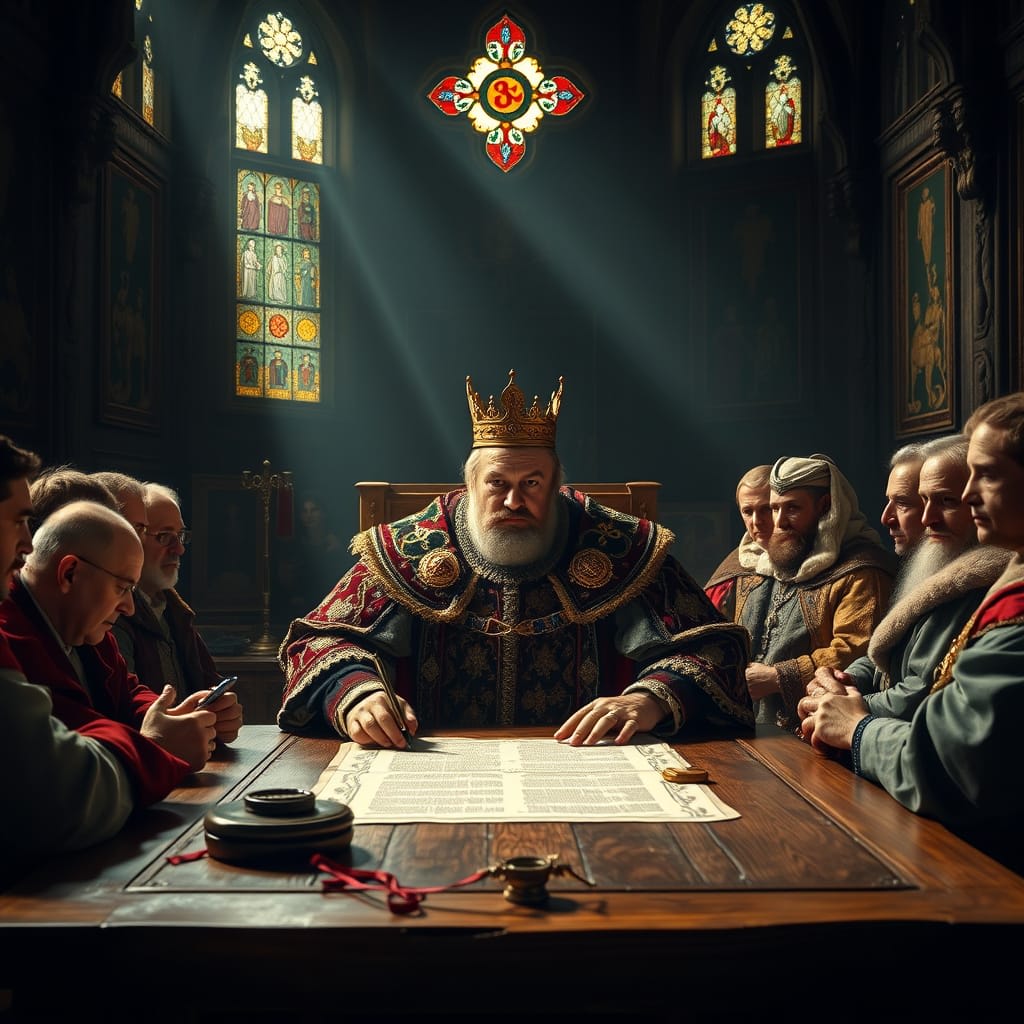
Consider the egregious abandonment of due process—that venerable principle which has protected individual liberty since Magna Carta (something all should know about if paid any attention in 9th grade history) illuminated the darkness of medieval governance. The Magna Carta signed in 1215 a.d. enshrined the notion that no one—not even a king—was above the law. This concept, which found its fullest expression in the American Constitution, was systematically dismantled by an administration that regarded legal norms as inconveniences. The most egregious example of this came when the Trump administration deported individuals to foreign prisons without regard for their legal status. Some of these deportees had entered the country legally, yet the administration made no effort to verify their paperwork before exiling them to grim fates abroad.
Consider the case of an individual, lawfully present in the United States, who was forcibly removed and imprisoned in El Salvador. When the administration belatedly admitted its mistake, it did not move to correct the injustice. The refusal to rectify such an error is not merely bureaucratic indifference—it is a direct assault on the principle that all individuals are entitled to their day in court. They did not merely commit a bureaucratic error; they engaged in a cavalier dismissal of eight centuries of Western legal tradition. One is reminded of King John before the barons arrived at Runnymede to sign the Magna Carta—a sovereign who believed accountability an inconvenience rather than a constitutional necessity. The implications loom ominously. A government that can dispatch legal residents to foreign prisons without recourse can extend such treatment to anyone. The precedent established transforms every citizen into a potential stateless person, dependent not upon their rights but upon the capricious judgment of administrative officials. If a government does not afford due process to the most vulnerable, then no citizen can rest easy knowing his or her rights are secure.
The degradation of trust extended beyond America’s borders. On the international stage, the tariff regimen implemented by the administration represents not merely economic miscalculation but diplomatic malpractice. Treaties bear signatures, not suggestions, and their violation communicates to our allies that American commitment extends only to the horizon of immediate advantage. The Trump administration imposed tariffs that violated treaties, including some agreements signed by Trump himself in his previous term. Trade partners, already wary of America’s capricious economic policies, saw these violations as further evidence that the United States could not be counted on to honor its commitments. What nation will willingly enter into an agreement with a country that has demonstrated an eagerness to shred its own word?
The conservative tradition has long recognized that stability and predictability in governance create the conditions for liberty to flourish. When authorities act arbitrarily—whether toward immigrants or international partners—they undermine the very legitimacy that enables peaceful governance.
The philosopher Oakeshott reminded us that to be conservative is to prefer the familiar to the unknown, the tried to the untried. There is nothing familiar or tried in governance without due process; nothing conservative about international relationships conducted with caprice rather than constancy.
America's strength has never resided in the raw exercise of power but in the moral authority derived from fidelity to principle. When we abandon those principles, we not only betray others but diminish ourselves. Trust, once lost, cannot be reclaimed by assertion or decree, but only through the patient demonstration of trustworthiness—a lesson this administration would be well advised to consider before the damage proves irreparable
Trust, once broken, is not easily restored. A nation that disregards due process at home and its treaty obligations abroad finds itself isolated, feared but not respected. If the United States cannot be trusted to protect the rights of its own citizens, nor to uphold the agreements it signs, then it has forfeited its standing as a nation governed by laws. It has instead become a country governed by impulse, with the rights of its people subject to the whims of those in power.
In the end, the collapse of trust is not merely a failing of one administration—it is a failing that reverberates through history. For when trust is gone, democracy itself stands on the precipice.
About the Creator
Joseph McCain
I love my wife. I love my children. And I had a 30 year love affair with newspapers.
Keep reading
More stories from Joseph McCain and writers in The Swamp and other communities.
A person’s responsibility to condemn the inexcusable
In a world increasingly defined by blurred moral lines, some moments demand absolute clarity. Elon Musk, one of the richest men on the planet and a close ally of Donald Trump, performed what German authorities have identified as a Nazi salute on Inauguration Day. The incident, met with cheers from neo-Nazis on Musk’s own social media platform, had the German government ban the video and related images in its country.
By Joseph McCainabout a year ago in The Swamp
The Forsyth House Fire
Since 1851, Forsyth House has stood on the corner of Union Street and Gordon Street in the heart of Glasgow. Its iconic, or was... because on Sunday 8th of March, 2026, a fire broke out in a small, seemingly un-named shop in the building and tore all that history down. As I write, the rubble is still unsettled and the street is still blocked off. Central Station is quiet on the upper level, and around 30 small businesses have quite literally gone up in smoke.
By S. A. Crawford2 days ago in The Swamp
"For Your Convenience"
So, I have this thing where I'm a little unhinged from time to time. I went from having zero filter as a child to not speaking up at all in my teens and early twenties. I think I'm starting to find a balance, but occasionally, I pop off and don't know how to say things "nicely"... I guess.
By Sara Wilson3 days ago in The Swamp
A Transparent Look at Vocal Challenges and Top Stories
Almost three years ago, we shared a resource article that served as a place for people to suggest new challenge prompts. We thought it would be a good idea to refresh that thread, and take the opportunity to answer a few common questions about top stories, how challenges are judged and how submissions are reviewed.
By Vocal Curation Team3 days ago in Resources


Comments
There are no comments for this story
Be the first to respond and start the conversation.