
The Echo Chamber of the Áras: Why Ireland's 'Figurehead' Election Matters Most
The Echo Chamber of the Áras: Why Ireland's 'Figurehead' Election Matters Most


The Constitutional Paradox of Soft Power
The unique nature of the office creates a profound paradox. While the Constitution ensures the President is kept "above politics"—lacking powers to initiate or veto legislation, set budgets, or determine foreign policy—the direct, popular election provides an immense reservoir of soft influence. The power of the Irish President lies in the microphone, not the policy book. Presidents are the primary global face of the nation, and their ability to use the "bully pulpit" to champion causes—like social inclusion, human rights, or cultural heritage—allows them to shape the national discourse far more effectively than many with direct political control. This dynamic transforms the election from a simple appointment to a crucial ideological test.
Yet, this moral influence brings its own complexities. The President must navigate a delicate line between articulation and activism—between advocacy and overreach. Every speech or symbolic gesture is dissected for hints of political preference, testing the balance between impartiality and leadership. In this sense, the office embodies a tension central to modern democracy: can a figurehead remain non-partisan while still inspiring national reflection and change? Ireland’s Presidents, particularly in recent decades, have answered with quiet defiance—expanding the moral boundaries of an apolitical role without formally altering its powers. Through soft diplomacy, international speeches, and acts of reconciliation, they have transformed the Áras an Uachtaráin into a moral compass rather than a mere ceremonial stage.
The Gatekeeper: Nomination and Public Frustration
The route to the ballot paper itself is a fascinating reflection of Ireland's political structure. Aspiring candidates face a rigorous constitutional filter, requiring nominations from either twenty members of the Oireachtas (parliament) or four local county or city councils. This mechanism, designed to ensure a serious field, often frustrates public interest by blocking celebrity or purely populist "outsider" candidates. While it maintains stability, it fuels a recurring sense that the electorate’s hunger for non-establishment figures is often denied. Consequently, when a non-party figure does make the ballot—by harnessing support from the political left, for example—they often become a powerful symbol for a disaffected public.
Recent campaigns have underscored how nomination hurdles can inadvertently elevate outsider voices when they finally break through institutional barriers. Instead of weakening the system, these moments reenergize civic engagement and prompt public debate about who truly represents the national spirit. The tension between establishment protection and grassroots enthusiasm reflects a deeper democratic pulse—one that oscillates between caution and renewal. Each presidential contest thus doubles as a referendum on political accessibility itself, challenging Ireland to balance respect for constitutional stability with its citizens’ appetite for change.
The "Second-Order" Referendum: Protesting the Government
The election's most significant contemporary function is as a "second-order election." Knowing the President's actions pose no immediate threat to the government's stability or policies, voters often use the presidential ballot as a safe opportunity to register a protest vote against the ruling coalition. This year's contest, following the long tenure of a hugely popular incumbent, has become particularly susceptible to this dynamic. Public anxieties over the housing crisis, cost of living pressures, and the government’s overall performance are channeled into support for the main challenger, effectively turning the race into an informal, risk-free referendum on the status quo.
In this environment, the tone of the campaign often reveals more about the state of civic trust than about presidential policy—highlighting how deeply symbolic offices can become democratic barometers of national sentiment. As campaigning unfolds, voters engage with ideas rather than manifestos, and the contest evolves from a personality-driven spectacle into a portrait of the public mood. The President’s moral authority, though constitutionally restrained, becomes a mirror through which Ireland sees its societal anxieties and aspirations reflected.
The Crucial Role of the Transferable Vote
Ireland’s distinctive electoral system, Instant-Runoff Voting (also known as the Single Transferable Vote in this single-winner context), adds a layer of complexity and high drama. To win, a candidate must secure an absolute majority: 50% of the valid votes plus one (the quota). If no candidate reaches this threshold on the first count, the candidate with the lowest number of votes is eliminated, and their lower-preference votes—the transfers—are redistributed to the remaining candidates. In a tight, multi-candidate race, this transfer process is where the election is ultimately decided. The final result often hinges less on who leads the first-preference count and more on the ideological pathway of the transferred votes, providing a detailed map of the electorate's true political leanings and compromises.
This meticulous counting process is not merely procedural; it dramatizes the pluralistic nature of Irish democracy. It ensures that the winning candidate reflects not only the largest initial bloc of supporters but also the secondary sympathies and broader consensus of the nation. In every count and transfer, Ireland’s democratic character—negotiated, inclusive, and deliberative—is laid bare for public observation.
The Echo of Change: A Seven-Year Mandate for Vision
Ultimately, this election determines the tone and tenor of the Republic for the next seven years. The new President will inherit an office fundamentally reshaped by their predecessors, who transformed it from a ceremonial sinecure into an active platform. The choice is a stark one: will the country opt for a return to a more traditional, reserved custodian of the Constitution, or will it endorse an outspoken, activist President who is willing to be the nation’s moral conscience, challenging the executive on issues of justice and ethics?
As Ireland looks outward in an era of cultural globalization and inward amid social unease, its choice of President will broadcast to the world what kind of moral authority the Republic wishes to embody. The future occupant of the Áras an Uachtaráin carries not just the constitutional duty to uphold the state but also the cultural responsibility to interpret what the state should stand for. This dual role—part guardian, part guide—makes the presidency both uniquely limited and immensely powerful. The outcome will not only select the next tenant of the Áras but will send a powerful signal about how Ireland views its identity, aspiration, and role on the global stage in the decade to come.
About the Creator
Saad
I’m Saad. I’m a passionate writer who loves exploring trending news topics, sharing insights, and keeping readers updated on what’s happening around the world.
Here’s Everything Investors Need to Know About the Historic Silver Rally in 10 Charts
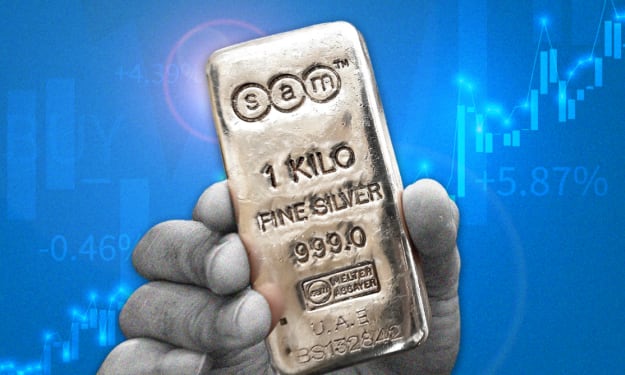
The precious metals market is experiencing an unusual surge, and silver is stealing the spotlight. After years of relatively muted performance compared to gold, silver prices have recently skyrocketed, attracting renewed attention from retail and institutional investors alike. Analysts describe the rally as historic, not just for its speed, but also for the market dynamics driving it. For anyone with exposure to precious metals—or considering entering the market—understanding what’s fueling the rally is critical. Investors are increasingly turning to visual data, such as charts, to make sense of trends, compare performance, and assess risks. In this article, we break down the silver surge and highlight the most important insights in 10 key charts that explain why this rally is capturing global attention. 1. Silver Price Over the Past Decade The first chart shows silver prices from 2016 to 2026. While the price remained relatively stable for much of the last decade, recent months have seen dramatic upward movement. This spike reflects a combination of increased industrial demand, investor interest, and macroeconomic uncertainty driving safe-haven buying. Key takeaway: Silver is breaking through historical resistance levels, hinting at a potential shift in market sentiment. 2. Gold-to-Silver Ratio Investors often watch the gold-to-silver ratio as a measure of relative value. Traditionally, silver trades at a lower price than gold, but the ratio can signal whether silver is undervalued. Recent charts show the ratio declining sharply, meaning silver is gaining faster than gold—a bullish signal for silver investors. Key takeaway: Historically, periods when the ratio drops have been followed by significant silver price gains. 3. Silver ETFs Inflows Exchange-traded funds (ETFs) are a major driver of precious metal investment. One chart highlights inflows into silver ETFs over the past two years. Surging inflows indicate strong investor demand, particularly from institutional players seeking exposure without owning physical silver. Key takeaway: Investor appetite is at a decade-high, contributing to upward price pressure. 4. Mining Production vs. Demand Supply constraints can fuel rallies. One chart compares global silver mining production to industrial and investment demand. Production has been relatively flat, while demand for electronics, solar panels, and silver bullion has increased. Key takeaway: Tight supply relative to demand is supporting prices and creating upward momentum. 5. Inflation Trends and Precious Metals Silver, like gold, is often considered a hedge against inflation. A chart comparing UK, US, and global inflation rates to silver prices shows a correlation: periods of rising inflation often coincide with rising silver prices. Key takeaway: Inflation fears are likely contributing to the current rally, as investors seek to preserve purchasing power. 6. Silver Futures Trading Volume Futures markets provide insight into investor sentiment and speculation. A chart showing trading volume in silver futures contracts reveals heightened activity in recent months, suggesting that both hedgers and speculators are positioning for further gains. Key takeaway: High futures volume indicates confidence—and volatility—can be expected in the near term. 7. Industrial Demand Segments Unlike gold, silver has major industrial uses in electronics, solar energy, and medical devices. One chart breaks down silver demand by sector, highlighting how growth in renewable energy and tech industries is boosting silver consumption. Key takeaway: Structural demand from technology and energy sectors underpins long-term bullish trends. 8. Retail Investor Interest Retail investors are flocking to silver as part of a broader alternative investment trend. A chart tracking online search interest, social media mentions, and retail trading platforms shows spikes during key market events. Key takeaway: Retail demand can amplify price movements, creating momentum-driven rallies. 9. Comparative Performance With Other Assets Another chart compares silver returns versus gold, equities, and bonds over the past 12 months. Silver has outperformed most traditional asset classes, particularly in periods of market volatility. Key takeaway: Silver’s recent outperformance positions it as a compelling diversification tool for investors. 10. Historical Price Surges Finally, a chart showing historic silver rallies places the current surge in context. While the rally is impressive, past cycles suggest that volatility can be significant, and sharp corrections are possible. Key takeaway: Investors should balance enthusiasm with caution, recognizing that silver’s historical price swings can be extreme. What This Means for Investors The historic silver rally is driven by a mix of macroeconomic, industrial, and speculative factors. Inflation concerns, tight supply, industrial demand, and strong retail and institutional interest have all converged to push silver to multi-year highs. However, like all commodities, silver is volatile, and investors need to consider: Timing and entry points for investment Portfolio diversification to manage risk Long-term versus short-term investment strategies Charts provide clarity, but they also highlight the unpredictable nature of commodities markets. Understanding trends, correlations, and historical patterns is essential for making informed decisions. Final Thoughts Silver is no longer just a “poor man’s gold.” Its historic rally in 2026 demonstrates its relevance as both an investment and an industrial commodity. For investors, the surge offers opportunity—but also risk. By examining these 10 charts, it becomes clear that while momentum is strong, careful research and a long-term perspective remain key. Whether you’re a seasoned investor or new to precious metals, understanding the forces behind the rally will help you make better-informed decisions. Silver’s story in 2026 is a reminder that commodities markets can surprise, reward, and challenge investors all at once.
By Muhammad Hassana day ago in The Swamp



Comments
There are no comments for this story
Be the first to respond and start the conversation.