
The Biggest Factory Powering Russia’s Missiles Comes Under Drone Attack, Video Surfaces
Critical Russian Missile Factory Targeted in Drone Assault, Video Evidence Sparks International Attention

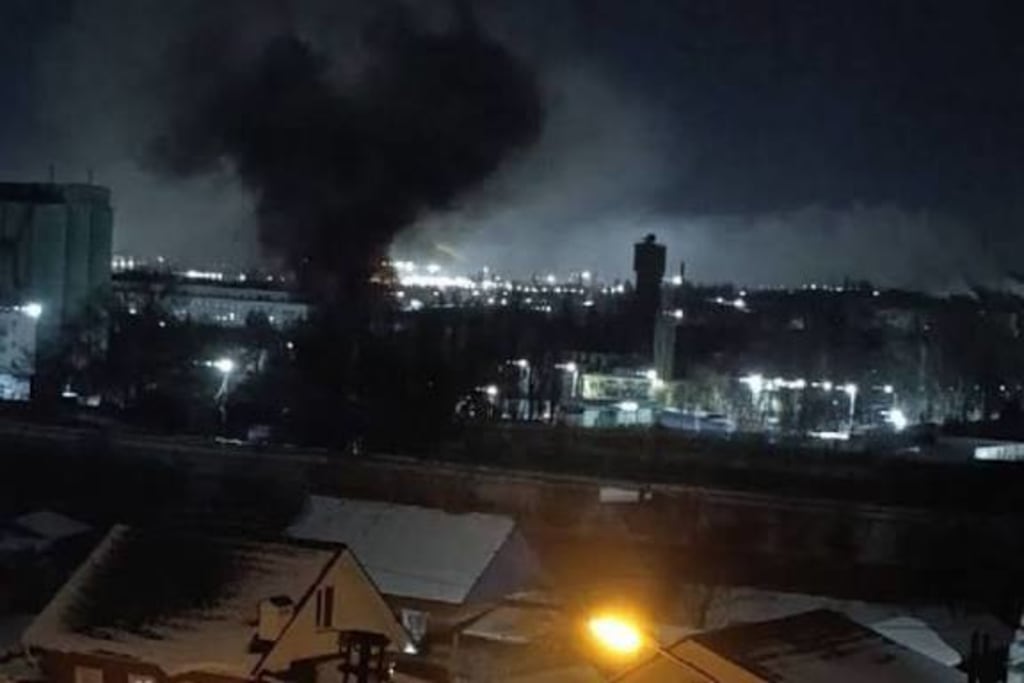
A video circulating online has revealed a dramatic development in Russia’s military infrastructure: the country’s largest factory responsible for producing missile components came under a drone attack, highlighting vulnerabilities in Russia’s defense supply chain. While the exact scale of damage is still being assessed, the incident underscores the growing role of drone warfare in modern conflicts and raises concerns about the resilience of strategic military production facilities.
The Targeted Facility
The facility in question is a key production hub for Russia’s missile program, reportedly responsible for manufacturing critical components used in both short-range and long-range systems. Analysts note that disruptions to operations at this plant could significantly impact Russia’s ability to sustain missile launches, particularly as tensions with neighboring countries and Western powers remain high.
The drone strike, captured in grainy but compelling footage, shows explosions and plumes of smoke rising from the complex, with structural damage evident across multiple sections of the factory. While official Russian sources have downplayed the attack’s impact, independent analysts warn that even minor disruptions can delay production cycles for high-precision missile components, which are notoriously difficult to manufacture.
The Rise of Drone Warfare
This incident illustrates the increasing use of drones as offensive tools in modern warfare. Small, precise, and relatively inexpensive compared to traditional airstrikes, drones can penetrate heavily defended areas and target high-value facilities with minimal risk to personnel. Over the past several years, military strategists have recognized drones as a game-changer, capable of tipping the balance in conflicts where conventional forces struggle to reach key infrastructure.
In this case, the drone attack demonstrates the potential vulnerability of even heavily fortified industrial complexes. It also signals that military planners must now account for aerial threats at all levels of production, from weapons assembly to supply chain logistics.
Strategic Implications
The attack on Russia’s missile factory has significant strategic implications. First, it puts pressure on Moscow’s military planners to diversify production sites and strengthen defense measures around critical facilities. Reliance on a single, centralized factory for essential missile components increases the risk of operational bottlenecks if targeted again.
Second, the strike could temporarily disrupt missile readiness, potentially affecting regional military posturing. While Russia possesses multiple production lines and stockpiles, delays in component manufacturing could slow replenishment cycles for both active deployments and training exercises. In a tense geopolitical environment, even short-term interruptions can influence diplomatic negotiations and military decision-making.
Finally, the attack highlights the evolving nature of asymmetric warfare. Smaller, agile forces equipped with drones can strike at the heart of larger powers’ capabilities, leveling the playing field in conflicts where conventional military strength may otherwise dominate.
Russia’s Response
While Moscow has yet to release detailed assessments of the damage, preliminary reports suggest heightened security measures across other key defense facilities. Military analysts predict that the Russian government will likely accelerate efforts to harden production sites against drone strikes, using technologies such as radar detection systems, anti-drone countermeasures, and dispersed production strategies.
Publicly, Russian media has framed the attack as an isolated incident and an external provocation, though the video’s circulation has sparked international debate about the vulnerability of critical military infrastructure. The Russian Ministry of Defense has reportedly initiated an internal review to determine the effectiveness of existing security protocols and explore measures to prevent future incidents.
Lessons for Global Military Planning
The incident underscores a broader lesson for militaries worldwide: the centralization of strategic production assets can be a liability in the age of drone warfare. Even technologically advanced nations are not immune to attacks on critical infrastructure, and conventional defenses may not suffice against small, precise aerial vehicles.
For countries facing ongoing or potential conflict, investing in redundancy, dispersal, and drone countermeasure technologies is now as essential as traditional armor and air defense systems. The attack also demonstrates that transparency, intelligence gathering, and surveillance of vulnerable sites are critical components of national security strategy.
Looking Ahead
As investigations continue, the global defense community is watching closely. The video of the drone attack has already sparked debates over the evolving nature of warfare, the vulnerability of missile production facilities, and the potential ripple effects on international security.
Whether the factory will fully recover, and how Moscow will adapt its military-industrial operations, remains uncertain. What is clear, however, is that the age of drone-enabled precision strikes has arrived, challenging traditional notions of military invulnerability and redefining how nations safeguard their strategic assets.
In the coming months, the ramifications of this attack could influence both Russian military operations and broader global defense strategies. For countries seeking to protect critical infrastructure, the message is unmistakable: preparedness against drone threats is no longer optional—it is imperative.
About the Creator
Fiaz Ahmed Brohi
I am a passionate writer with a love for exploring and creating content on trending topics. Always curious, always sharing stories that engage and inspire.
Keep reading
More stories from Fiaz Ahmed Brohi and writers in The Swamp and other communities.
North Korea’s Kim Oversees Hypersonic Missile Tests, Citing Growing Geopolitical Crisis
North Korea has once again captured global attention as leader Kim Jong-un personally oversaw a series of hypersonic missile tests, citing escalating geopolitical tensions as justification for the demonstrations of military might. The tests, confirmed by Pyongyang’s state media, have triggered alarm in neighboring countries and beyond, underlining the fragile security situation in Northeast Asia. A Show of Advanced Military Capability Hypersonic missiles are a strategic game-changer in modern warfare. Unlike traditional ballistic missiles, hypersonic weapons can travel at speeds exceeding Mach 5, maneuver mid-flight, and evade most existing missile defense systems. North Korea’s successful tests signal its ambition to close the technological gap with global military powers, particularly the United States and South Korea. State-run KCNA reported that Kim Jong-un supervised multiple launches at a military testing range in the country’s northwest. According to the report, the tests were carried out with “precision and success,” highlighting the country’s growing missile expertise. Analysts note that Pyongyang’s investment in hypersonic technology underscores its strategy to gain a credible deterrent against perceived foreign threats. Geopolitical Justifications Kim cited a “growing geopolitical crisis” as the impetus for the missile tests. Though the North Korean leader did not elaborate on the specific provocations, the tests come amid increasing military cooperation between South Korea and the United States. Joint exercises between the two allies, often framed as routine defensive drills, are viewed by Pyongyang as aggressive acts. The timing of these hypersonic missile launches sends a clear signal: North Korea intends to assert its military strength and independence in the face of perceived encirclement. In a statement, Pyongyang described the launches as a “necessary defensive measure” to protect national sovereignty. While the tests have heightened regional tensions, North Korea insists that the exercises are not aimed at initiating conflict but at securing the country’s defensive posture. Regional and Global Reactions The hypersonic missile tests have sparked immediate concern in South Korea, Japan, and the United States. South Korea’s Ministry of Defense confirmed that it monitored the launches and has heightened surveillance along its eastern coast. President Yoon Suk-yeol emphasized the need for calm but warned that any aggression against South Korea would meet a “decisive response.” Japan’s Defense Ministry issued a statement expressing “grave concern” over the missile tests, highlighting the risk they pose to regional peace and security. The Japanese government has called for consultations with the United States and other allies to coordinate responses and reinforce deterrence measures. Meanwhile, the United States, which has repeatedly warned Pyongyang against escalating military provocations, reaffirmed its commitment to the defense of allies in the region. Pentagon officials described the hypersonic tests as a “provocative act” but underscored that diplomatic avenues remain open. The Biden administration is expected to consult closely with regional partners to determine the next steps in balancing deterrence with dialogue. The Strategic Implications of Hypersonic Weapons Hypersonic missile technology is particularly concerning because of its combination of speed, maneuverability, and potential nuclear capability. Unlike conventional missiles, which follow predictable trajectories, hypersonic missiles can evade radar and anti-missile systems, complicating defense planning. For North Korea, hypersonic weapons are both a deterrent and a bargaining tool. By demonstrating technological prowess, Pyongyang strengthens its negotiating position in any future talks concerning sanctions, security guarantees, or nuclear disarmament. Experts warn that the proliferation of such advanced weapons could spark a regional arms race, with neighboring countries accelerating their own missile defense and offensive capabilities. Looking Ahead As North Korea continues to advance its missile programs, the international community faces a delicate balancing act: deterring further provocations while keeping open channels for dialogue. Analysts suggest that sustained diplomatic engagement, coupled with targeted sanctions, may provide the most effective approach to reducing tensions. However, Kim Jong-un’s decision to personally oversee hypersonic missile tests underscores the North Korean leadership’s commitment to showcasing military power, particularly in times of perceived geopolitical instability. The tests are unlikely to be the last demonstration, and regional actors must remain vigilant in anticipating the next move from Pyongyang. In the meantime, the world watches closely as North Korea continues to refine its missile technology. With hypersonic weapons entering the global arsenal, the stakes for regional security and international diplomacy have never been higher.
By Fiaz Ahmed Brohi2 months ago in The Swamp
The Forsyth House Fire
Since 1851, Forsyth House has stood on the corner of Union Street and Gordon Street in the heart of Glasgow. Its iconic, or was... because on Sunday 8th of March, 2026, a fire broke out in a small, seemingly un-named shop in the building and tore all that history down. As I write, the rubble is still unsettled and the street is still blocked off. Central Station is quiet on the upper level, and around 30 small businesses have quite literally gone up in smoke.
By S. A. Crawford3 days ago in The Swamp
President Pezeshkian Demands 3 Things to Stop War.
The Iranian President Pezeshkian has been speaking about the three things that the country wants to stop the war. Firstly, Iran's legitimate rights, payment of reparations, and a firm international guarantee that the country won't be attacked in the future. Mr. Pezeshkian said he had been speaking to President Putin and Shabaz Sharif, the Prime Minister of Pakistan. Underlining Iran's commitment to peace. Mr. Pezeshkian personally thanked Russia for standing by his nation in the war. Russia has called for a "de-escalation" of the conflict. Russia has supplied Iran with humanitarian aid as the war has unfolded.
By Nicholas Bishop4 days ago in The Swamp



Comments
There are no comments for this story
Be the first to respond and start the conversation.