
Thailand Counts Votes in Early Election as Three Major Parties Battle for Power
A tense political showdown unfolds as Thailand’s voters demand change, stability, and answers on the economy

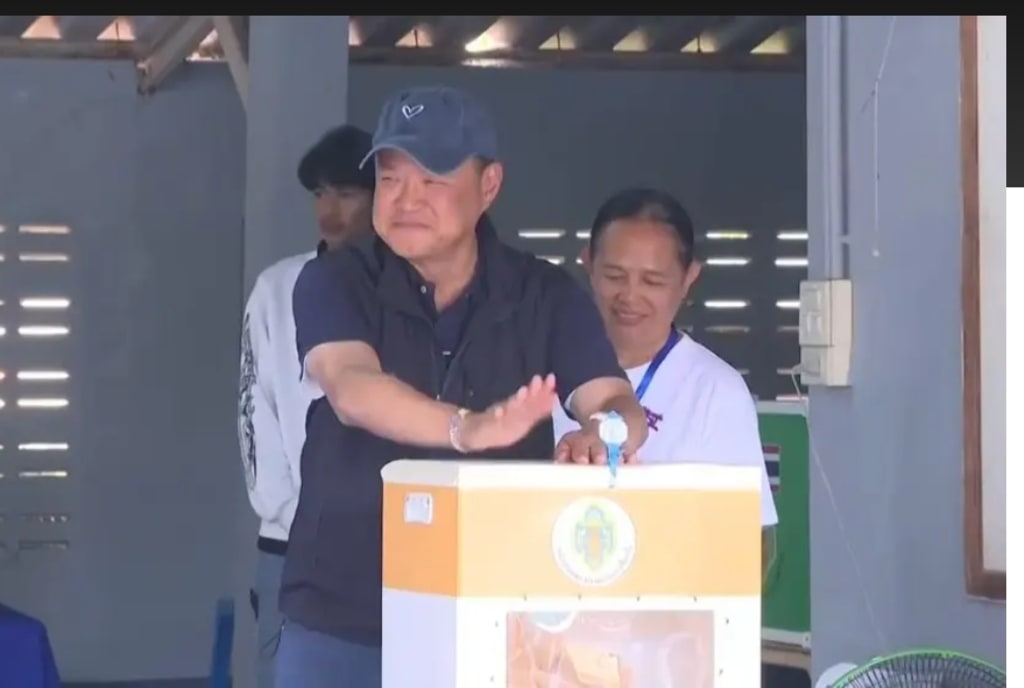
Thailand is once again at the center of political attention as the country begins counting votes following a closely watched early national election. With three main parties vying for power, the results could reshape Thailand’s leadership and set the direction for its economy, democracy, and regional influence.
The election comes at a time when Thailand is facing deep public frustration over the cost of living, slow economic recovery, political instability, and long-standing divisions between conservative power centers and reformist movements. As ballots are counted, supporters of all major parties are watching anxiously—because even a small shift in votes could determine who forms the next government.
For Thailand, this is not just another election. It is a high-stakes test of whether the country can move beyond years of political turbulence and build a more stable future.
Why Thailand Held an Early Election
Early elections typically signal political pressure or a breakdown in confidence. In Thailand’s case, the decision to call an early election reflects rising tension within the political system.
Several factors pushed Thailand toward this moment:
Public anger over economic hardship and inflation
Growing dissatisfaction among younger voters
Political deadlock and instability within the ruling coalition
Demands for reforms and greater transparency
The need for a fresh mandate amid ongoing national divisions
Thailand has a long history of political instability, with frequent leadership changes, mass protests, and military influence in governance. Many voters are hoping this election marks a turning point.
The Three Main Parties Competing for Power
This election is largely shaped by three dominant political forces, each offering a different vision for Thailand’s future.
1. The Reformist Party: A Youth-Driven Push for Change
One of the strongest challengers in this election is the reform-oriented party that has gained major support among:
Young voters
Urban professionals
Pro-democracy activists
Students and first-time voters
This party’s campaign focuses on political reform, stronger democratic institutions, and reducing the influence of traditional power structures. It has positioned itself as the voice of a new Thailand—one that wants modern governance and accountability.
However, critics argue that reformist policies could trigger pushback from conservative institutions and create new political conflict.
2. The Populist Party: The Return of Old Political Networks
The second major contender is the populist party with deep roots in Thailand’s political history. This party often draws strong support from:
Rural voters
Lower-income communities
Regions that benefited from earlier welfare programs
Its platform emphasizes economic relief, social programs, and direct support for families struggling with rising prices. Many voters see this party as the only one that has historically delivered practical benefits.
But opponents accuse it of relying on old political networks and argue that it may bring back the same cycles of corruption and political confrontation that Thailand has struggled with for decades.
3. The Conservative Party: Stability and the Establishment
The third major party represents Thailand’s traditional conservative establishment, often associated with:
Pro-military political influence
Traditional elites
Older voters who fear instability
This party campaigns on stability, national unity, and protecting Thailand from political chaos. Its supporters argue that Thailand needs order and strong leadership to attract investment, manage tourism, and maintain national security.
However, critics claim that this party represents the same establishment that has limited democratic reforms and slowed progress in modern governance.
Key Issues Shaping the Election Results
1. The Economy and Cost of Living
Thailand’s economy is still recovering, and many citizens feel the pressure daily. While tourism has improved, the benefits have not been equally shared across society.
Voters are focused on:
Rising food prices
Fuel costs
Household debt
Job security
Slow wage growth
Economic promises have been a major battleground in this election, with each party offering different solutions—ranging from welfare expansion to business-friendly reforms.
2. Democracy, Reform, and Political Freedom
Thailand’s younger generation has become more politically active in recent years. Many want:
Greater democratic freedom
Reform of political institutions
Stronger human rights protections
Less military influence in politics
This issue is especially important in urban areas like Bangkok, where youth movements have been vocal and persistent.
3. Political Stability and Fear of Crisis
While many voters want change, others worry that aggressive reform could lead to another period of protests, unrest, or even intervention by powerful institutions.
Thailand’s history has made stability a major issue. Some citizens prefer a government that avoids confrontation—even if it means slower reform.
Counting Votes: A Nervous Waiting Game
As Thailand counts votes, tensions are high across the country. Elections in Thailand often come with uncertainty because the final outcome is not always determined by popular votes alone. Coalition-building plays a huge role, and post-election negotiations can last days or weeks.
Key questions now include:
Which party will win the most seats?
Will any party gain enough to lead a stable coalition?
Will the reformist movement gain enough power to shape policy?
Could the establishment still control the outcome through alliances?
Many analysts expect coalition talks to be intense, especially if no party wins a clear majority.
What Happens Next: Coalition Politics and Power Deals
Thailand’s political system often requires parties to form coalitions to govern. That means even if one party wins the most votes, it may still struggle to form a government without partners.
Possible outcomes include:
A reformist-led coalition, if it can secure enough allies
A populist-led coalition, if it gains rural support and negotiates deals
A conservative-led coalition, supported by establishment-friendly parties
The next government’s stability will depend heavily on whether coalition partners can agree on key policies.
Why This Election Matters Beyond Thailand
Thailand is a major economy in Southeast Asia and plays an important role in the region. Investors, neighboring countries, and global partners are closely watching the election.
The results will influence:
Thailand’s economic direction and investment climate
Regional cooperation in ASEAN
Tourism and international business confidence
Thailand’s democratic reputation worldwide
If Thailand emerges with a stable government, it could boost confidence in the country’s long-term future. But if the election leads to political chaos, Thailand may face another period of uncertainty.
Final Thoughts: Thailand at a Crossroads
Thailand’s early election reflects a nation searching for balance—between change and stability, reform and tradition, democracy and institutional control.
As votes are counted, the outcome will reveal what Thai citizens want most: a bold new direction, a return to populist economic relief, or the stability promised by conservative leadership.
No matter which party wins, Thailand’s next government will inherit serious challenges. The question now is whether it can deliver real progress—or whether the country will remain trapped in its familiar cycle of political division.
FAQs (People Also Ask)
Why did Thailand hold an early election?
Thailand held an early election due to political instability, public pressure, and the need for a new mandate amid economic and governance challenges.
Which parties are competing in Thailand’s election?
Three main groups are competing: a reformist party, a populist party, and a conservative establishment party.
What are Thai voters most concerned about?
The biggest concerns include the economy, inflation, wages, political reform, and long-term stability.
What happens after votes are counted in Thailand?
After counting, parties negotiate to form a coalition government, which may take time if no party wins a clear majority.
About the Creator
Asad Ali
I'm Asad Ali, a passionate blogger with 3 years of experience creating engaging and informative content across various niches. I specialize in crafting SEO-friendly articles that drive traffic and deliver value to readers.
Why Black History Matters in America?
The United States of America is celebrating their 250th anniversary in 2026. I'm proud to be an American and as someone who was born here, I wouldn't imagine myself living anywhere else. This is a country where opportunities are possible. Where anyone can be successful in anything they desire to do. Equality, community, and togetherness are the backbones of what America is and should be about. However, we have an administration who wants to erase and disregard those who have made positive, meaningful impacts in our country, specifically Black figures, such as Martin Luther King, Jr., Rosa Parks, and Maya Angelou. President Trump and his administration have been constantly complaining and fighting against what they call the "Woke agenda". They use this excuse as a distraction from other issues they refuse to address, such as the high cost of living, climate change, and inflation. That equality is dividing America, when in reality, it's bringing us together. Being woke is not tied to a specific political party. No matter where you stand on the political spectrum, you can still care about other people and their plights. Compassion and empathy for others isn't tied to a political party, either. We were taught as children to treat others the way we want to be treated and not judge others because they're different from us. Caring about others isn't a personal attack on your beliefs. It doesn't make you any less of a person. People who are easily offended over African American figures, past or present, or anything related to it, are grasping at straws. Current and future generations need to know who people like Harriet Tubman and Shirley Chisholm were, especially in the classroom. Black History is part of American History. It should be recognized, not hidden or forgotten. Besides, you can't shield children from everything, just because your feelings are easily hurt.
By Mark Wesley Pritchard 7 days ago in The Swamp
Where’s Evo? Missing Morales Mystery as Bolivia’s Ex-President Goes to Ground
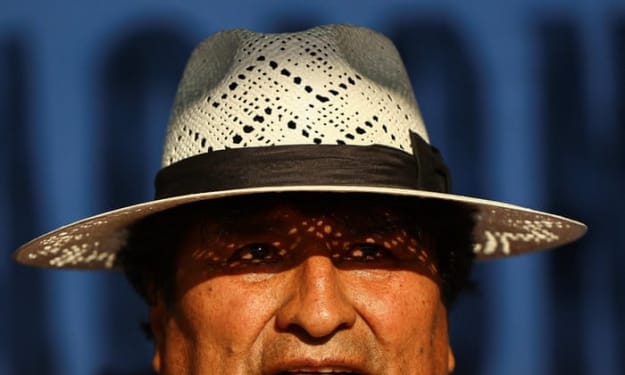
Bolivia is gripped by political uncertainty and speculation as former president Evo Morales has effectively disappeared from public view, prompting questions about his safety, political future, and the stability of the country’s already fragile political landscape. Once one of Latin America’s most visible and outspoken leaders, Morales has gone silent amid escalating tensions within Bolivia’s ruling party and mounting legal pressure. Morales, who governed Bolivia from 2006 to 2019, has not been seen publicly for several weeks. His absence has fueled rumors ranging from illness and exile to secret negotiations and fears of arrest. Supporters insist he remains in the country, while critics accuse him of deliberately avoiding authorities as investigations linked to corruption and alleged abuse of power continue. A Vanishing Act in a Time of Turmoil The former president’s disappearance comes at a time when Bolivia’s governing Movement for Socialism (MAS) party is deeply divided. President Luis Arce, once Morales’s close ally and finance minister, is now locked in a bitter power struggle with his former mentor over leadership of the party and the direction of the government. Morales had been preparing for a political comeback, declaring his intention to seek the presidency again despite constitutional and judicial obstacles. His ambitions sparked fierce debate inside MAS and raised alarms among opposition groups who argue that his return would destabilize the country. As tensions rose, Morales began canceling appearances and stopped posting regularly on social media, a sharp contrast to his normally outspoken presence. His supporters say he is in a secure location in Bolivia’s coca-growing Chapare region, historically his political stronghold. Authorities, however, have declined to confirm his whereabouts. Legal Pressure and Political Calculations Morales faces multiple legal challenges stemming from events during and after the 2019 crisis that forced him from office. Prosecutors have reopened investigations into alleged financial irregularities and decisions made during his presidency. Though Morales denies wrongdoing, the cases have increased speculation that he could be detained if he re-emerges publicly. Political analysts suggest Morales may be attempting to avoid arrest while negotiating behind the scenes to protect his influence within MAS. “Morales is not just hiding from prosecutors,” said one Bolivian political scientist. “He is repositioning himself in a battle for control of the ruling party.” President Arce has sought to distance himself from Morales’s confrontational style, portraying his government as more pragmatic and focused on economic recovery. However, Morales continues to command loyalty among grassroots movements, especially in rural and Indigenous communities. This split has created uncertainty within the party that has governed Bolivia for most of the past two decades. Rumors and Public Anxiety The lack of official information has fueled conspiracy theories across Bolivia. Social media platforms are flooded with speculation, including claims that Morales has fled the country or that he is being secretly protected by loyalist militias. Government officials have refused to comment directly, citing security concerns. Opposition leaders accuse Morales of trying to provoke instability by disappearing at a sensitive political moment. “Bolivia deserves transparency,” said one opposition lawmaker. “If he is innocent, he should face the courts instead of hiding.” Meanwhile, Morales’s supporters warn that any attempt to arrest him would spark mass protests similar to those that followed his removal from power in 2019. Trade unions and coca growers’ organizations have pledged to defend him, raising fears of renewed unrest. Echoes of the Past Morales’s disappearance revives memories of the chaotic period that followed his resignation in 2019, when he briefly went into exile in Mexico and Argentina. That episode polarized the country and left deep scars in Bolivia’s political culture. For many Bolivians, the current mystery underscores how unresolved that crisis remains. While Morales returned in 2020 after Arce’s election victory, the relationship between the two men has steadily deteriorated. Observers note that Morales’s absence now carries symbolic weight. Once the face of Bolivia’s political transformation, he has become a shadowy figure whose silence destabilizes both his supporters and his rivals. International Attention Foreign diplomats and regional organizations are closely monitoring the situation. Bolivia is seen as a key political actor in South America’s shifting ideological balance, and renewed unrest could ripple across neighboring countries. Human rights groups have urged authorities to respect due process and avoid actions that could provoke violence. They also called on Morales to clarify his status and cooperate with legal proceedings if summoned. What Comes Next? The question of where Evo Morales is — and why he has vanished from view — reflects a deeper struggle over Bolivia’s political future. If he remains hidden, it could deepen divisions within MAS and embolden opposition forces. If he resurfaces, he may face legal consequences or spark large demonstrations. Some analysts believe Morales is waiting for the right moment to re-enter politics dramatically, either by rallying supporters or by negotiating immunity. Others argue that his influence is waning and that his disappearance marks the beginning of the end of his political dominance. For now, Bolivia waits. Streets are calm, but tensions simmer beneath the surface. In a country shaped by protests and political upheaval, the silence surrounding its former president is proving almost as powerful as his voice once was. As one commentator put it, “Evo Morales built a career on being seen and heard. His disappearance speaks volumes.”
By Fiaz Ahmed a day ago in The Swamp
The Lesions of Devotion
Every day I set myself down on the freshly cut lawn and strip myself bare. I take my guitar and finger the frets and pick at the strings, listening for dissonance. My life is dissonance. I twist the tuning pegs until each string sounds bright. Then I kneel, calves pointing behind me, kneecaps facing forward. All exposed to the breeze. I close my eyes and play the melody.
By Paul Stewart3 days ago in Fiction


Comments
There are no comments for this story
Be the first to respond and start the conversation.