
Teleradiology Market Trends & Summary
How Remote Imaging, AI, and Digital Health Are Reshaping Global Diagnostics

Introduction: A New Era for Medical Imaging
The global healthcare industry is in the middle of a digital transformation, and few segments reflect this shift more clearly than teleradiology. As hospitals and diagnostic centers face rising patient volumes, staff shortages, and growing pressure to deliver faster and more accurate diagnoses, remote radiology services have emerged as a critical solution.
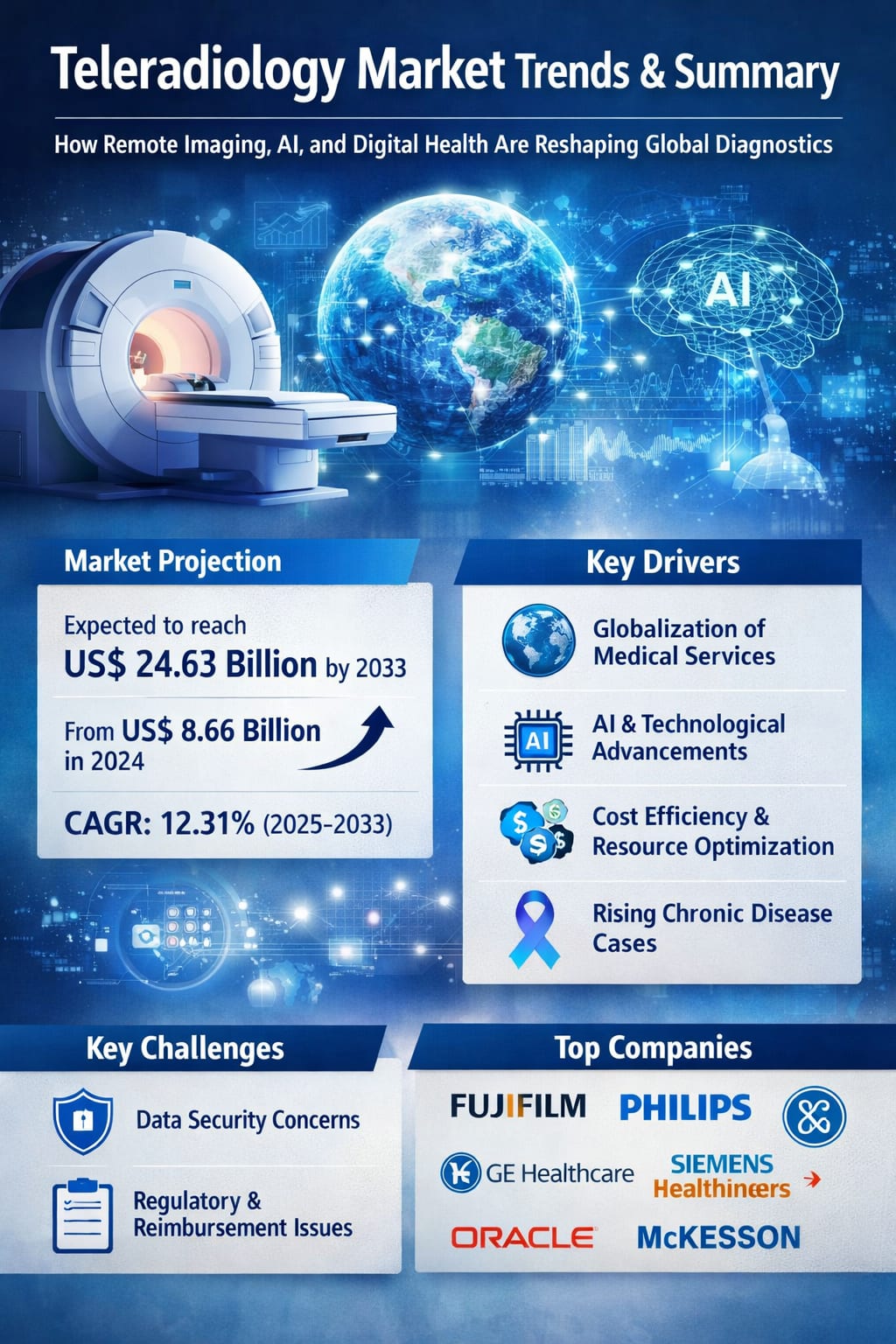
According to Renub Research, the Teleradiology Market is expected to reach US$ 24.63 billion by 2033, up from US$ 8.66 billion in 2024, expanding at a compound annual growth rate (CAGR) of 12.31% from 2025 to 2033. This impressive growth trajectory is being fueled by rapid digitization, continuous technological development, the integration of artificial intelligence (AI) and machine learning (ML), and the healthcare sector’s increasing focus on cost-effectiveness and resource optimization.
Teleradiology, at its core, involves the electronic transmission of medical images—such as X-rays, CT scans, MRIs, and ultrasounds—from one location to another for interpretation by qualified radiologists. What began as a solution to serve remote or underserved regions has now evolved into a mainstream component of modern healthcare systems worldwide.
Global Teleradiology Industry Overview
Recent technological advancements, rising healthcare demand, and the expanding need for radiology services in areas with limited specialist access have all contributed to the strong expansion of the global teleradiology industry. By enabling images to be reviewed by expert radiologists regardless of geography, teleradiology helps healthcare providers deliver faster diagnoses, improve patient outcomes, and optimize the use of scarce medical expertise.
The growing adoption of digital imaging systems, cloud-based platforms, and AI-assisted diagnostics is further strengthening this market. These tools not only improve workflow efficiency but also enhance diagnostic accuracy and reporting speed. During the COVID-19 pandemic, the pressure on healthcare systems and the need for remote medical services accelerated the adoption of telemedicine solutions, including teleradiology. Even after the pandemic, many of these digital practices have remained in place, becoming a permanent part of healthcare delivery models.
Another important driver is the rising burden of chronic diseases and age-related conditions that require frequent imaging. For instance, a January 2022 article in the American Cancer Society Journal reported over 1.9 million cancer cases in the United States in 2022, significantly increasing the demand for diagnostic imaging procedures. As imaging volumes grow, healthcare providers are increasingly turning to teleradiology to manage workloads efficiently and ensure timely reporting.
In parallel, leading companies are actively introducing advanced platforms and solutions. In August 2022, 5C Network launched “Prodigi,” an AI-powered, cloud-based platform that allows radiologists to interpret images directly from the cloud, enabling large-scale teleradiology operations for hospitals and diagnostic centers. Such innovations are expected to further accelerate market growth over the forecast period.
Key Growth Drivers for the Teleradiology Market
1. Globalization of Medical Services
Healthcare is becoming increasingly global, supported by advances in telecommunications, secure data transfer protocols, and interoperable digital health systems. Patients and healthcare providers alike are seeking access to specialist opinions, sometimes across national borders, to improve diagnostic accuracy and treatment planning.
A notable example is India’s use of teleradiology during the pandemic through initiatives such as CollabDDS Online Radiology Services (CORS), which enabled real-time collaboration between clinicians in tertiary hospitals and rural health centers. This kind of model highlights how teleradiology is helping bridge the urban–rural healthcare divide and bringing specialist expertise to previously underserved areas.
2. Focus on Cost Efficiency and Resource Optimization
Healthcare systems around the world are under constant pressure to reduce costs while maintaining or improving quality of care. Teleradiology supports this goal by allowing hospitals to share radiology workloads, reduce the need for on-site specialists during off-hours, and improve utilization of existing imaging infrastructure.
According to data updated by the National Institutes of Health (NIH) in March 2023, U.S. healthcare spending on biomedical imaging increased from US$ 2,774 million to US$ 3,101 million year-over-year. This rising investment underscores both the growing importance of imaging and the need for more efficient ways to manage imaging services—an area where teleradiology plays a crucial role.
3. Rapid Technological Advancements
Digitization, the widespread adoption of Picture Archiving and Communication Systems (PACS), cloud computing, and AI-driven tools are reshaping radiology workflows. AI-assisted image analysis, in particular, is helping radiologists detect abnormalities faster and prioritize urgent cases more effectively.
Organizations such as the Radiological Society of North America (RSNA) have supported the launch of enterprise remote reporting platforms, while companies like Fujifilm have introduced mobile digital radiography systems such as FDR micro, expanding access to imaging even in resource-limited settings. A 2023 article in The Lancet also highlighted how teleradiology software, AI, and mobile imaging devices can help address radiologist shortages and support emergency care and population screening programs.
Challenges Facing the Teleradiology Market
Data Security and Privacy Concerns
Because teleradiology involves the electronic transmission of sensitive patient data, cybersecurity risks remain a major concern. Data breaches, unauthorized access, and hacking incidents can compromise patient privacy and damage trust in digital healthcare services. Moreover, providers must comply with strict data protection regulations such as HIPAA in the United States and similar laws in other regions. Differences in national regulations can make cross-border teleradiology operations particularly complex, increasing compliance costs and operational risks.
Regulatory and Reimbursement Issues
The regulatory landscape for teleradiology varies widely across countries and regions. Licensing requirements, data residency laws, and medical liability rules can all affect how services are delivered. Reimbursement policies are another challenge, as not all healthcare systems provide consistent or adequate compensation for remote diagnostic services. This lack of standardization can slow market adoption and complicate long-term investment decisions for service providers.
Regional Market Insights
United States
The U.S. teleradiology market has experienced strong growth due to high imaging volumes, technological innovation, and the need for rapid diagnoses, especially in rural and underserved areas. The integration of AI and advanced digital imaging systems is further improving efficiency and accuracy. While regulatory compliance and data security remain ongoing challenges, the continued demand for remote healthcare services is expected to keep the U.S. market on a solid growth path.
United Kingdom
In the UK, teleradiology is increasingly used by the National Health Service (NHS) to manage heavy workloads and reduce diagnostic backlogs. Digital transformation initiatives and the need for faster reporting are driving adoption. However, strict data protection rules under GDPR and reimbursement considerations continue to shape market dynamics.
India
India’s teleradiology market is growing rapidly as the country seeks to address shortages of radiology specialists, particularly in rural regions. Government initiatives, expanding digital health infrastructure, and the rise of cloud-based platforms are supporting this growth. Although challenges such as internet connectivity and data security remain, teleradiology is becoming a vital part of India’s healthcare delivery system.
United Arab Emirates
The UAE is investing heavily in digital health and advanced medical technologies, making it a fast-growing market for teleradiology. Strong healthcare infrastructure and government support for telemedicine are key growth drivers. Regulatory compliance and cross-border licensing issues remain considerations, but the overall outlook is positive as digital health becomes more deeply integrated into the healthcare system.
Teleradiology Market Segmentation
By Imaging Techniques:
X-Ray
Computed Tomography (CT) Scan
Magnetic Resonance Imaging (MRI)
Ultrasound
Nuclear Medicine
Others
By Technology:
Hardware
Software
Services
By End Users:
Hospitals
Ambulatory Surgical Centers
Diagnostic Centers
Others
By Country (18 Key Markets):
United States, Canada, Mexico, Brazil, United Kingdom, Germany, France, Italy, Spain, Netherlands, China, Japan, India, South Korea, Australia, South Africa, United Arab Emirates, Rest of the World.
Competitive Landscape
The global teleradiology market is supported by a mix of established healthcare technology giants and specialized service providers. Major companies covered in the market analysis include:
FUJIFILM Corporation
Koninklijke Philips
General Electric Company
Oracle Corporation
Siemens AG
GE Healthcare
McKesson
These players are focusing on product innovation, AI integration, cloud-based platforms, and strategic partnerships to strengthen their market positions. Company analysis typically covers their overview, key leadership, recent developments, and revenue performance, providing a comprehensive view of the competitive environment.
Final Thoughts: A Market Built for the Digital Future
The global teleradiology market is no longer just a niche solution for remote areas—it has become a core component of modern healthcare systems. With Renub Research projecting the market to grow from US$ 8.66 billion in 2024 to US$ 24.63 billion by 2033, the sector’s long-term potential is clear.
Driven by digitization, AI integration, rising imaging volumes, and the need for cost-effective healthcare delivery, teleradiology is reshaping how diagnostic services are provided worldwide. While challenges related to data security, regulation, and reimbursement remain, ongoing technological innovation and supportive healthcare policies are expected to keep the market on a strong growth trajectory.
In the coming years, teleradiology will likely play an even bigger role in improving access to quality healthcare, reducing diagnostic delays, and ensuring that medical expertise can reach patients—no matter where they are.
About the Creator
Sakshi Sharma
Content Writer with 7+ years of experience crafting SEO-driven blogs, web copy & research reports. Skilled in creating engaging, audience-focused content across diverse industries.
Keep reading
More stories from Sakshi Sharma and writers in The Swamp and other communities.
All-Terrain Vehicle Market Size & Forecast 2026–2034: Off-Road Mobility Drives the Next Growth Phase
Introduction The global All-Terrain Vehicle (ATV) market is entering a phase of steady and structurally supported growth as off-road mobility continues to gain importance across recreation, agriculture, defense, and industrial applications. According to Renub Research-based estimates, the All-Terrain Vehicle Market is expected to expand from US$ 4.73 billion in 2025 to US$ 6.29 billion by 2034, registering a compound annual growth rate (CAGR) of 3.21% during 2026–2034.
By Sakshi Sharma8 days ago in The Swamp
The Saddest Thing - The Billionaires Who Rule America Aren't Even Enjoying Themselves
This single post says more about our ruling class than a thousand policy papers. The saddest thing about today's system is that the men robbing the rest of us - sabotaging our economic prospects, our pensions, our access to affordable healthcare - are not even happy.
By Scott Christenson🌴5 days ago in The Swamp


Comments
There are no comments for this story
Be the first to respond and start the conversation.