
Tanker Linked to Russia Trade Hit by Explosions Off West Africa’
Rising Maritime Tensions: What the Attack on a Russia-Linked Tanker Means for Global Trade

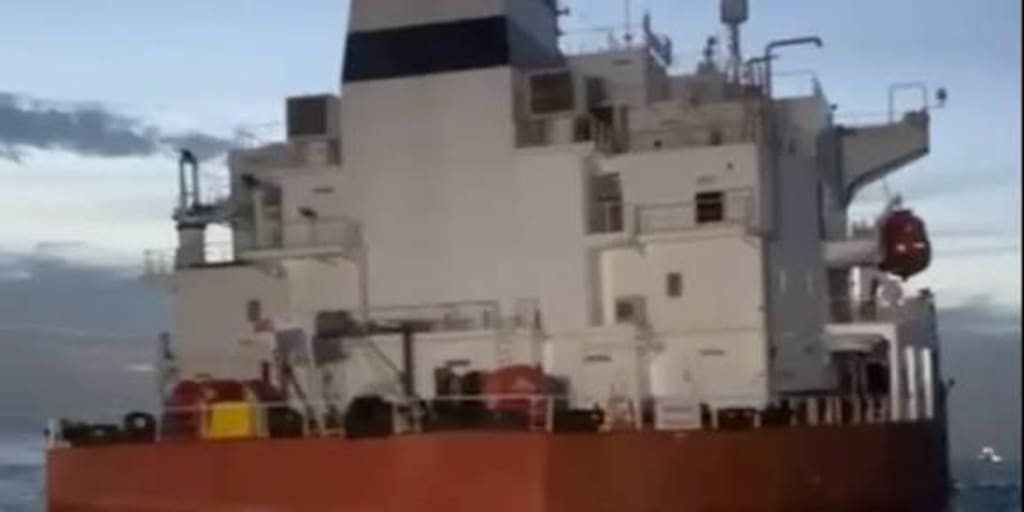
A Russia-linked tanker was hit by explosions off the coast of West Africa, raising alarm among international shipping authorities and sparking concerns over maritime security in one of the world’s busiest trade regions. While no casualties have been reported so far, the incident has drawn attention to the escalating risks faced by commercial vessels amid ongoing geopolitical tensions.
The tanker, whose precise identity is being verified by authorities, was en route from a West African port when multiple explosions rocked its hull. Sources indicate that the vessel is associated with Russian trade, which adds a layer of complexity to the incident given the current international sanctions and scrutiny surrounding Russian maritime activities.
West Africa has increasingly become a hotspot for maritime incidents, from piracy attacks in the Gulf of Guinea to politically motivated strikes targeting commercial shipping. Analysts suggest that this latest explosion could be part of broader strategic efforts to disrupt trade routes or to send a geopolitical message in response to the ongoing Russia-Ukraine conflict and related sanctions imposed by Western nations.
Maritime security experts have highlighted that the Gulf of Guinea, encompassing countries like Nigeria, Ghana, and Cameroon, has seen a dramatic rise in attacks on shipping vessels. These incidents, ranging from hijackings to targeted sabotage, not only threaten crew safety but also have far-reaching consequences for global trade and energy supplies. The latest explosion underscores the vulnerability of even large, commercial tankers navigating this region.
Officials from the tanker’s home country and international maritime authorities are coordinating to assess the situation and prevent further escalation. Preliminary investigations suggest that the explosions could have been caused by an external attack, possibly a targeted strike, although accidental causes are not being ruled out. Experts are calling for enhanced surveillance and coordinated patrols to safeguard key maritime routes in West Africa.
The economic implications of such incidents are significant. Tankers play a vital role in transporting crude oil, refined petroleum products, and other essential goods. Disruptions can cause supply chain delays, increase shipping insurance costs, and even impact global energy prices. Analysts warn that repeated incidents in strategic trade corridors could exacerbate economic instability in regions dependent on maritime trade.
Furthermore, the attack highlights the geopolitical dimensions of maritime security. A Russia-linked vessel being targeted near West Africa may prompt discussions among international stakeholders regarding the protection of neutral commercial shipping from becoming collateral in larger conflicts. It also raises questions about how global powers can cooperate to ensure that commercial interests are safeguarded even amid political tensions.
International responses are beginning to take shape. The United Nations and regional bodies such as the Economic Community of West African States (ECOWAS) have urged calm and called for a thorough investigation into the incident. Shipping companies operating in the region are reviewing their risk assessments and updating protocols to protect crews and cargo. Additionally, naval forces from multiple countries are considering joint patrols to deter future attacks and secure vital maritime lanes.
For the crew aboard the tanker, the incident has been a harrowing reminder of the dangers that seafarers face daily. While no casualties have been confirmed, the psychological impact and disruption of operations can be profound. Maritime unions and advocacy groups are emphasizing the need for stronger protective measures, including emergency response drills and rapid communication channels for vessels navigating high-risk waters.
Beyond immediate security concerns, the attack is also expected to influence broader international trade discussions. Russia’s maritime commerce is already under heavy scrutiny due to sanctions, and incidents like this could further complicate shipping logistics and contractual obligations. Analysts predict that insurers, logistics firms, and energy traders will closely monitor developments in West Africa to gauge risk levels and adjust operations accordingly.
In conclusion, the explosion aboard the Russia-linked tanker off West Africa serves as a stark reminder of the intersection between geopolitics and commercial shipping. While the immediate focus is on ensuring the safety of the crew and assessing the damage, the long-term implications touch on global trade security, regional stability, and international relations. As investigations continue, the incident reinforces the urgent need for coordinated efforts to protect maritime trade and ensure that economic lifelines remain secure in an increasingly volatile world.
About the Creator
Fiaz Ahmed Brohi
I am a passionate writer with a love for exploring and creating content on trending topics. Always curious, always sharing stories that engage and inspire.
Keep reading
More stories from Fiaz Ahmed Brohi and writers in The Swamp and other communities.
Pope Leo Finds His Voice on First Foreign Trip
Pope Leo’s first foreign trip as the head of the Catholic Church has already captured global attention. Beyond the ceremonial welcome and customary photo ops, this journey is proving to be more than just a diplomatic visit; it is a statement of intent from a pontiff eager to engage directly with the world’s challenges.
By Fiaz Ahmed Brohi4 months ago in The Swamp
The Forsyth House Fire
Since 1851, Forsyth House has stood on the corner of Union Street and Gordon Street in the heart of Glasgow. Its iconic, or was... because on Sunday 8th of March, 2026, a fire broke out in a small, seemingly un-named shop in the building and tore all that history down. As I write, the rubble is still unsettled and the street is still blocked off. Central Station is quiet on the upper level, and around 30 small businesses have quite literally gone up in smoke.
By S. A. Crawford3 days ago in The Swamp
Wealthy British nationals fleeing Gulf conflict bypass UK to avoid tax bills
Wealthy British nationals living in the United Arab Emirates (UAE) and neighbouring Gulf states are choosing to relocate to countries such as Ireland and France rather than return to the United Kingdom amid rising conflict in the region — a decision driven largely by concerns over the UK tax system as the current tax year draws to a close. With only a few weeks left before the 2025–26 UK tax year ends on 5 April, many high‑net‑worth individuals who have established non‑resident status are hesitant to risk returning home for fear of triggering significant tax liabilities. The UK’s tax authority, HM Revenue & Customs (HMRC), counts the number of days an individual spends in the UK as a key determinant of tax residency; exceeding allowable days could make a non‑resident liable for UK income tax and capital gains tax on worldwide income and gains. Conflict prompts decisions rooted in tax, not safety The rising conflict in the Gulf region has forced many Britons to contemplate where to regroup. Rather than risk being treated as UK tax residents by spending too much time in Britain — and potentially face retroactive taxation — they are instead flying to countries perceived as more tax favourable until the new UK tax year begins. Ireland and France have become popular temporary destinations, offering a buffer until Britons can return without altering their tax status. A wealthy business owner, speaking to The Guardian, said he was spending time in Dublin to avoid returning prematurely to London, which could have triggered capital gains tax on assets or businesses that had been sold while he was abroad. “I’m happy to pay income tax and tax on investments next tax year, but I don’t want the sale of a business that I sold years ago to fall within UK capital gains tax,” he said. Exceptional circumstances relief unlikely Some expatriates hoped that current travel advisories related to the conflict might qualify them for HMRC’s “exceptional circumstances” rule — a provision that, in the past (notably during the COVID‑19 pandemic), allowed flexibility over residency tests for people unable to leave certain regions. But tax professionals warn that HMRC is unlikely to be sympathetic, noting that governments generally don’t consider advisory alerts sufficient to trigger tax‑year leniency. Nimesh Shah, chief executive of tax advisory firm Blick Rothenberg, told The Guardian that the current situation around the Gulf does not meet the stringent criteria HMRC applies for exceptional circumstances. “In HMRC’s mind they’ve chosen to go [to the UAE] to not pay tax in the UK,” he said, adding that those leaning on that provision may be disappointed. Tax rules and residency traps Under UK tax law, the Statutory Residence Test governs whether an individual is considered a UK resident for tax purposes. Spending too many days in the UK — typically more than 90 or 120 in a year, depending on circumstances — can trigger residency status. Once deemed resident, individuals may face income tax on worldwide earnings and capital gains tax (CGT) on gains realised abroad, including sales of businesses or investment assets. Those who have been non‑resident for fewer than five full tax years are particularly vulnerable. If they return and restart UK residency status, the UK’s Temporary Non‑Residence (TNR) rules could subject them to CGT on gains made while they were outside the country — even if those gains occurred years earlier. Broader context: wealthy Britons and tax migration This latest bout of relocation sits within a wider debate over the UK’s changing tax landscape. In recent years, reforms to the so‑called “non‑domiciled” tax regime and moves to tax worldwide income more comprehensively have prompted some wealthy individuals to reconsider their tax affairs and, in some cases, their residency. While broader “millionaire exodus” claims are contested and likely exaggerated, these current moves reflect how tightly the timing and interpretation of tax laws influence where the wealthy choose to live during periods of geopolitical stress. Public reaction and policy implications Reaction among the public and on social media has been mixed. Some commentators argue that if wealthy Britons benefit from UK services — including evacuation support — they should contribute to the tax base. Others take a more laissez‑faire view, noting that existing residency rules allow people latitude in where they live and pay tax, and that individuals often make these choices for legal, financial reasons rather than a disdain for their home country. For policymakers, these developments highlight ongoing tensions between tax competitiveness and fairness — a debate that is likely to continue as the UK navigates the post‑Brexit economic and political landscape. Subtitle: Wealthy British expatriates displaced by Gulf conflict are avoiding returning to the UK to protect tax‑favourable status, choosing alternative European destinations to evade potentially costly tax residency rules.
By Fiaz Ahmed 2 days ago in The Swamp


Comments
There are no comments for this story
Be the first to respond and start the conversation.