technology
Talking tech; debates about regulating technology, privacy laws, piracy, and the pitfalls of AI.
Why LED High Bay Lamps Are Best For Lighting Sheds?
We all know that low lighting levels can potentially cause serious cuts and burns while working inside a poorly lit shed or garage. It gets even worse when you trip over cables or tools left lying on the floor by one of your mates.
By Ecofin Solutions ForU3 years ago in The Swamp
Healthcare: How Does this Sector Benefits from Digital Wallet
A revolution is afoot in the healthcare sector and it is a digital one! Yes, digital wallets have finally started their foray into the world of healthcare & rest assured that they are quickly gaining momentum in this sector too. Such growth in digital wallets’ popularity is understandable when one sees that payments are among patients’ biggest concerns. The difficulty of accessing invoices, bills, etc. has also long been a point of friction in this industry.
By Ryan Williamson3 years ago in The Swamp
Are We Living in a Post-Truth World?
Former US president Donald Trump made 30,573 false or misleading claims during his four-year term. While that’s steep on any scale, the idea that politicians routinely lie to the public is not breaking news. But Trump took his relationship with reality to even shakier ground than usual. He widely dismissed unflattering media reports as fake news. He consistently hurled insults at journalists. And he still claims the 2020 US election was rigged against him.
By Shane Peter Conroy4 years ago in The Swamp
Get verified and explore Fet Life's new facial recognition system.
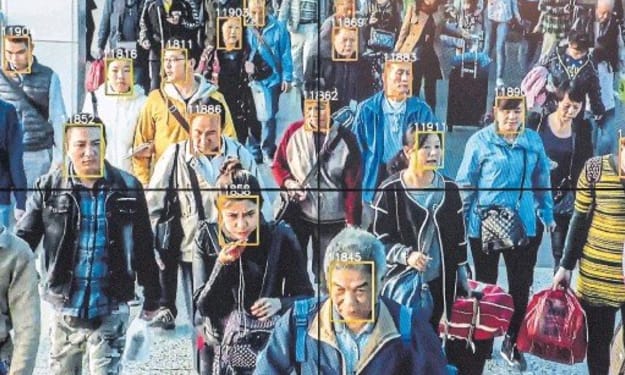
There is a reason why Facebook and many others have stopped doing this. Facial recognition systems harm people in the community. But face recognition, the technology behind these features, is more than just a gimmick. It is employed for law enforcement surveillance, airport passenger screening, and employment and housing decisions. Despite widespread adoption, face recognition was recently banned for use by police and local agencies in several cities, including Boston and San Francisco. Why? Of the dominant biometrics in use (fingerprint, iris, palm, voice, and face), face recognition is the least accurate and is rife with privacy concerns. Police use face recognition to compare suspects’ photos to mugshots and driver’s license images; it is estimated that almost half of American adults – over 117 million people, as of 2016 – have photos within a facial recognition network used by law enforcement. This participation occurs without consent, or even awareness, and is bolstered by a lack of legislative oversight. Face recognition empowers a law enforcement system with a long history of racist and anti-activist surveillance and can widen pre-existing inequalities. I do not support this as part of Fet Life and it will out others as not even credit card companies are safe from getting hacked. This is a bad idea and bad for the global community to particpate with.
By Joseph Crown4 years ago in The Swamp
Work in the Twenty-First Century
Labor Day got me thinking about the world of work in America. So many people are pontificating about how the pandemic will change work in the future. Many of these people are employers trying to decide whether they want employees back in office or if work from home (WFH) will be more common even after COVID. Hybrid models are being tried out in some work environments, models which have employees spending part of the work week on site and the rest of the week spent working from home. There are discussions about 4-day work weeks once again, and shorter work hours. When commuting to work was interrupted, the WFH model, which we did not think we were ready for, became an important way to work, take care of family needs, and stay healthy.
By Nancy Brisson4 years ago in The Swamp
Labor Day 2021
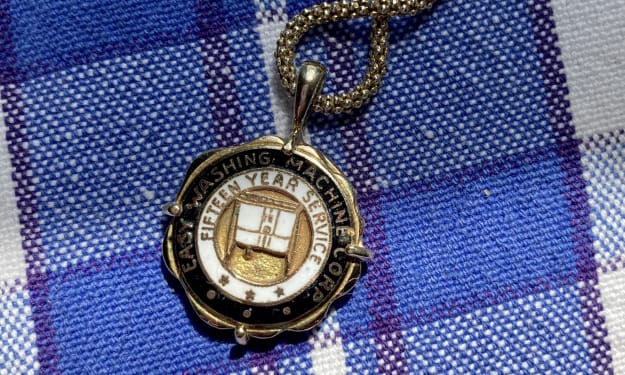
This week began with Labor Day which always puts my mind on my father. Dad earned the nickname “Brain” because, had he not been born into a poor family just at the edge of the Great Depression, his intelligence might have led to a very different life than the one he lived. He had to drop out of school after eighth grade to go to work in order to help support his mother and father. He found a job at the Easy Washer plant in Syracuse, NY. I know he worked there for at least 15 years, beginning when he was thirteen. Easy Washer made wringer washing machines. I also know that he worked there right through WWII, doing essential war work.
By Nancy Brisson4 years ago in The Swamp
Information is Treachery
A computer can not read - that's simply not one of its gifts. It can't see a picture, either, or listen to a song or watch a film. What a computer sees - insofar as it can be said to "see" anything - is an endless world of switches, some on, some off. Yet within those switches are patterns, some of which correspond to stories, pictures, songs or films. At command, a computer can take those switches and perfectly recreate these things, telling stories it hasn't the means to understand.
By Andrew Johnston5 years ago in The Swamp