history
Past politicians, legislation and political movements have changed the course of history in ways both big and small. Welcome to our blast to the past.
Ukraine: China Harnesses ex-Soviet Central Asia in Bid to Resolve Crisis and...?
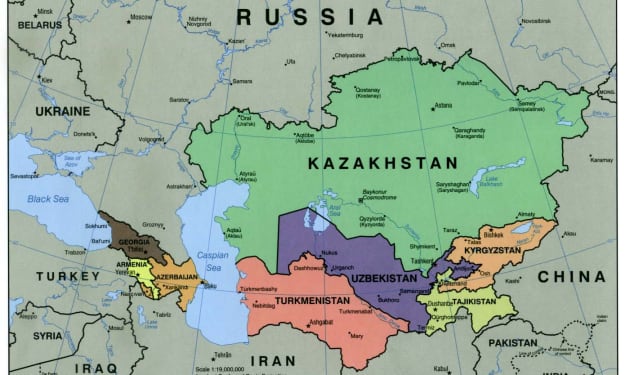
If there’s a political vacuum then power will fill it. In a deft diplomatic flanking move, China is strengthening its ties with former Soviet Central Asian republics Kazakhstan, Kyrgyzstan, Tajikistan, Uzbekistan and Turkmenistan.
By James Marinero3 years ago in The Swamp
THE RISE OF BARRACK OBAMA TO AMERICAN PRESIDENT
In the USA, there had been several memorable presidential campaigns, however none possibly as historical and provoking as the rise of Barack Obama. His journey from a extraordinarily unknown community organizer to turning into the primary black president of the US in 2008 is a story of wish, perseverance, and a real underdog story.
By Festus Law3 years ago in The Swamp
McGill and the Great ReThink
What's in a name? For an English major, this can lead to many other questions. I was on the McGill campus looking at some of the book purchases I made at The Word on Rue Milton (this used bookstore was one of the main drops for me and others when we were students). Feeling nostalgic, I walked up to the campus, passed through the Arts Building centred in the campus, and then sat outside in the rare sunlight.
By Kendall Defoe 3 years ago in The Swamp
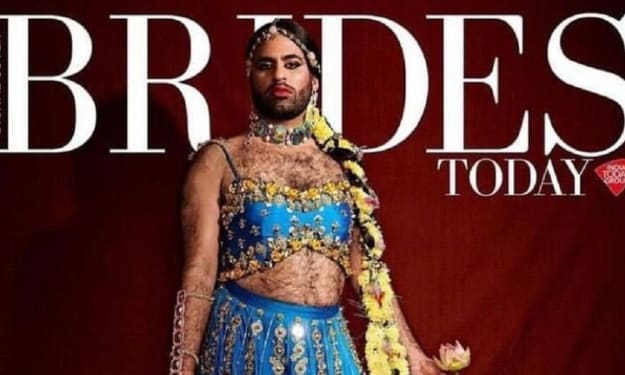
Transgender promotion has reached the Indian media and is causing controversy
The cover of the digital magazine featured a photo of Indian-born transgender activist Alok Vaid Menon. Menon said in an interview with the magazine that "India practices discrimination by not normalizing same-sex marriage," considering that "the refusal to legally recognize same-sex marriage is a form of discrimination that must be addressed."
By News Correct3 years ago in The Swamp
Napoleon Bonaparte
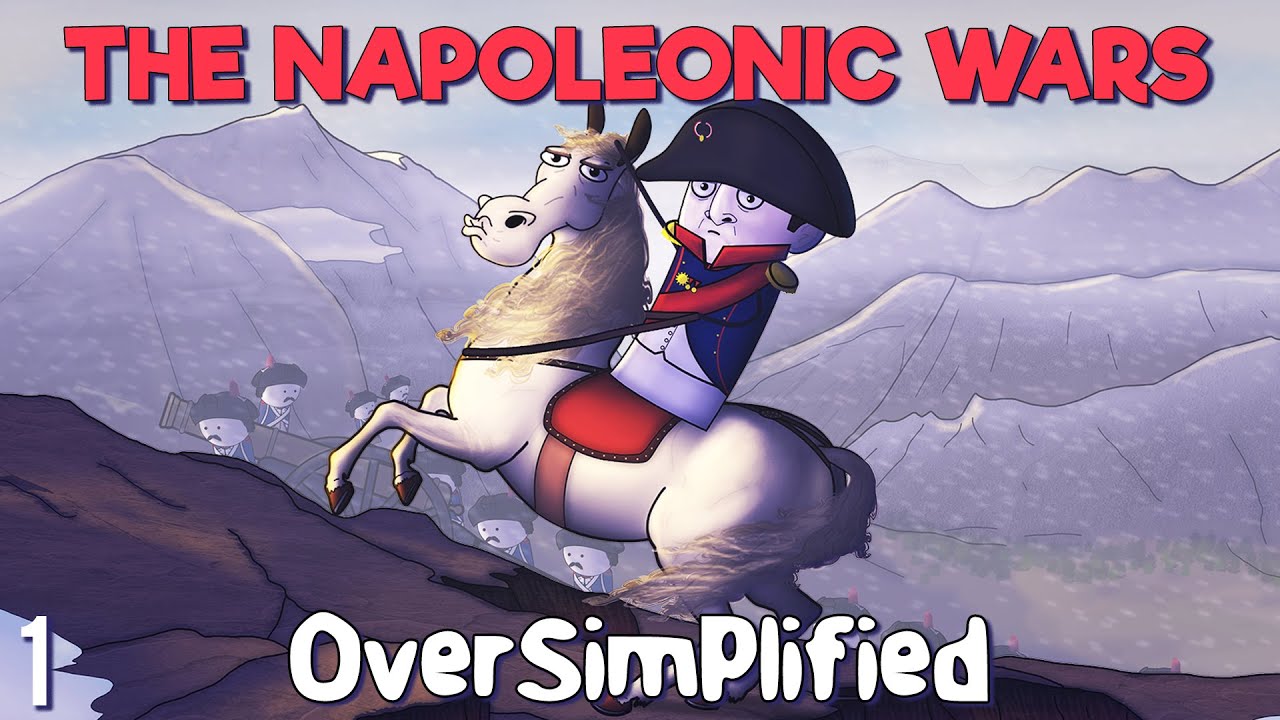
Napoleon Bonaparte was born on a small island in Corsica, France. You see what makes his story fascinating is that many great conquerors had impressive origin stories. They were usually aristocrats or nobility. But Napoleon Bonaparte was from a humble middle-class family who was making just enough money to live comfortably. So now let’s begin our story. Napoleon Bonaparte was born on August 15, 1769, in Corsica. When Napoleon was born Corsica was a part of the Republic of Genoa, but 1 day it declared independence and left the republic. So the Republic of Genoa asked France if it wanted to buy the island and France accepted. And That’s how Napoleon was born French. But the Corsicans hated their new conquerors and did many anti-French things. Because of that Napoleon developed anti-French sentiments. However, his dad embraced the French people and loved them. Because of this, tension grew between them. After Napoleon finished his primary education his family sent him off to France where he went to military school. He got bullied a lot there for his height and Corsican accent. But he was very intelligent and read a lot of books about the great conquerors of the past. He graduated from his military school at the age of 16 and was put in as a second lieutenant in the army. Now that might seem like a pretty nice role to get but Napoleon wasn't satisfied. He didn’t want to be some junior officer. He wanted to rise the ranks and become an important general. But the problem was this would be very difficult. Since he was Corsican and didn't come from a rich family it would be very hard. You see in that time jobs were given on your family’s rank in the social classes. And even though Napoleon was the most talented officer there it would be hard to get up the ranks because of his family’s social status. But luckily for him, the French Revolution came along. He helped the revolutionaries. First, he put down a counter-revolutionary uprising. Then he put down a royalist uprising. Because of his deeds, he was given his army and was given a very high rank. He was making astonishing progress and was making his dream come true. But right around this time after the monarchy was abandoned the other European nations were starting to threaten France. They were worried that their peasants would uprise as France did. So they formed a coalition against France. This was the whole Europe vs France. Because of this the war of the First Coalition Began. At first, France struggled. But then they started to do surprisingly well in their conquered territories created sister republics and spread their revolutionary ideas across Europe. Then they planned a three-pronged attack on Vienna to knock Austria out of the war. The 2 main armies in the north were to attack Vienna and Napoleon’s army in the south as a diversion. This was the first time Napoleon led a military campaign and was his chance to prove himself. And boy he did. The army he was given was underpaid, demoralized, and lacked food and arms. But Napoleon Galvanized them with speeches and got them fired up and took them into Italy. He was outnumbered and his campaign was supposed to be a sideshow, but he made it the main show. While the 2 northern armies were being held back Napoleon was making astonishing progress in the south. He masterfully split his opponent's armies into 2 and took them on separately. This would mean he was able to defeat the armies more easily. In the battle of Lodi, he was getting covered in mud and firing the cannons himself. This got him the respect of his army and when he told them to charge on abridging that was almost suicidal they did it and took the bridge. Because of all of his victories, the Austrians were on the run. Napoleon plundered as he went and sent money back to France to help its economy. As he marched towards Vienna the exhausted Austrians were forced to make peace. And like that, Napoleon almost single-handedly took Austria out of the war. He also created sister republics in the territories he conquered and created their constitutions himself. When he went back to France he was hailed a hero by the people and the unpopular government was afraid that he would get some power-hungry ideas. So they sent him to Egypt so that he could maybe undermine British access to Egypt. But Napoleon couldn’t. He wasn’t trained to fight naval battles and the British had much better ships. So he returned to Egypt. But one thing you should know is that Napoleon was a great propagandist, and he published his newspapers which often exaggerated his achievements. Because of this when he returned to Paris he was again hailed as a hero. At this time the government’s worst fear came true. He started to get some power-hungry ideas. He was then approached by a very influential person Emmanuel Joseph Seiyes who told him he wanted to stage a coup on the government. He needed Napoleon’s help. Napoleon agreed. The plan was to trap the government inside a building. So this is how it happened. Napoleon said that there was a Jacobin Plot to kill them and if they got inside that building they would be safe. After they went inside they were able to make them give up their power. They formed a new government called the Consulate and Napoleon got all the power. For the next few years, Napoleon worked on stabilizing France’s economy. But since Napoleon was stabilizing the economy and France was solidifying its sister republics the European powers decided to start the war of the Second Coalition. The difference in this war was that Russia was also part of the Coalition. At first, Russia was on the offensive and they pushed France back deep into their territory. At this point, it looked hopeless for France. But Napoleon called the reserve guard to the front lines and he took the fight to the opposition. This is where Napoleon’s art of deception comes in. Napoleon went and occupied Geneva an important city. It looked like he would go north and take on the Austrian forces in Germany. But he instead went for the crazy idea of marching his army through the Alps and launching a surprise attack on Austria’s second force in the south which was deployed to siege Genoa. This was a hard trip for Napoleon’s army and they suffered badly. But Napoleon’s plan paid dividends. When he emerged out of the Alps the Austrians expected him to come from the back and try and fight them, But instead, he went for the supply lines of Austria. This forced Austria to come and face Napoleon head-on. This helped Napoleon because his army was able to attack from the north and the other army was able to attack from the south. Then after the army in Germany won there Vienna was exposed and the Austrians sued for peace. This ended the War of the Second Coalition with another French victory. But there was still one nation still at war with France. The United Kingdom. They were using their powerful navy to take control of French Ports and were hijacking even neutral ships. Because of all this, the European countries now got mad at the British and embargoed them. In response, Britain went to Copenhagen and blew a bunch of stuff up. But because the British were out of money they had to make a treaty with France. For a long time, Europe was at peace. Now Napoleon proved to be a great governor. He made the economy prosper with a new national bank, currency reform, and an improved taxation and welfare system. He got rid of corrupt government officials and improved the infrastructure. H also created an organized legal system that was easy to follow. He built on the ideas of the French Revolution and gave equality to all. He also reformed the educational system and ensured jobs weren’t given by social status but by talent. That meant everyone had to compete with everyone. What this also did was give Napoleon the best possible generals. The last thing he did was bring back the Catholic Church to ensure no Catholics rioted… To be continued
By Sunkrith Amerineni3 years ago in The Swamp