book reviews
Reviews for political die-hards of books about politicians, civil rights, Supreme Court rulings and the ever-changing Swamp.
JFK, The Warren Commission, & 'A Cruel and Shocking Act'
In the more than a half-century since the assassination of John F. Kennedy in Dallas, questions have been raised time and again about it. How many shots? Who was involved? Did alleged assassin Lee Harvey Oswald act alone or was he even involved at all? The Warren Commission, set up in the aftermath of the assassination and whose report was issued to the public in 1964, was meant to answer those questions once and for all. Instead, it would merely add gasoline to the fire of conspiracy claims. How and why that came to be is covered in this volume from journalist Philip Shenon who explores (as the book is sub-titled) “the secret history of the Kennedy assassination.”
By Matthew Kresal8 years ago in The Swamp
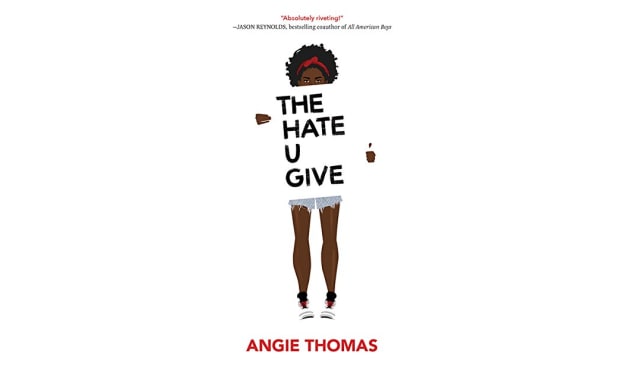
'The Hate U Give' by Angie Thomas: Book Review
The Hate U Give is a novel written by Angie Thomas. Her novel focuses on the problems of today dealing with police shootings and #BlackLivesMatter. The main character, Star, witnesses her best friend, Khalil, shot by a police officer after being pulled over by the officer. Khalil died in Stars arms and she was traumatized after witnessing this tragedy. The novel shows how much her life changes after the tragedy and what others around her go through as well. It also shows how her community changes after the death of Khalil.
By Anaya Chambers8 years ago in The Swamp
'On Tyranny: Twenty Lessons from the Twentieth Century' by Timothy Snyder
Throughout the reading of On Tyranny: Twenty Lessons from the Twentieth Century (Timothy Snyder, Vintage Publishing, 2017)the figure of Victor Klemperer resonates strongly. Klemperer was a humanist, philologist, and Professor of Romance Languages and therefore, a man shaped by language, culture, and books. His testimony of the Nazi Germany shares many features with other witnesses but his condition of linguist makes Klemperer a sharp observer of the nazi's perversion of language. Klemperer filled his diaries I shall bear witness (1933-1945) with personal impressions, objective or subjective descriptions, from a jewish and no-jewish perspective, what represent an evocative narration of daily life under Nazism picturing the entire trajectory from the first years of Nazism after the elections in 1933 to their defeat of the Germans and the end of the war in 1945. But if there is a trait relevant about Klemperer work is his analysis of how the Nazis appropriated the language and enraptured the entire nation in the process. In 1947 he published LTI – Lingua Tertii Imperii: Notizbuch eines Philologen (The language of the Third Reich), a close study of the language of Nazism and how propaganda helped to form individual and collective identities. Klemperer used the book as a resource to keep himself sane, while he was forced to abandon his classes and start to work in a factory. It is remarkable that most of the words used for the nazis were not new terms but existent words that were adjudged with new meanings like for example New Order. Also ‘Umsiedlung’ (resettle) or ‘Aussiedlung’ (evacuation) words for the killing of Jews, while the gas chambers were called the ‘Badeanstalten’ or bath houses. And of course the biggest of the euphemisms used for the systematic extermination of Jews known as the Final Solution ‘Endlosung.'
By Guillermo Fernandez8 years ago in The Swamp
'Revolutionary Keywords for a New Left' by Ian Parker
Revolutionary Keywords for a New Left (Zero Books, 2017) is an atypical dictionary where one can find 50 relevant keywords for left politics. Already in 1975, the British marxist Raymond Williams published Keywords: A Vocabulary of Culture and Society. In doing so, he highlighted the importance of language to build a system of thought for the left. In the last essay that works as a conclusion for the book, Ian Parker revises the trajectory of different keywords for the left dividing it in three periods; before the 1917 Russian Revolution, from 1917 to 1967, and from 1967 to 2017. By using as support material Raymond William's book, this catalogue allows us to observe the evolution of the political vocabulary and compare both, how the use of words changes throughout the years and which words enter and disappear from the lexicon. Parker takes over the immense endeavour of updating and renewing that vocabulary, modernising it within the present social framework. The task is gigantic and Parker, who is well aware of that, warns in the introduction of the numerous perils of an self-centred academia isolated in a marble tower, ignoring the real world while debating and discussing aimlessly, and how political activists are generally reluctant to use terms from an academic background for being considered too intellectual and not relevant in the practical field.
By Guillermo Fernandez8 years ago in The Swamp
Best Nonfiction Books About the Republican Party
Right now, there seems to be an identity crisis going on in the American political scene. The Democratic Party has become famous for being liberal, and the Republican Party has become known for being the party of Trump, bigotry, and sexism.
By Mackenzie Z. Kennedy8 years ago in The Swamp
The Reluctant Fundamentalist and Being Brown
Five years ago I picked up a book that I never finished, but I fell in love with its title and the promise of a narrative so perfectly laced with a train of political and religious of thought that would fall perfectly in line with mine.
By Sajidah Ali8 years ago in The Swamp
Important Books Every Young Conservative Should Read
More than ever before, conservative thought leaders have been seeing their books flying off store shelves. These days, lots of people want to understand right-wing ideologies, and want to learn how to support conservative politicians.
By Cato Conroy8 years ago in The Swamp
How Would the U.S. Government Survive the Apocalypse?
Since the dawn of the nuclear age, how to survive a potential war fought with perhaps the most dangerous weapons invented by human beings has been a frequently asked —not just by private individuals, but by governments as well. Tracing the history of how the U.S. government has planned for a nuclear showdown and its aftermath, Garrett M. Graff's 2017 book Raven Rock: The Story of the U.S. Government’s Secret Plan to Save Itself — While the Rest of Us Die is a sobering but engrossing look into this shadowy world.
By Matthew Kresal8 years ago in The Swamp
Must Read Books About American Politics
Politics has never been a hotter subject. People are now discussing it at bars, at the dinner table, and even using political parties as an insult. Many of us, particularly those who enjoyed the Obama years, are wondering how things got this way.
By Ossiana Tepfenhart8 years ago in The Swamp
The Spy Novel That Predicted the Rise Of Trump & "Russiagate"
A businessman turned politician wins the Republican nomination for President of the United States. He defeats his Democratic challenger and looks set to go into the White House, preaching policies favorable to Russia. Yet a British intelligence operative uncovers proof linking the campaign to the Russians, forcing an investigation that eventually leads not just to major campaign officials but to the President-Elect himself.
By Matthew Kresal8 years ago in The Swamp
Smiley, le Carré, & 'A Legacy Of Spies'
It's been more than a quarter of a century since the Berlin Wall came down and the Cold War ended. There's a generation that has grown up in its aftermath, looked back on what was done, and wondered whether it was worth all the toil and treasure paid out for it. It is perhaps not surprising, in a time of retrospection about that great and most secretive conflict of the twentieth century, that one of the authors who came out of it returns to it. John le Carré, himself briefly a British intelligence agent at the height of the Cold War, does so with his novel A Legacy Of Spies and he brings forth many of his best-known characters to do so.
By Matthew Kresal8 years ago in The Swamp