activism
Grassroots campaigns have proven instrumental in bringing about political, social or environmental change; you've got to start somewhere-might as well start here.
What does the Black Lives Matter Movement mean to you?
The United States has experienced a momentous time in the last few months with regard to the Black Lives Matter movement and the pandemic. I've seen the devastation in our country and how it has forced many people, including me, to reconsider the lenses through which they see the world, as well as the way that it has targeted Black people. This has made us look at ourselves and our families to see the negative stereotypes that we perpetuate every day. As a South Asian citizen, I have learned about the harmful practices that affect Black people. The most common example is colorism. This practice has been embedded in South Asian culture since colonization. We need to take a step back, reexamine and have difficult conversations both with ourselves and with others so that we can all move forward together. It is important to recognize that America was built on systems that were designed to serve white people. Only when that realization is made can we begin to rebuild these systems for everyone's benefit. Non-Black POCs like me must learn about their own history. This includes how the Civil Rights Movement led to the United States allowing people from all Asian countries to come to the United States and how the Model Minority Myth has only harmed Black people. It is important to understand the history of Black brothers and sister by reading informative articles, watching documentaries, and watching movies that depict certain aspects of our society, such as the prison system. Also, it is crucial to create spaces for BIPOC to be heard, seen, and supported. As young people, it is our responsibility to be the best allies possible. This includes avoiding performative allyship and making use of any platform that we have to raise awareness. We can stop injustice by signing petitions, contacting representatives and continuously educating ourselves.
By Damian Peters4 years ago in The Swamp
The diversity of the recent Black Lives Matter protests is a good sign for racial equity
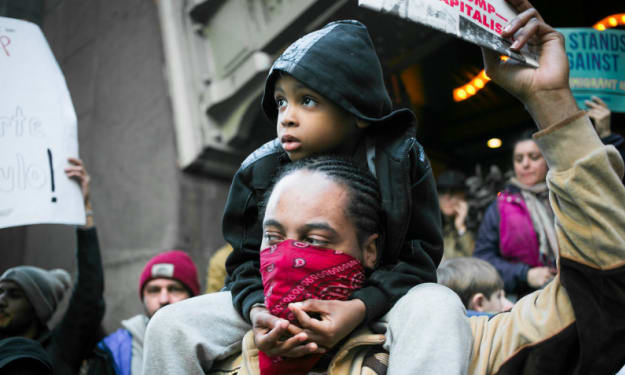
Protests have been erupting across the US since George Floyd's death by the police in Minneapolis, May 25. While demonstrations continue with no ending, many have pointed out that they are the " broadest in U.S. history." It is difficult to ignore that these protests were different.
By Damian Peters4 years ago in The Swamp
Richard Dawkins Is Wrong About Down Syndrome
On August 20th, 2014, renowned atheist author and ethologist Richard Dawkins told a woman on Twitter she ought to hypothetically abort in the case her child happened to have Down Syndrome. More specifically, he told her it would be immoral for her to keep the baby. What followed was what Dawkins facetiously described as “a new feeding frenzy,” subsequently painting himself as the victim of unfair scrutiny.
By Ilana Quinn4 years ago in The Swamp
How Do We Get Humans To Treat Other Humans Like Humans?
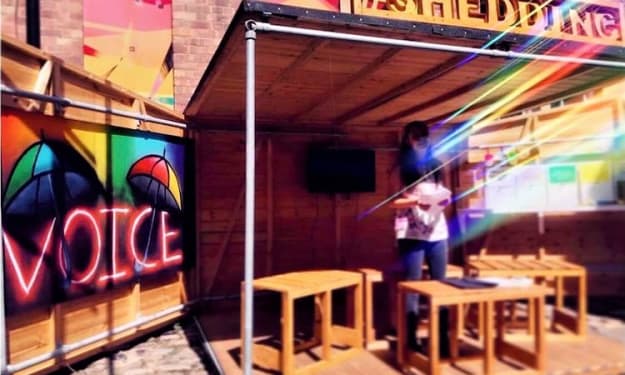
I want to talk about something that has given me a lot of pause. It’s about the importance of using your voice, showing up for each other, and community. I am a citizen of dual nationality… which is very confusing, because I am both us and them, self and other, the byproduct of two countries – England and Tunisia – yet also unable to qualify as a true-blue native of either of them. You could say I am somewhat displaced. Although not nearly as displaced as those who have found themselves with no other option than to leave the only place they know and try to cobble their lives back together on unfamiliar land.
By Outrageous Optimism 4 years ago in The Swamp
Why a Muslim-American dissident read Thoreau
Often associated with nonviolent civil disobedience, Thoreau isn’t the first name that springs to mind when one thinks of violent resistance. Yet Thoreau was among the first names I came across when I began to research Muslim-Americans’ responses to the crackdown on their civil liberties following 9/11. The Egyptian-American Muslim Tarek Mehanna, who since 2012 has been incarcerated in a US Supermax for downloading and translating content deemed by the US government to constitute “material support” for al-Qaeda, cites Thoreau prolifically in his prison writings and drawings. (I have discussed Mehanna’s case in more detail here.)
By Rebecca Ruth Gould4 years ago in The Swamp
Tokenism Post-BLM: Don't Let It Be The Easy Way Out
"We stand with you in solidarity" "We need to bind together during these tumultuous times" These words were somewhat cathartic for those who wanted to see the burgeoning pot of racial issues being acknowledged. But with most companies scrambling to hide their complicity post-BLM, we saw the same words fall prey to their safety net.
By Muhammad Hamza Shah5 years ago in The Swamp