
Supreme Court Rules in Favor of TikTok Sale or Ban: A Landmark Decision on National Security and Digital Freedom
"Supreme Court Upholds Law Mandating Sale or Ban Amid National Security Concerns"
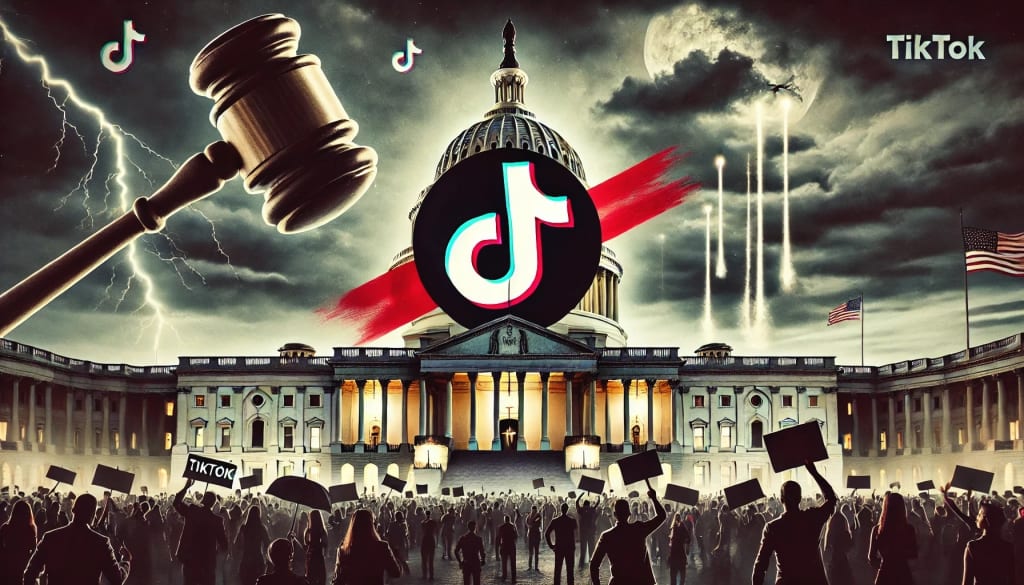
The United States Supreme Court has upheld a federal law requiring TikTok’s Chinese parent company, ByteDance, to divest its U.S. operations or face a nationwide ban. The decision, delivered on January 17, 2025, concludes months of legal and political debate over the app’s potential national security risks. TikTok, a short-form video platform with over 170 million American users, has been at the center of growing concerns about data privacy and possible influence by the Chinese government.
This ruling stems from the Protecting Americans from Foreign Adversary Controlled Applications Act, a bipartisan law passed in April 2024. The legislation mandates that any app deemed a security threat and linked to a foreign adversary must either sell its U.S. operations or cease operations entirely in the country. While ByteDance has repeatedly denied allegations that it shares user data with Beijing or that it could be coerced into doing so, U.S. lawmakers and intelligence agencies have expressed persistent skepticism.
Supreme Court’s Reasoning
The Court’s unanimous opinion acknowledged TikTok’s immense cultural and economic impact in the U.S. but emphasized that Congress had acted to address legitimate security concerns. Writing for the Court, the justices noted that “while TikTok plays a key role in free expression, Congress’s intent in crafting this law was not to suppress speech but to protect national security.” The ruling further stated that the law does not violate the First Amendment because it focuses on the platform’s ownership and security practices rather than restricting the content shared on it.
The decision came just a week after the Court heard arguments from TikTok’s legal team, which contended that the law was unconstitutional and disproportionately targeted the app. However, the justices ruled that the risks associated with ByteDance’s ownership were substantial enough to justify the government’s action.
What This Means for TikTok Users
TikTok now faces a fast-approaching deadline: by January 19, 2025, ByteDance must sell its U.S. operations or the app will be banned from major platforms like the Apple App Store and Google Play Store. If the ban is enforced, TikTok will gradually lose functionality for current users as updates and security patches are no longer available. This has sparked concern among creators, businesses, and users who rely on the platform for their livelihoods or entertainment.
In response, TikTok has expressed resistance to selling its U.S. operations, stating that it continues to explore legal and diplomatic options. The company has also called the Supreme Court's decision "a dangerous precedent" that could affect other foreign-owned companies operating in the U.S.
Political Implications
This decision places the future of TikTok in the hands of the incoming administration of President-elect Donald Trump. The outgoing Biden administration has deferred implementation of the ban to Trump, who will take office on January 20, 2025. Trump has previously advocated for banning TikTok, having attempted similar measures during his first term in 2020.
However, recent statements from the president-elect suggest a potential openness to negotiation. Trump has hinted at the possibility of working with ByteDance and even involving Chinese President Xi Jinping in discussions. This development introduces a layer of unpredictability, as political and diplomatic factors could shape the final outcome.
Alternative Platforms and Market Impact
In anticipation of a potential ban, many TikTok users and creators have begun exploring alternative platforms. RedNote, another video-sharing app with Chinese ownership, has seen a spike in downloads, while American platforms like Instagram Reels and YouTube Shorts aim to attract displaced creators. This migration underscores the app's significance to the creator economy, where influencers and businesses rely heavily on TikTok for visibility and revenue.
Broader Implications
The Supreme Court’s decision highlights the evolving complexities of regulating global tech platforms. It underscores the tension between national security and the free flow of digital content. The case also raises broader questions about data privacy, corporate transparency, and the future of foreign-owned apps in the U.S. As governments worldwide grapple with similar concerns, TikTok’s fate could serve as a precedent for how nations handle foreign technology companies.
As the January 19 deadline approaches, the world watches to see how ByteDance and the incoming Trump administration will navigate this high-stakes moment. For millions of TikTok users in the U.S., the decision has already triggered uncertainty, forcing them to consider whether their favorite app can adapt—or whether its time on American soil is running out.
This case not only reflects shifting geopolitical dynamics but also illustrates the challenges of safeguarding digital sovereignty in an increasingly interconnected world. At over 600 words, it encapsulates the legal, political, and cultural significance of the ruling.
About the Creator
Votes Being Counted in Uganda Election as Opposition Alleges Rigging
Uganda is at a critical political crossroads as votes are being counted in a highly contested election. The country has watched closely as citizens cast their ballots, and now the nation waits to see the outcome amid allegations of electoral malpractice.
By Aarif Lashari4 days ago in The Swamp


Comments
There are no comments for this story
Be the first to respond and start the conversation.