
Sudan Sources Say South Sudanese Among Captured RSF Members as War Rages
It seems that you are asking for assistance with subtitles. Could you please clarify the specific content or topic you'd like a subtitle for, or if you're referring to the best community to belong to on Vocal Media?

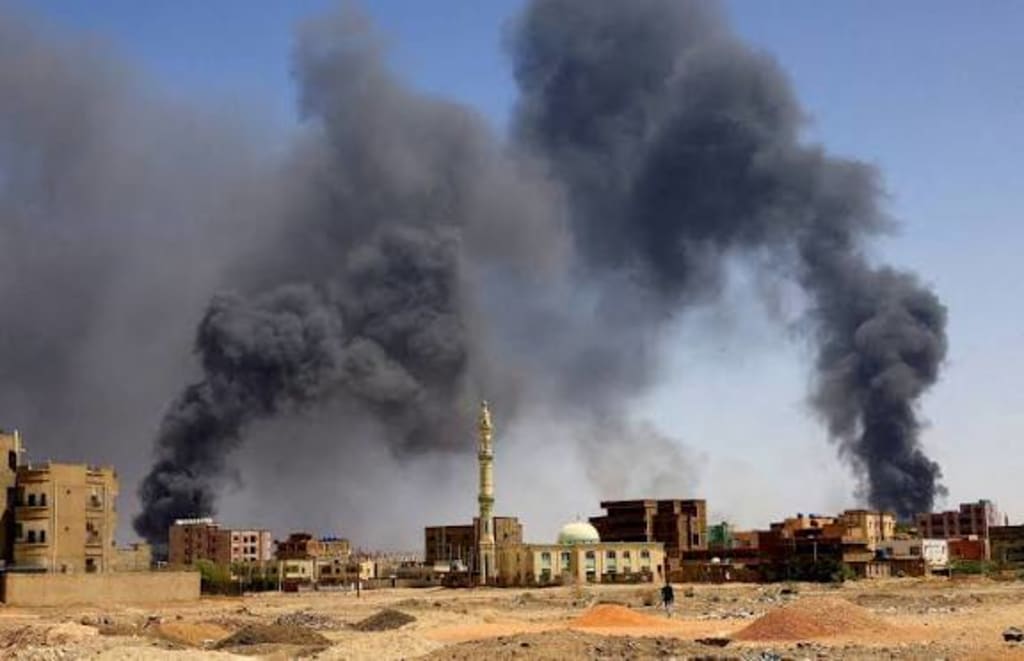
As Sudan’s devastating conflict grinds on with no clear end in sight, new revelations from local and regional sources suggest that some of the fighters captured from the Rapid Support Forces (RSF) are South Sudanese nationals. The claim adds a complex regional dimension to a war that has already shattered Sudan’s social fabric, displaced millions, and destabilized the Horn of Africa.
A War That Refuses to End
The war in Sudan erupted in April 2023, pitting the Sudanese Armed Forces (SAF) against the RSF, a powerful paramilitary group that grew out of the notorious Janjaweed militias. What began as a power struggle between rival military leaders quickly spiraled into a nationwide conflict. Cities such as Khartoum, Omdurman, El Fasher, and Nyala have witnessed relentless fighting, while civilians have borne the brunt through killings, looting, sexual violence, and forced displacement.
According to the United Nations, Sudan is now facing one of the world’s worst humanitarian crises. Millions have fled their homes, food insecurity is widespread, and health systems have collapsed in many regions. Against this grim backdrop, reports of foreign nationals among RSF fighters have raised alarm bells in both Sudan and neighboring countries.
South Sudanese Fighters: What the Sources Say
Sudanese military and security sources claim that several RSF members captured during recent clashes identified themselves as South Sudanese citizens. Some reportedly spoke local South Sudanese languages, while others allegedly admitted crossing the border to fight in Sudan in exchange for money.
While independent verification remains difficult amid ongoing hostilities, analysts say the reports are plausible. Sudan and South Sudan share a long, porous border stretching over 2,000 kilometers, much of it poorly monitored. Communities on both sides are historically interconnected through trade, migration, and shared ethnic ties, making cross-border movement relatively easy.
Why Would South Sudanese Join the RSF?
Experts point to several factors that could explain the presence of South Sudanese nationals among RSF ranks. Poverty and unemployment remain severe in South Sudan, the world’s youngest nation, which has struggled with instability and economic hardship since gaining independence in 2011. For some young men, the promise of payment, food, or weapons may outweigh the risks of joining a foreign conflict.
Additionally, armed groups in the region have long recruited fighters beyond national borders. The RSF, with its significant financial resources derived from gold mining, smuggling networks, and external support, is believed to have the capacity to attract mercenaries or informal recruits from neighboring states.
Regional Implications and Rising Tensions
The involvement—real or perceived—of South Sudanese fighters risks straining already fragile relations between Khartoum and Juba. South Sudan officially maintains a policy of neutrality in Sudan’s conflict, repeatedly calling for dialogue and peace. The government in Juba has denied any state involvement and has urged its citizens not to participate in foreign wars.
However, Sudanese public opinion has reacted sharply to the reports. On social media and in local commentary, some Sudanese accuse neighboring countries of fueling the conflict, intentionally or otherwise. Such narratives could inflame xenophobia and complicate diplomatic efforts to de-escalate tensions.
The RSF’s Transnational Nature
The allegations also highlight the increasingly transnational character of the RSF. Unlike a conventional national army, the RSF operates through flexible networks that blur the lines between militia, business enterprise, and criminal organization. Its recruitment methods, funding sources, and alliances extend beyond Sudan’s borders, making the conflict harder to contain.
This transnational aspect worries international observers, who fear the war could further destabilize an already volatile region. The Horn of Africa has seen overlapping conflicts in Ethiopia, Somalia, and South Sudan, and Sudan’s war threatens to become another node in a wider web of insecurity.
Humanitarian Costs Continue to Mount
While debates rage over the nationality of captured fighters, civilians continue to suffer. Entire neighborhoods have been destroyed, aid convoys looted, and humanitarian workers targeted. In Darfur, reports of ethnic violence echo the horrors of the early 2000s, raising fears of mass atrocities.
The capture of RSF fighters, South Sudanese or otherwise, does little to ease the suffering of ordinary people. Instead, it underscores how deeply entrenched and multifaceted the conflict has become.
Calls for Accountability and Peace
Human rights groups stress that all fighters involved in abuses must be held accountable, regardless of nationality. They argue that focusing solely on foreign involvement risks distracting from the core issue: a brutal power struggle that has devastated Sudan and robbed millions of their future.
International mediators continue to push for ceasefires and negotiations, but efforts so far have failed to produce lasting results. As the war drags on, the revelation of foreign fighters serves as a stark reminder that Sudan’s conflict is no longer just a domestic crisis—it is a regional one.
Conclusion
The reports that South Sudanese nationals are among captured RSF members add a troubling new layer to Sudan’s ongoing war. Whether driven by economic desperation, regional instability, or the RSF’s far-reaching networks, their alleged involvement highlights the conflict’s expanding footprint. As fighting rages on, the urgent need for peace, accountability, and regional cooperation has never been clearer. Without decisive action, Sudan’s tragedy risks spilling even further beyond its borders, with consequences the region can ill afford.
About the Creator
Fiaz Ahmed Brohi
I am a passionate writer with a love for exploring and creating content on trending topics. Always curious, always sharing stories that engage and inspire.
Keep reading
More stories from Fiaz Ahmed Brohi and writers in The Swamp and other communities.
The Limits of Saudi Power in Southern Yemen: A Struggle for Control in a Divided Nation
The conflict in Yemen, now in its ninth year, has involved multiple actors with competing interests. One of the most significant powers involved in the Yemen conflict is Saudi Arabia, which has supported the Yemeni government against the Houthi rebels since 2015. However, despite the kingdom's military dominance and substantial financial investments, Saudi Arabia's power in southern Yemen has encountered serious limits. The Southern Transitional Council (STC) and other local factions, once aligned with Riyadh, now challenge Saudi influence in the region, underscoring the complexity of Yemen's ongoing civil war. The Southern Transition and Saudi Interests Historically, the southern part of Yemen had its own independent government until its unification with the north in 1990. The unification did not last long, as tensions between the two regions culminated in a civil war in 1994. While the North emerged victorious, the deep divide between the northern and southern regions persisted. The region's desire for autonomy resurfaced after the conflict began in 2015, and the STC, a group primarily based in the south, emerged as a significant player. Saudi Arabia’s involvement in Yemen's war was initially framed as a campaign against the Iran-backed Houthi rebels, but over time, the dynamics became far more complex. With the STC’s growing influence and its desire for greater autonomy for southern Yemen, Riyadh found itself supporting a fractured coalition, one that struggled with competing local interests. Saudi Arabia’s primary goal in Yemen has been to contain the rise of the Houthi rebels, who control northern Yemen and have ties to Iran. However, its military campaign has failed to defeat the Houthis, and the southern region's instability, fueled by the STC and other local groups, has become another challenge to Riyadh's authority. The Rise of the Southern Transitional Council (STC) In recent years, the STC has become one of the most prominent and well-equipped military forces in southern Yemen, despite initially being a Saudi-backed entity. The STC, which seeks greater autonomy for the south, has increasingly challenged Saudi Arabia's authority in the region. The group has been supported by the United Arab Emirates (UAE), which has its own interests in the south. As a result, Saudi Arabia has faced growing opposition from a faction it once considered an ally. The STC's demands for autonomy have led to tensions with the Yemeni government, which is also supported by Saudi Arabia. The STC wants to establish a federal system of government, granting the south significant control over its resources and governance. This vision conflicts with Saudi Arabia's broader goal of preserving Yemen as a unified state under the current internationally recognized government. The UAE, which has supported the STC, withdrew many of its forces from Yemen in 2019, leaving Saudi Arabia to continue its military involvement. Despite this, the UAE has continued to provide political and financial backing to the STC, which has become a formidable political and military force in southern Yemen. Saudi Arabia’s Struggle for Influence Saudi Arabia’s involvement in southern Yemen has become a complex balancing act. On the one hand, the kingdom supports the internationally recognized Yemeni government, which it sees as a counterweight to the Houthi rebels. On the other hand, it needs the support of the STC, which controls significant portions of the south and has become a key player in the conflict. While Saudi Arabia has tried to maintain influence over the STC, tensions have emerged between the two. The STC has increasingly acted independently of Saudi Arabia and has fought against Yemeni government forces in the south. The group’s push for autonomy has further complicated Saudi Arabia’s position. The difficulty for Saudi Arabia lies in its inability to fully control the situation in southern Yemen. Despite its military power and financial resources, Saudi Arabia has found it challenging to bring about a resolution to the conflict or ensure stability in the south. The STC’s growing autonomy and the division between Riyadh and its allies in Yemen have limited Saudi Arabia’s ability to assert control over the region. The Role of External Actors: The UAE and Iran While Saudi Arabia has tried to maintain influence over southern Yemen, other external actors have played significant roles in shaping the region’s dynamics. The UAE, in particular, has had a strong presence in the south, supporting the STC and providing military backing. The UAE's backing of the STC is rooted in its broader geopolitical interests, including limiting Iranian influence in the region and securing access to the strategic ports in southern Yemen. The involvement of Iran, through its support of the Houthi rebels, has also complicated the situation. Iran's involvement has added a sectarian element to the conflict, with the Houthis, a Shia Muslim group, facing off against Saudi Arabia, a predominantly Sunni power. Saudi Arabia’s concern about Iran's growing influence in Yemen has been a major driver of its involvement in the war. The Way Forward: A Fragmented South and a Fragile Peace As the conflict in Yemen drags on, it remains unclear whether Saudi Arabia will be able to exert control over southern Yemen. While the kingdom has worked to secure a political settlement through the Riyadh Agreement (2019), which was intended to bring the Yemeni government and the STC together, the agreement has largely failed to produce meaningful results. The STC continues to push for autonomy, and the central government remains fragmented, with the war showing few signs of ending. Saudi Arabia's influence in Yemen is likely to remain limited as long as local actors like the STC continue to challenge the government’s authority. The conflict in Yemen, once seen as a straightforward confrontation with the Houthis, has become far more complex, with competing regional powers and local factions complicating the path to peace. Conclusion: A Shifting Geopolitical Landscape The limits of Saudi power in southern Yemen underscore the changing geopolitical dynamics in the region. Saudi Arabia's strategic interests in Yemen have become increasingly difficult to navigate, as its influence is challenged by local actors and rival powers such as the UAE and Iran. The southern region, with its growing autonomy and division between various factions, poses a serious challenge to Saudi Arabia’s regional influence. As Yemen's civil war continues, the future of Saudi Arabia's role in the country remains uncertain. However, it is clear that the kingdom’s efforts to shape the future of southern Yemen will face increasing challenges as the region becomes more fragmented and complicated by shifting alliances.
By Fiaz Ahmed Brohi18 days ago in The Swamp
At Least 22 People Killed When Crane Falls on Train in Northeast Thailand
A normal train ride turned into a horrifying nightmare when a massive construction crane collapsed onto a moving passenger train in northeast Thailand, killing at least 22 people and injuring dozens more. The tragic incident has shaken the nation, raising urgent questions about construction safety, infrastructure planning, and accountability.
By Aqib Hussain7 days ago in The Swamp
The Things That Almost Got Said
There are moments in life when words rise to the surface of our lips, press against our teeth, and then retreat back into silence. These are the things that almost got said — the confessions, apologies, truths, and goodbyes that never quite found their voice. They linger in our minds long after the moment has passed, replayed again and again, heavier each time.
By Aarif Lashariabout 19 hours ago in The Swamp


Comments
There are no comments for this story
Be the first to respond and start the conversation.