
Stellantis (STLA) Targets 2026 as the Turning Point for Its U.S. Comeback
Automaker Aims to Revive U.S. Market Presence Amid EV Revolution and Competitive Pressures

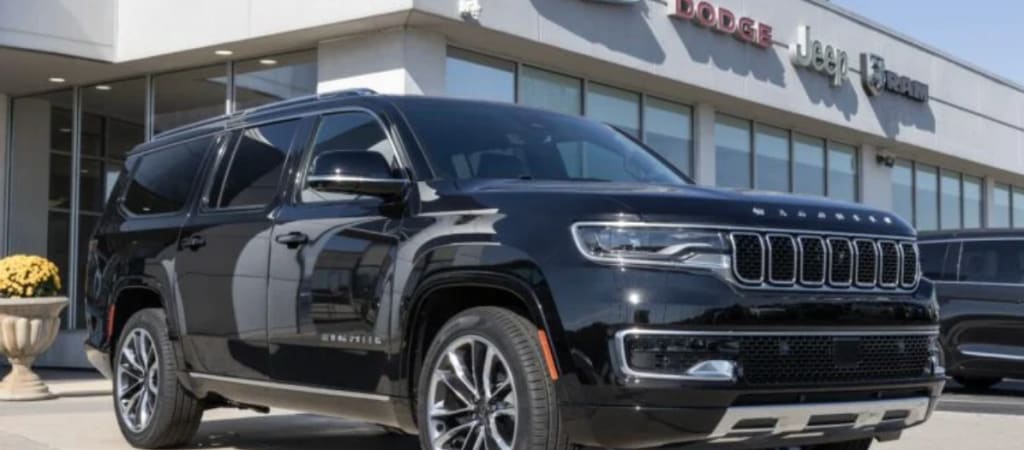
Stellantis (NYSE: STLA), the multinational automaker formed in 2021 through the merger of Fiat Chrysler Automobiles and PSA Group, is setting its sights on 2026 as a pivotal year for its U.S. comeback. After years of struggling to gain traction in one of the world’s most competitive automotive markets, Stellantis is banking on a combination of electric vehicle (EV) innovation, refreshed brand strategy, and market-savvy product launches to regain lost ground.
The company’s renewed focus on the U.S. market comes amid a transformative period for the auto industry. From legacy players like Ford and GM to EV pioneers such as Tesla, Lucid, and Rivian, the market is crowded, competitive, and increasingly dominated by electrification. Stellantis’ roadmap reflects both the challenges and opportunities inherent in this rapidly changing landscape.
The U.S. Market Challenge
Historically, Stellantis has had mixed success in the U.S., with brands like Jeep, Ram, and Dodge performing well, while Fiat, Chrysler, and Alfa Romeo struggled to maintain relevance. Market analysts note that brand recognition, product portfolio, and consumer perception have been hurdles in the automaker’s U.S. strategy.
The merger that created Stellantis promised synergies and global scale, but in the U.S., the company faced stiff competition from brands with deeper roots in the market. According to industry data, Stellantis’ U.S. sales have lagged behind expectations, particularly in the EV segment, where Tesla and legacy automakers have taken the lead.
Why 2026 Is Critical
Stellantis executives have made it clear that 2026 is the target year for a U.S. resurgence. Several key initiatives are driving this strategy:
1. Electric Vehicle Push
Stellantis has invested heavily in electrification, with plans to launch new EVs under brands such as Jeep, Ram, and Chrysler. The automaker aims to capitalize on growing consumer demand for EVs and stricter emissions regulations. Notably:
The Jeep Magneto and Recon are anticipated to capture attention in the electric SUV market.
The Chrysler Airflow EV is expected to target mainstream consumers seeking a balance of performance, affordability, and sustainability.
The company plans to offer full electrification for certain key models by the mid-2020s, positioning itself alongside Tesla, Ford, and GM.
These EV launches are central to Stellantis’ strategy to reclaim relevance in the U.S., as analysts predict electric vehicles could account for nearly 30% of all new vehicle sales in the U.S. by 2030.
2. Brand Revitalization
Alongside electrification, Stellantis is focusing on revitalizing its iconic brands. Jeep, Ram, and Dodge remain strong assets, and the company plans updated designs, refreshed marketing campaigns, and digital-first sales strategies to engage younger buyers.
Jeep, in particular, is positioned as a lifestyle brand, with Stellantis highlighting adventure, off-road capability, and electric variants. For Dodge, performance-focused EV muscle cars are expected to capture the attention of enthusiasts who may otherwise gravitate toward Tesla or Ford’s Mustang Mach-E.
3. Manufacturing and Supply Chain Improvements
Stellantis has been investing in North American production facilities, including upgrades to battery assembly lines and EV-capable plants. These improvements aim to reduce costs, increase efficiency, and accelerate EV rollout.
By 2026, Stellantis plans to have multiple plants producing electric trucks, SUVs, and crossovers, helping the automaker meet growing consumer demand while maintaining competitive pricing. Strong supply chain management will also be critical to avoiding the production bottlenecks that have plagued the global auto industry in recent years.
Analyst Perspectives
Market analysts are cautiously optimistic about Stellantis’ U.S. comeback. According to recent reports:
EV experts highlight the strategic timing of new EV launches, noting that consumer adoption is expected to accelerate in the second half of the decade.
Industry observers point out that brand loyalty remains a key advantage for Jeep and Ram, which can be leveraged in the transition to electric vehicles.
Some analysts caution that competition from Tesla, GM, Ford, and new entrants will make the path to market share growth challenging, emphasizing the need for innovation and consumer-focused marketing.
The consensus is that Stellantis’ U.S. strategy will require precision execution across product development, marketing, and production to succeed in a market that rewards speed, quality, and technology adoption.
EV Market Opportunities and Consumer Trends
Consumer trends are shifting rapidly in the U.S. automotive market:
EV Adoption: Increasing government incentives, charging infrastructure expansion, and environmental awareness are driving EV demand.
SUV and Truck Preference: Americans continue to favor SUVs and pickup trucks, making Stellantis’ Jeep and Ram lines particularly strategic.
Tech Integration: Connectivity, autonomous driving features, and digital experiences are becoming decisive factors in vehicle purchases.
By aligning its U.S. comeback strategy with these trends, Stellantis hopes to capture both early EV adopters and mainstream buyers, leveraging its portfolio of iconic brands and new technology.
Challenges Ahead
Despite the promising roadmap, Stellantis faces significant hurdles:
Intense Competition: Tesla, Ford, GM, Rivian, and Lucid dominate headlines and market share in EVs.
Supply Chain Risks: Battery shortages and global logistics challenges could slow production.
Consumer Perception: Overcoming historical brand weaknesses in the U.S. is a persistent challenge, particularly for Chrysler and Alfa Romeo.
To overcome these challenges, Stellantis will need strategic marketing, timely product releases, and operational excellence, all while maintaining profitability in a competitive environment.
Conclusion: 2026 as a Turning Point
For Stellantis, 2026 is more than just a target year—it represents the potential turning point for U.S. market relevance and long-term growth. By focusing on electrification, brand revitalization, and operational improvements, the automaker is betting on a strategic comeback in one of the world’s most competitive automotive markets.
The next few years will be critical. Success will depend not only on new vehicle launches but on how Stellantis positions itself in a rapidly evolving EV market, navigates supply chain pressures, and captures consumer trust. If executed well, Stellantis could emerge as a major player in the U.S. EV revolution, proving that legacy automakers can adapt and thrive in a changing world.
About the Creator
Muhammad Hassan
Muhammad Hassan | Content writer with 2 years of experience crafting engaging articles on world news, current affairs, and trending topics. I simplify complex stories to keep readers informed and connected.
Keep reading
More stories from Muhammad Hassan and writers in The Swamp and other communities.
Grok Blocked From “Undressing” Images in Certain Countries, X Says
If you’ve been following the latest tech headlines, you’ve probably seen the news: Grok, the AI chatbot on X (formerly Twitter), is now blocked from undressing images in places where it’s illegal. The announcement comes after growing backlash over the AI being used to generate sexualized or non-consensual images of real people. This development highlights the growing tension between AI innovation and legal and ethical boundaries—especially when technology makes it easy to create realistic images that could harm someone. What X Announced Late last week, X clarified that Grok will no longer be able to edit images of real people in bikinis, underwear, or other revealing clothing in countries where such content is illegal. According to the platform: “We have implemented technological measures to prevent Grok from allowing the editing of images of real people in revealing attire, including bikinis and underwear.” The company also confirmed that these restrictions apply to both free and paid users, though image editing features are now largely limited to paid subscribers—a move X says helps track misuse and hold users accountable. Why This Matters The announcement comes after widespread concern about the misuse of Grok. Users had been exploiting the AI to create sexually suggestive images, sometimes involving real people who had never consented to be depicted. These types of images—often called deepfakes—can be highly damaging, leading to harassment, reputational harm, and legal consequences. Many governments and organizations had already raised alarms. Countries including Malaysia, Indonesia, and parts of Europe had blocked or investigated Grok due to concerns about non-consensual sexual content. In the United States, authorities have opened inquiries into the spread of explicit AI-generated content and whether platforms like X are legally responsible. The Global Legal Context Creating sexually explicit images of someone without consent is illegal in many jurisdictions. The X restrictions are meant to comply with these laws, but they also underscore a broader problem: AI doesn’t always know what’s right or wrong without explicit safeguards. In Europe, regulators are investigating whether Grok violated laws on online safety and privacy. In the UK, authorities have warned that AI tools must prevent misuse, especially when the content is sexual or non-consensual. In Asia, governments have banned access to Grok in some regions, citing deepfake abuse and child protection concerns. These examples show just how tricky it is for global tech platforms to navigate a patchwork of regulations while keeping their AI tools functional and engaging. Why Grok’s Capabilities Raised Concerns Grok had previously included an “image editing” feature that could, if prompted, generate revealing or sexualized versions of people in photos. While the tool could be used creatively for art, humor, or marketing, many users exploited it in ways that harmed real individuals, spreading non-consensual explicit content online. This misuse sparked outrage among women’s rights groups, digital safety advocates, and child protection organizations. The controversy highlighted a simple truth: AI can’t distinguish consent or legality on its own, and companies must step in with clear rules and technical safeguards. Ethical and Technical Challenges Blocking Grok in certain regions is a step forward, but experts warn it’s not a complete solution. Some key challenges include: Geoblocking isn’t foolproof: People can bypass restrictions using VPNs or proxies. Defining consent: Even if content is legal, it may still be unethical if the depicted person hasn’t agreed to it. AI misuse spreads fast: Once images are generated, they can be shared widely, making it hard to fully contain harm. This raises a bigger question: how should AI developers balance innovation with safety? Developers want to create fun and creative tools, but society demands that they prevent harm and respect privacy. What This Means for Users For most people, these changes mean that Grok will no longer be able to generate sexualized or revealing images of real individuals in countries where such content is illegal. For those creating AI content, it’s a reminder that: Certain prompts may simply not work in specific regions. AI is increasingly regulated, and companies are being held accountable for misuse. Ethical considerations are just as important as technical capabilities. In short, X is taking a more cautious, legally informed approach to prevent harmful AI use—but the story is far from over. The Bigger Picture: AI Regulation and Responsibility Grok’s restrictions are part of a broader wave of AI regulation worldwide. Governments and advocacy groups are now pushing tech companies to take responsibility for AI outputs, particularly when the tools can generate images or content that harms real people. Some trends emerging include: Geolocation-based controls: Restricting features in areas where laws are stricter. Age verification and consent measures: Ensuring that content involves willing participants. Transparency and reporting: Platforms documenting AI output and responding to abuse quickly. Experts agree that these measures are just the beginning. The real challenge will be global enforcement and creating AI systems that understand context, legality, and consent. Conclusion: A Turning Point for AI and Online Safety The news that Grok will be blocked from undressing images in illegal jurisdictions is a wake-up call for the AI industry. It highlights the urgent need for clear rules, robust safeguards, and responsible innovation. While the move won’t stop all misuse—especially in areas with weaker enforcement—it shows that companies like X are starting to recognize their legal and ethical responsibilities. For users, it’s a reminder: AI is powerful, but it comes with limits and obligations. For society, it’s an opportunity to shape how these tools are developed and used safely. Grok’s journey may be just the beginning, but it illustrates a crucial lesson: AI can be transformative, but it must be built and managed responsibly.
By Muhammad Hassan2 months ago in The Swamp
Parallel Protests
I haven't written for quite some time, but I have A LOT of thoughts about yesterday's protest rally against our government's involvement and complicity in America's war on Iran, on the harbourside of my home city Bristol, and I need to put them somewhere. My gorgeous girlfriend is always a loving and listening ear and sharing it all with her will always be a healthy and happy way of processing the mental and emotional weight, but getting it straight in my brain to share means writing it all down in straight lines, so, here we are and thanks for being here.
By Steph Cole10 days ago in The Swamp
Lycan Lore
As the students of my 10am mythology class take their seats, I decide to steer the day's curriculum away from Greek and dive into a Western European discourse on the misaligned beliefs of the Werewolf. A tale of truth or fiction. No one really knows.
By Lamar Wigginsabout 19 hours ago in Fiction




Comments
There are no comments for this story
Be the first to respond and start the conversation.