
Starmer Wants UK Plc to Win Over China’s Xi Without Annoying Trump
Britain’s delicate balancing act as Keir Starmer courts Chinese investment while managing relations with a possible second Trump presidency

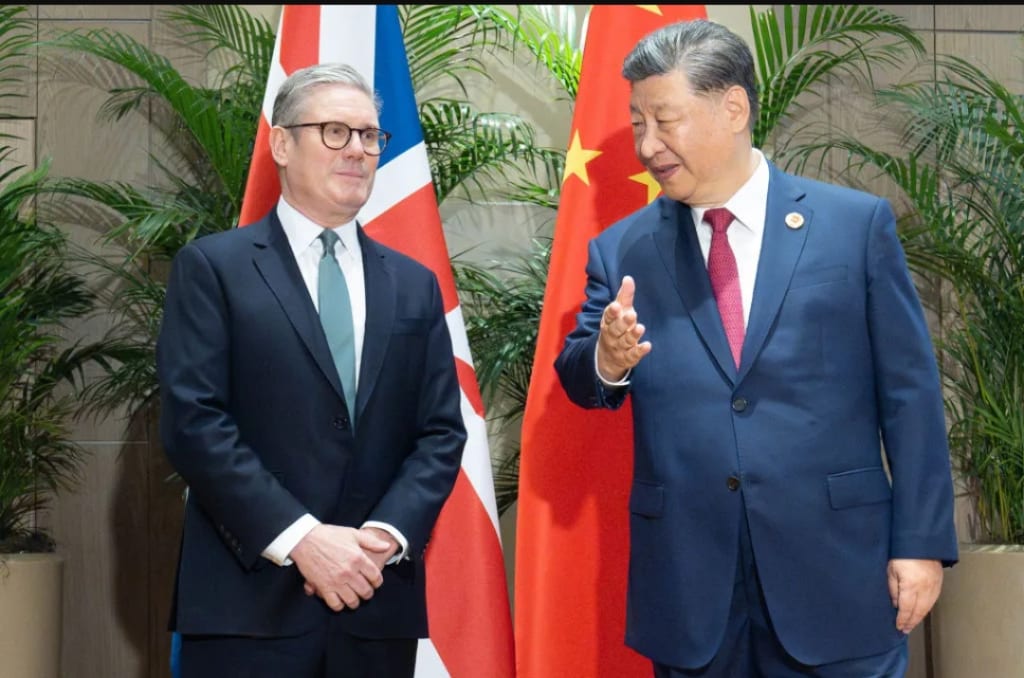
As the global political landscape grows increasingly complex, UK Prime Minister Keir Starmer is attempting a high-wire diplomatic act: strengthening economic ties with China’s President Xi Jinping while ensuring Britain does not alienate the United States—particularly former president Donald Trump, who could return to the White House. For “UK Plc,” Starmer’s favored phrase for Britain’s national economic interests, the challenge is not just diplomatic—it is strategic, commercial, and deeply geopolitical.
Britain’s Economic Reality and the China Question
The UK economy is under sustained pressure from sluggish growth, post-Brexit trade friction, and persistent inflation concerns. Against this backdrop, China remains an unavoidable economic partner. It is the world’s second-largest economy, a major source of investment capital, and a critical market for British financial services, pharmaceuticals, higher education, and green technology.
Starmer’s government has signaled a more pragmatic tone toward Beijing than previous Conservative administrations. Rather than framing China primarily as a strategic threat, Labour’s approach emphasizes “engage and protect”—engaging economically where possible while safeguarding national security interests. This recalibration reflects economic necessity as much as ideological shift.
Courting Xi While Protecting UK Plc
Starmer’s message to Chinese leadership is clear: Britain is open for business, but on defined terms. The UK wants Chinese capital in areas such as clean energy, electric vehicles, advanced manufacturing, and financial services—sectors that align with Labour’s growth agenda and climate commitments.
At the same time, the government is cautious about sensitive infrastructure. Telecoms, defense supply chains, data centers, and critical technologies remain tightly regulated. This selective openness allows Starmer to argue domestically and internationally that Britain is not naïve about security risks, even as it seeks economic cooperation.
For UK Plc, the goal is simple: attract investment, boost exports, and create jobs—without surrendering strategic autonomy.
The Trump Factor Looms Large
While engaging China is one challenge, managing relations with Washington is another. Donald Trump’s confrontational stance toward Beijing defined much of his presidency, marked by tariffs, trade wars, and open hostility. If Trump returns to power, any Western country seen as “too friendly” with China could face political and economic retaliation.
Starmer is acutely aware of this risk. The United States remains Britain’s closest security ally and one of its most important trading partners. Alienating Washington—especially under a Trump administration—would be economically and strategically disastrous.
As a result, Starmer is framing UK-China engagement not as a geopolitical realignment, but as a narrowly economic partnership. British officials emphasize that the UK remains aligned with US positions on human rights, Taiwan, and global security, even while pursuing dialogue and trade with Beijing.
Diplomatic Language and Strategic Signaling
One of Starmer’s key tools is language. Rather than grand announcements or symbolic state visits, the government favors quieter diplomacy. Engagement with China is presented as technical, sector-specific, and business-focused rather than political.
This careful messaging is designed to reassure Washington that Britain is not undermining Western unity. It also sends a signal to Beijing that cooperation is possible, but Britain will not break ranks with its allies.
In effect, Starmer is trying to de-risk relations with China without de-coupling from it—a strategy increasingly popular across Europe.
Business Leaders Caught in the Middle
British executives understand the stakes. China is a major market for banks, insurers, automakers, universities, and luxury brands. At the same time, many UK firms rely on US capital markets, technology partnerships, and regulatory goodwill.
Starmer’s balancing act aims to provide clarity and stability for these businesses. By setting clear boundaries and consistent policy, the government hopes companies can pursue opportunities in China without fear of sudden political backlash from either side of the Atlantic.
For UK Plc, predictability is as valuable as access.
Risks of Miscalculation
Despite careful planning, the strategy carries real risks. Relations between the US and China remain volatile, and Britain could be forced to choose sides in a future crisis—over Taiwan, trade sanctions, or technology controls.
A Trump-led US administration may demand stronger alignment and show little patience for nuance. Beijing, meanwhile, may grow frustrated if British engagement remains cautious and conditional.
Starmer’s challenge is to keep Britain relevant and respected by both powers without being pulled into open confrontation.
A Test of Starmer’s Global Leadership
This approach represents an early test of Starmer’s foreign policy credibility. Success would mean renewed investment, improved trade flows, and a reputation for pragmatic leadership. Failure could leave Britain isolated—too cautious for China, too independent for the US.
For now, Starmer is betting that diplomacy, discipline, and economic realism can keep UK Plc competitive in a divided world.
Conclusion: Walking the Tightrope
Keir Starmer’s attempt to win over China’s Xi Jinping without annoying Donald Trump reflects the realities of modern geopolitics. Britain can no longer afford ideological rigidity, but it also cannot ignore alliances that underpin its security and prosperity.
If Starmer succeeds, the UK could position itself as a smart, flexible middle power—open to business, firm on values, and trusted by allies. If he fails, the cost will be paid not just in diplomatic capital, but in jobs, investment, and global influence.
For UK Plc, the tightrope walk has only just begun.
About the Creator
Asad Ali
I'm Asad Ali, a passionate blogger with 3 years of experience creating engaging and informative content across various niches. I specialize in crafting SEO-friendly articles that drive traffic and deliver value to readers.
Frank Gardner: Not Only Americans Risked Life and Limb to Serve in Afghanistan
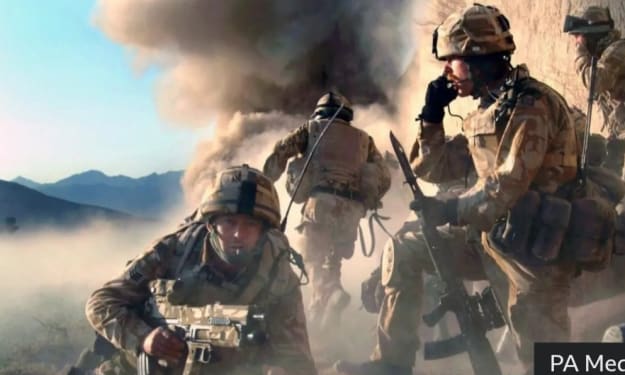
When discussions turn to the war in Afghanistan, the focus often rests heavily on the United States—its soldiers, its decisions, and its sacrifices. Yet as journalist and security correspondent Frank Gardner has repeatedly emphasized, Americans were far from the only ones who risked life and limb during the two-decade conflict. Thousands of service members from allied nations, alongside Afghan civilians and local forces, paid a profound price in a war that reshaped lives far beyond US borders.
By Aarif Lashari5 days ago in The Swamp
US, Ukraine and Russia Delegations Head to Abu Dhabi for First Trilateral Talks
For the first time since Russia’s invasion of Ukraine in early 2022, delegations from the United States, Ukraine, and Russia are heading to Abu Dhabi for trilateral talks. This rare three-way meeting is aimed at discussing possible ways to ease tensions in one of the deadliest conflicts in Europe in decades.
By Muhammad Hassan6 days ago in The Swamp


Comments
There are no comments for this story
Be the first to respond and start the conversation.