
Starmer to Meet Labour MPs After McSweeney Quits as Chief of Staff Over Mandelson Appointment
A Shock Resignation at a Sensitive Moment
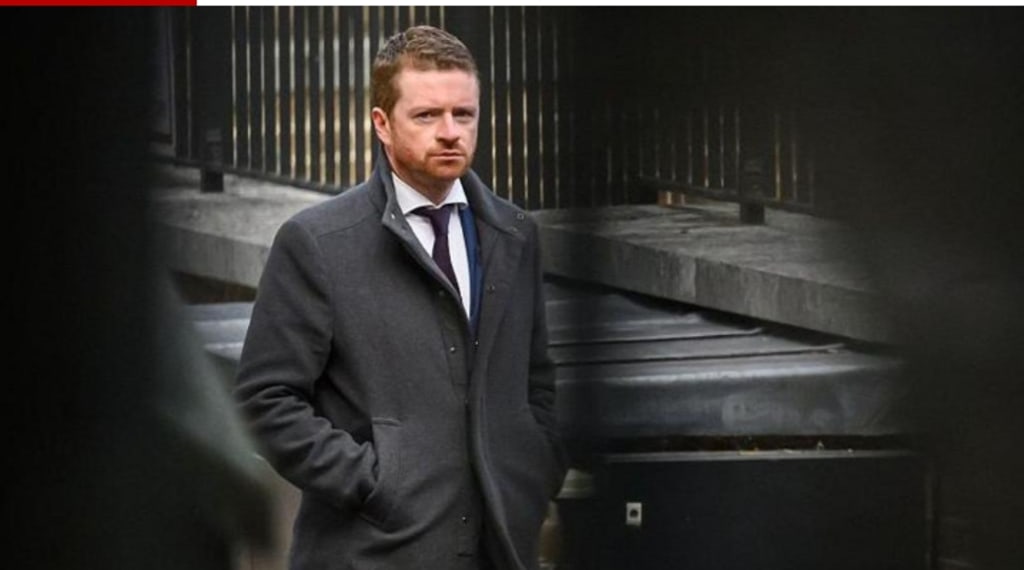
Keir Starmer is facing one of the most delicate internal moments of his leadership after his chief of staff, Morgan McSweeney, resigned following the controversial appointment of Peter Mandelson to a senior advisory role. The move has triggered unease across Labour’s parliamentary party, prompting Starmer to convene a meeting with MPs in an effort to steady nerves, reassert authority, and prevent the situation from escalating into a broader crisis.
While Labour remains strong in the polls and firmly positioned as a government-in-waiting, this episode exposes the persistent tension between the party’s modern leadership and the unresolved legacy of New Labour-era power brokers.
Who Is Morgan McSweeney — and Why His Exit Matters
Morgan McSweeney was not just another senior aide. He was widely viewed as:
One of Starmer’s closest political strategists
A key architect of Labour’s electoral discipline
A central figure in rebuilding Labour’s credibility after years of internal chaos
McSweeney’s role went beyond logistics. He helped shape messaging, manage internal dissent, and enforce the “no distractions” approach that has defined Starmer’s leadership style.
His resignation, therefore, is not merely administrative — it is symbolic.
When a chief of staff walks out, it usually signals a serious breakdown in trust at the very top.
The Mandelson Factor: Why This Appointment Is So Divisive
Peter Mandelson remains one of the most polarizing figures in Labour politics. To supporters, he is:
A master strategist
A proven election winner
A figure with global political experience
To critics, he represents:
The excesses of New Labour
An era associated with spin, elite politics, and corporate closeness
A step backward rather than forward
Mandelson’s appointment — particularly without broader consultation — reignited old anxieties within Labour ranks about who truly holds influence around Starmer.
For McSweeney, the issue was reportedly not personal animosity, but direction: what Mandelson’s return signaled about Labour’s future power structure.
Why Timing Makes This Worse
This dispute comes at a particularly sensitive time.
Labour is:
Leading in national polls
Preparing for the realities of government
Under increased media scrutiny
At this stage, unity is not just desirable — it is essential. Voters who are open to Labour are looking for stability, professionalism, and reassurance.
Internal resignations risk reviving memories of Labour’s past disunity — something Starmer has spent years trying to bury.
Starmer’s Meeting With MPs: Damage Control or Reset?
Starmer’s decision to meet Labour MPs directly is a calculated move.
The objectives are clear:
Contain the fallout before speculation grows
Reassure MPs that decision-making remains disciplined
Demonstrate leadership, not defensiveness
Such meetings are rarely about policy. They are about tone, confidence, and trust.
Starmer will need to explain:
Why Mandelson was brought in
What boundaries exist around his role
How internal voices will continue to be respected
Failure to address these concerns openly could deepen internal skepticism.
A Clash of Political Cultures
At the heart of this episode is a deeper cultural clash within Labour.
On one side:
A modernized party focused on discipline and electability
Younger strategists shaped by post-Brexit politics
A leadership trying to appear technocratic and steady
On the other:
Veterans of New Labour who believe experience wins elections
A comfort with centralized power
A belief that politics is ultimately about hard-nosed strategy
McSweeney’s resignation suggests that these two cultures are colliding — and not quietly.
What This Means for Starmer’s Authority
Leadership is often tested not during elections, but during internal conflict.
Starmer now faces a choice:
Reassert control and clarify the chain of command
Or risk appearing overly influenced by political heavyweights
Even if Mandelson’s role is limited, perception matters. If MPs believe that decisions are being shaped behind closed doors by figures associated with the past, confidence in leadership cohesion may erode.
That erosion doesn’t need to be dramatic to be dangerous — it can be slow and subtle.
Reaction Inside the Parliamentary Party
Initial reactions among Labour MPs have reportedly been mixed.
Some argue:
Mandelson’s experience could be valuable
Labour cannot afford amateurism if it wants to govern
Elections are won by strategy, not sentiment
Others worry:
This move undermines the “new politics” image
It alienates younger voters and activists
It sends the wrong signal about accountability
Starmer’s meeting will likely expose how deep these divisions run.
Public Perception: Does the Voter Care?
For most voters, the names McSweeney and Mandelson mean little.
But what voters do notice is:
Headlines about resignations
Stories about internal tension
Suggestions of behind-the-scenes power struggles
These narratives matter because they shape emotional impressions — competence, unity, readiness.
If Labour looks distracted by internal drama, even briefly, it risks weakening its core pitch: that it is ready to govern responsibly.
Lessons From Labour’s Past
Labour history is filled with cautionary tales.
Internal battles have:
Derailed campaigns
Undermined leaders
Distracted from public-facing priorities
Starmer’s leadership was built in reaction to that history. His promise was simple: no more chaos.
McSweeney’s resignation challenges that promise — not fatally, but visibly.
What Happens Next
Several outcomes are possible:
Containment
The issue fades after clarification and reassurance.
Structural Change
Starmer tightens advisory roles and formalizes boundaries.
Lingering Unease
MPs remain uneasy, even if publicly silent.
Which path emerges depends on how convincingly Starmer handles the next few days.
Conclusion: A Warning, Not a Crisis — Yet
This episode is not a catastrophe for Labour. But it is a warning light.
McSweeney’s resignation highlights unresolved questions about:
Influence
Direction
The balance between experience and renewal
Starmer’s response will matter more than the resignation itself. If he can reassure MPs, clarify leadership structure, and keep Labour focused outward rather than inward, the party will move on quickly.
If not, this moment may be remembered as the first visible crack in Labour’s carefully constructed image of unity.
About the Creator
Keep reading
More stories from Zahid Hussain and writers in The Swamp and other communities.
Ukraine’s Strategy to Kill 50,000 Russian Soldiers a Month: A Sign of Confidence or an Indicator of Weakness?
Few statements in modern warfare are as arresting as this one: Ukraine’s strategy is to kill 50,000 Russian soldiers a month. Whether spoken openly or inferred through battlefield reporting, the figure has circulated widely among analysts, commentators, and military observers. It represents not just a number, but a philosophy of war—one rooted in attrition, endurance, and the grim mathematics of prolonged conflict. But what does such a strategy actually mean? Is it a sign of Ukrainian confidence—proof that Kyiv believes it can outlast and outfight a numerically larger enemy? Or does it signal weakness, an admission that decisive breakthroughs are no longer realistic? The answer lies somewhere between resolve and necessity. Understanding Attrition Warfare At its core, a strategy centered on killing large numbers of enemy soldiers is a form of attrition warfare. Instead of rapid territorial gains or dramatic maneuvers, success is measured by: Enemy casualties Degradation of manpower Destruction of equipment Erosion of morale Attrition is not glamorous. It is slow, costly, and psychologically exhausting. Yet history shows it has often determined outcomes in long wars—from World War I’s trenches to the Iran-Iraq War and beyond. Ukraine did not begin this war intending to fight an attritional campaign. Its early successes relied on maneuver warfare, surprise, and precision strikes. But as the conflict dragged on, the battlefield changed—and so did Ukraine’s options. Why the Number Matters The figure of 50,000 Russian soldiers per month is not necessarily a literal operational target. Rather, it represents a threshold—the level of losses at which Russia’s ability to sustain the war begins to crack. Russia has a larger population, deeper reserves, and a long history of absorbing enormous casualties. However, even for Moscow, losses on this scale strain: Training systems Officer corps Logistics Domestic political tolerance If Russia loses tens of thousands of troops monthly, replacements become less effective, less motivated, and less experienced. Over time, quantity stops compensating for quality. From Ukraine’s perspective, this is the war’s central calculation. A Strategy Born of Constraints To understand whether this approach signals confidence or weakness, it’s essential to examine why Ukraine may be pursuing it. Limited Resources Ukraine does not have infinite manpower. Its population is smaller, and mobilization carries political and economic costs. Prolonged offensives that trade territory for lives are unsustainable. Instead, Ukraine has leaned into: Precision artillery Drones and loitering munitions Long-range strikes on logistics Defensive fortifications These methods aim to maximize Russian losses while minimizing Ukrainian casualties—a classic asymmetric approach. Western Aid Realities Ukraine’s strategy is also shaped by the nature of Western support. While allies have provided weapons, ammunition, and intelligence, that aid has often been: Delayed Politically constrained Insufficient for rapid breakthroughs Without overwhelming superiority in air power or armor, Ukraine cannot easily replicate the kind of decisive offensives seen in past wars. Attrition becomes not just a choice, but a necessity. The Case for Confidence Supporters of Ukraine’s approach argue that targeting massive Russian losses reflects strategic confidence, not desperation. Confidence in Intelligence and Targeting Ukraine’s ability to inflict heavy casualties relies on: Real-time intelligence Western surveillance support Advanced targeting systems The consistent destruction of Russian artillery, command posts, and troop concentrations suggests Ukraine believes it can maintain this kill rate over time. That belief implies confidence in its operational capabilities. Confidence in Russian Weakness Ukraine’s leadership may believe that Russia’s apparent resilience is overstated. While Moscow can mobilize bodies, it struggles with: Poor training Corruption Low morale Weak junior leadership High casualty rates magnify these problems. A force that replaces veterans with barely trained recruits becomes increasingly brittle. From this perspective, killing 50,000 soldiers a month is not unrealistic—it is the path to eventual collapse. The Case for Weakness Critics, however, see the strategy as a warning sign. Lack of Breakthroughs Attrition-focused strategies often emerge when: Maneuver options are exhausted Offensives stall Defenses become impenetrable Ukraine’s counteroffensives have achieved limited territorial gains at enormous cost. Emphasizing enemy casualties can sometimes mask the absence of strategic momentum. If killing becomes the primary metric of success, it may reflect an inability to achieve decisive outcomes. Unsustainable Expectations The figure of 50,000 per month also raises questions about credibility. Casualty figures in war are notoriously unreliable. Inflated estimates can: Shape public perception Maintain morale Justify continued sacrifice But if expectations are set too high, they risk backfiring. When reality fails to match rhetoric, confidence erodes—both domestically and among allies. Russia’s Willingness to Absorb Losses A central gamble in Ukraine’s strategy is the assumption that Russia will eventually break under sustained casualties. History offers mixed lessons. Russia has endured catastrophic losses before—often with little immediate political consequence. The Kremlin tightly controls media narratives, represses dissent, and frames casualties as patriotic sacrifice. However, modern Russia is not the Soviet Union of World War II. Today’s society is more connected, more consumer-oriented, and more sensitive to prolonged instability. Whether Russia’s tolerance for losses has a breaking point remains one of the war’s great unknowns. The Human Cost Behind the Numbers Focusing on monthly kill rates risks abstracting the human reality of war. Each number represents: A life lost A family destroyed A trauma multiplied For Ukraine, emphasizing enemy casualties may be psychologically necessary—but it also underscores the war’s moral weight. A strategy defined by death reflects a conflict with few remaining illusions. This reality complicates the notion of “confidence.” Sometimes endurance, not optimism, drives such choices. Information Warfare and Messaging Statements about killing tens of thousands of enemy soldiers also serve an information warfare function. They aim to: Signal resolve to allies Deter Russian escalation Undermine Russian morale Reinforce Ukraine’s narrative of resistance In this sense, the strategy is as much about perception as battlefield outcomes. Confidence, here, may be performative—but performance matters in modern war. What This Strategy Says About the War’s Trajectory Whether confident or constrained, the focus on attrition suggests one clear reality: Ukraine is preparing for a long war. Not months—but years. A war where: Victory is incremental Gains are measured in degradation, not conquest Survival itself becomes success In such a context, killing 50,000 soldiers a month is not an end—it is a means to keep the conflict winnable. Conclusion: Confidence, Weakness, or Something Else? Ukraine’s apparent strategy to kill massive numbers of Russian soldiers each month is neither pure confidence nor simple weakness. It is a reflection of: Strategic realism Structural constraints Calculated endurance Ukraine believes it can survive longer than Russia can tolerate loss. That belief contains confidence—but also acknowledges the limits of what is possible. In wars of attrition, victory does not always belong to the strongest or the fastest. It often belongs to the side that can endure the longest without breaking. Whether Ukraine’s calculation is correct remains uncertain. But one thing is clear: the strategy reveals a nation that understands the cost of war—and has chosen to pay it slowly, deliberately, and with eyes wide open.
By Zahid Hussain5 days ago in The Swamp
Why Black History Matters in America?
The United States of America is celebrating their 250th anniversary in 2026. I'm proud to be an American and as someone who was born here, I wouldn't imagine myself living anywhere else. This is a country where opportunities are possible. Where anyone can be successful in anything they desire to do. Equality, community, and togetherness are the backbones of what America is and should be about. However, we have an administration who wants to erase and disregard those who have made positive, meaningful impacts in our country, specifically Black figures, such as Martin Luther King, Jr., Rosa Parks, and Maya Angelou. President Trump and his administration have been constantly complaining and fighting against what they call the "Woke agenda". They use this excuse as a distraction from other issues they refuse to address, such as the high cost of living, climate change, and inflation. That equality is dividing America, when in reality, it's bringing us together. Being woke is not tied to a specific political party. No matter where you stand on the political spectrum, you can still care about other people and their plights. Compassion and empathy for others isn't tied to a political party, either. We were taught as children to treat others the way we want to be treated and not judge others because they're different from us. Caring about others isn't a personal attack on your beliefs. It doesn't make you any less of a person. People who are easily offended over African American figures, past or present, or anything related to it, are grasping at straws. Current and future generations need to know who people like Harriet Tubman and Shirley Chisholm were, especially in the classroom. Black History is part of American History. It should be recognized, not hidden or forgotten. Besides, you can't shield children from everything, just because your feelings are easily hurt.
By Mark Wesley Pritchard 8 days ago in The Swamp
Astronomers Detect Seven‑Hour Space Signal — Scientists May Finally Understand What It Was
In a discovery that has left astronomers both stunned and excited, scientists recently detected a signal from deep space that lasted an incredible seven hours. This is not just any ordinary blip in the universe—it's potentially the longest gamma-ray burst ever recorded. Researchers are now working hard to understand what could have caused this unprecedented cosmic event.
By Ayesha Lashariabout 9 hours ago in The Swamp
Foot Bindings
I asked my grandmother how she knew she'd fallen in love. I am not sure I ever did love him, she said. This was before I met my husband. I was naive, a naked spring, a raw nerve of a thing. That cannot ever be me, I knew. Sadness swept in gently like a Moscow thaw. It is no simple thing, looking into a woman's vast soul and seeing its foot bindings. Now, in Italy divorced with my skin singed off, when I say I don't love him mean: I have succeeded at feeling nothing most days and it mostly works. Do you want the comfort of Nothing? Do you want Nothing, too? Be warned: you'll never be free, even when you are nothing. Here is what doesn't work: Accepting the stages of grief. Talking about it. Sitting with the feeling. Missing him—no, the person you were when you believed in death do us part. Writing poetry. That, too. When I say I don't love him I mean: I feel capsized in an endless, starved tide. What sometimes works: selective memory. You must forget ripe tomatoes and his beard and feeling perfectly sheltered in a big blue world. Forget coffee in bed, laughter watching TV, blowing out the candles on the birthday cake and the quiet all-encompassing knowledge that you are chosen. Remember only how love turned to a banal everyday survival act, a trapeze act unsure whether he will catch you, how the warmth stagnated and became sour, remember the foot bindings and remember the resentment boiling in your veins as you stick it out for the kids. Six-hour Netflix binges help, too. A man's fingers tracing your spine. Frozen pizza at 2 a.m. Random trips to the museum just to stand near things that last a while. The realization that crying won’t change anything. Seeing that life is just a dream, and refusing to participate in your own suffering. Bite your fist. Walk on eggshells around joy. When I say I don't love him, I mean he didn’t break my heart, he just stopped touching it and it forgot how to beat right.
By Ella Bogdanovaa day ago in Poets


Comments
There are no comments for this story
Be the first to respond and start the conversation.