
Starmer and Xi Hail a Reset in Ties, Helped by Large AstraZeneca Investment
UK–China relations show signs of thaw as business diplomacy and strategic pragmatism take center stage

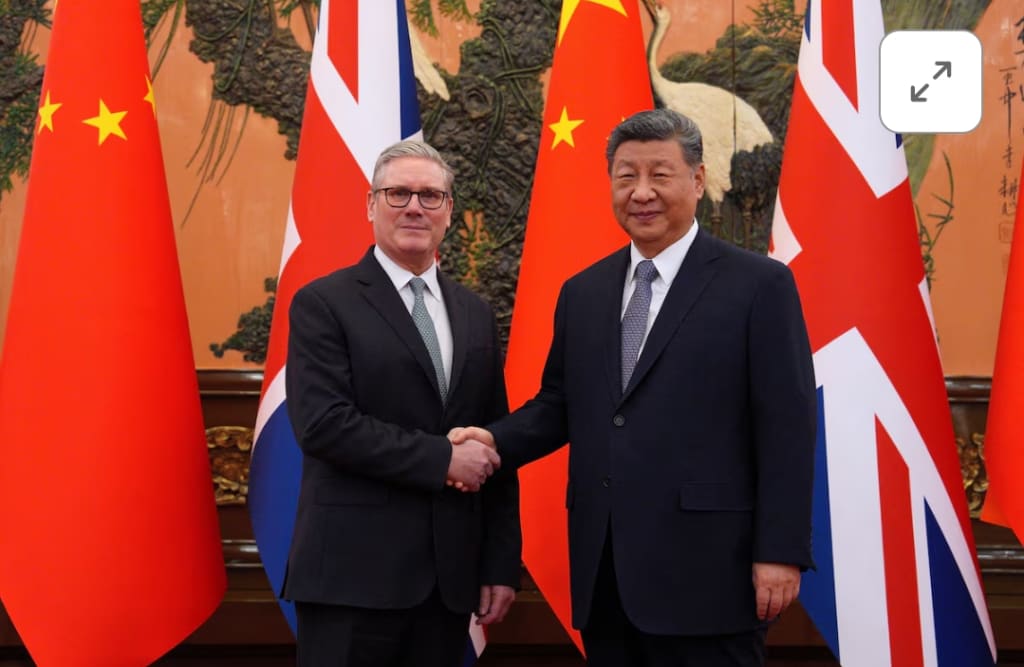
UK Prime Minister Keir Starmer and Chinese President Xi Jinping have hailed a “reset” in bilateral relations, signaling a cautious but notable shift in ties between London and Beijing. The renewed tone comes as AstraZeneca announced a major investment in China, highlighting how economic cooperation is once again being used as a bridge in an otherwise complex and often strained relationship.
The development reflects Starmer’s broader effort to rebalance the UK’s foreign policy—seeking economic opportunity with China while carefully managing political sensitivities at home and abroad.
A Symbolic Reset After Years of Strain
Relations between the UK and China have been tense in recent years, shaped by disagreements over human rights, national security, trade imbalances, and geopolitical alignment with the United States. Diplomatic engagement cooled, and trust eroded as both sides adopted tougher rhetoric.
The recent meeting between Starmer and Xi marks an attempt to change that tone. By publicly acknowledging a reset, both leaders are signaling openness to dialogue and cooperation, even if deep disagreements remain unresolved.
This shift is less about abandoning principles and more about re-engaging pragmatically in a multipolar world.
AstraZeneca’s Investment as a Diplomatic Catalyst
At the heart of the reset is AstraZeneca’s large-scale investment in China, which has been widely viewed as a confidence-building move. The pharmaceutical giant, with strong UK roots, has expanded its footprint in China to strengthen research, manufacturing, and access to one of the world’s largest healthcare markets.
For Beijing, the investment reinforces China’s appeal as a destination for global capital despite geopolitical headwinds. For London, it demonstrates that UK companies can still thrive in China—provided diplomatic channels remain open.
Business, once again, is acting as a form of diplomacy.
Starmer’s Balancing Act With China
Prime Minister Starmer faces a delicate challenge. On one hand, China is a critical economic partner, offering growth opportunities for UK firms in pharmaceuticals, technology, finance, and green energy. On the other, the UK must navigate security concerns, ethical considerations, and its close alliance with the United States.
Starmer’s approach appears to emphasize economic realism without political naivety. By focusing on trade, investment, and regulated engagement, the UK aims to reduce friction without appearing soft on core values.
This strategy reflects a broader European trend of “de-risking” rather than full disengagement from China.
Xi’s Message: Stability and Openness
For President Xi, welcoming a reset with the UK fits into China’s broader diplomatic messaging. As economic growth slows and foreign investment becomes more selective, Beijing is eager to project stability, openness, and predictability to international partners.
Highlighting AstraZeneca’s investment allows China to showcase that global companies still see long-term value in its market. It also helps counter narratives that China is becoming isolated due to geopolitical tensions.
Improved ties with the UK send a signal to other Western economies considering their own relationship with Beijing.
Economic Stakes Are High
Trade between the UK and China runs into tens of billions of pounds annually. China remains a major market for British goods, services, and investment, while the UK offers financial expertise, innovation, and global connectivity.
A reset could unlock new opportunities in areas such as healthcare, life sciences, climate technology, and education. However, progress will likely be incremental rather than dramatic.
Both sides understand that economic cooperation must coexist with political caution.
Domestic and International Reactions
The reset has drawn mixed reactions. Business leaders largely welcome the thaw, seeing it as a chance to stabilize commercial relationships and reduce uncertainty. Investors often prefer predictable diplomacy over confrontation.
Critics, however, warn against overlooking concerns related to human rights, data security, and strategic dependence. Some argue that economic engagement should not come at the expense of values or national security.
Starmer will need to reassure domestic audiences that engagement does not equal endorsement.
The Role of the US Factor
One of the most sensitive aspects of UK–China relations is the United States factor. Washington remains wary of closer Western engagement with Beijing, particularly in strategic sectors.
Starmer’s challenge is to avoid appearing out of step with US policy while still pursuing UK economic interests. The framing of the reset—as cautious, conditional, and investment-focused—appears designed to avoid triggering diplomatic friction with allies.
In this sense, the UK is positioning itself as a pragmatic middle power rather than a geopolitical outlier.
What a “Reset” Really Means
Despite optimistic language, the reset does not signal a return to the era of unrestricted engagement. Instead, it suggests a more transactional and controlled relationship, where cooperation is encouraged in specific sectors while red lines remain firmly in place.
Issues such as national security, technology transfer, and political freedoms are unlikely to disappear from the agenda. The difference lies in tone and willingness to talk rather than posture.
Progress will depend on sustained dialogue and mutual restraint.
Looking Ahead: Cautious Optimism
The meeting between Starmer and Xi, reinforced by AstraZeneca’s investment, offers a glimpse of what a recalibrated UK–China relationship might look like. It is pragmatic, economically focused, and carefully worded to avoid political backlash.
Whether this reset leads to tangible long-term gains remains to be seen. Much will depend on global geopolitical trends, domestic politics, and how both sides manage disagreements when they inevitably arise.
Conclusion: Business as a Bridge, Not a Cure
Starmer and Xi’s declaration of a reset in ties, supported by a major AstraZeneca investment, reflects a shared desire to stabilize relations without ignoring reality. Economic cooperation is being used as a bridge to rebuild trust—but it is not a cure-all.
The UK’s approach signals a shift toward measured engagement, balancing opportunity with caution. In a world defined by strategic competition, this reset may not resolve tensions—but it could prevent them from worsening.
For now, diplomacy and investment are once again moving in the same direction.
About the Creator
Asad Ali
I'm Asad Ali, a passionate blogger with 3 years of experience creating engaging and informative content across various niches. I specialize in crafting SEO-friendly articles that drive traffic and deliver value to readers.
Pilot Captures Historic Northern Lights Show From 37,000 Feet
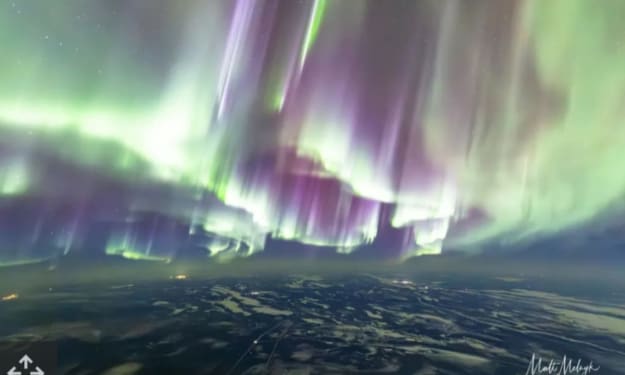
A commercial airline pilot recently captured a breathtaking display of the Northern Lights from 37,000 feet, offering a rare and historic glimpse of one of nature’s most spectacular phenomena. The footage, shared widely on social media, shows the skies over the Arctic lit up in vibrant greens, purples, and reds, stunning both aviation enthusiasts and nature lovers alike. This rare aerial perspective not only highlights the beauty of the aurora borealis but also demonstrates how technology and human curiosity can bring extraordinary natural events to global audiences. What the Pilot Witnessed Flying over the Arctic Circle, the pilot reported seeing one of the most intense aurora displays in recent memory. The Northern Lights, or aurora borealis, occur when charged particles from the sun collide with Earth’s magnetic field, creating shimmering waves of light in the polar regions. From 37,000 feet, the pilot described the scene as “like the sky was on fire with color, moving in waves and ripples across the horizon.” Passengers on the flight were also treated to a rare glimpse of the phenomenon, with many scrambling to take photos or videos. The pilot’s footage shows undulating curtains of green and purple light stretching across the night sky, highlighting how spectacular the aurora can appear from high altitudes, far above city lights and atmospheric haze. The Science Behind the Northern Lights The aurora borealis is caused by solar winds interacting with Earth’s magnetosphere. When electrically charged particles from the sun collide with gases in Earth’s atmosphere, they emit light that appears as glowing sheets, arcs, or waves in the sky. The intensity, color, and movement of the aurora depend on several factors: Solar activity: Higher sunspot activity results in more vivid displays Atmospheric composition: Different gases produce different colors—oxygen typically creates green or red hues, while nitrogen can produce purples and blues Geographic location: The aurora is most visible near the magnetic poles, particularly above northern Scandinavia, Canada, Alaska, and Greenland The pilot’s footage offers an exceptional real-time perspective of this phenomenon from high altitude, giving scientists, enthusiasts, and the public a unique opportunity to observe auroral activity like never before. Why This Footage Is Historic While the Northern Lights are regularly photographed from the ground, footage from cruising altitude in a commercial aircraft is rare. The pilot’s recordings capture: The aurora spanning hundreds of miles across the Arctic sky Dynamic motion and ripples, which are often difficult to appreciate from ground-level photography A unique perspective above cloud cover, offering an unobstructed view Experts say this type of footage is valuable for both scientific observation and public engagement, allowing people to experience the grandeur of the aurora in a way that was previously limited to satellite imagery or specialized flights. Public Reaction The footage has gone viral on social media, with users praising the pilot for capturing such a stunning and rare sight. Many viewers described the video as “otherworldly” and “breathtaking,” while others noted the contrast between the peaceful night sky and the vibrant aurora. Science communicators have also shared the video, highlighting it as an example of how natural phenomena can inspire curiosity and wonder, and emphasizing the importance of studying solar and geomagnetic activity to better understand our planet’s relationship with the sun. Northern Lights and Aviation Aviation professionals note that flights over polar regions sometimes offer rare opportunities to witness the aurora. Commercial aircraft flying north during nighttime winter months are more likely to cross auroral ovals, especially when solar activity is high. However, capturing the Northern Lights from a cockpit requires timing, visibility, and quick thinking, as pilots are primarily focused on flight safety. The fact that this pilot was able to record clear, high-quality footage at cruising altitude makes this capture particularly remarkable. The Importance of Sharing Natural Wonders This historic footage is more than just a viral video—it’s an opportunity to raise awareness about the beauty and fragility of our planet. The Northern Lights are impacted by solar cycles, geomagnetic storms, and atmospheric conditions, and sharing such experiences can inspire greater appreciation for Earth’s natural phenomena. Educational programs and nature enthusiasts are using footage like this to teach about: Solar activity and space weather Earth’s magnetosphere The cultural significance of auroras for northern communities By making these phenomena accessible to a global audience, pilots, scientists, and enthusiasts help cultivate a wider appreciation for Earth sciences and environmental stewardship. Looking Ahead As technology improves and more pilots and passengers have access to high-quality cameras, aerial footage of the Northern Lights may become increasingly common. Such recordings can serve both scientific and educational purposes, helping researchers monitor auroral activity and allowing the public to experience one of the most spectacular natural light shows on Earth. For travelers hoping to witness the aurora, winter flights over the Arctic Circle, particularly between September and March, remain the best opportunity. However, the pilot’s historic footage from 37,000 feet demonstrates that sometimes, extraordinary sights can appear even when least expected. Conclusion The recent footage captured by a commercial airline pilot showcases the Northern Lights like never before, offering an inspiring view of one of nature’s most beautiful phenomena from the sky. From a scientific, educational, and aesthetic perspective, this historic capture reminds us of the power and wonder of the natural world, and the unique experiences that await those who dare to look up. Whether viewed by scientists, aviation enthusiasts, or the general public, this extraordinary light show underscores the beauty of Earth’s polar skies and the enduring fascination of the aurora borealis.
By Muhammad Hassan7 days ago in The Swamp
You Can’t Have Guns”: What Is Donald Trump’s Real Stance on the Second Amendment
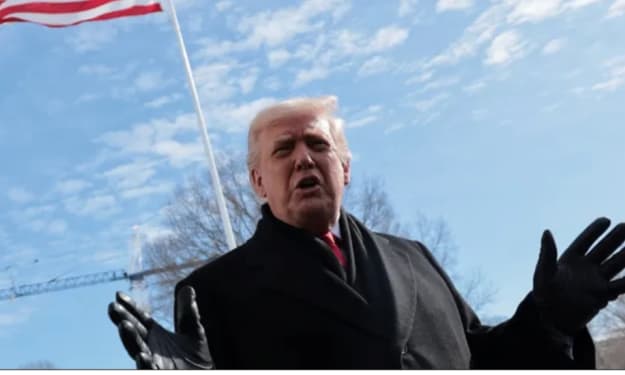
Donald Trump has long branded himself as one of the strongest defenders of the Second Amendment in modern American politics. On the campaign trail and at conservative gatherings, he has repeatedly warned supporters that Democrats want to “take away your guns” and positioned himself as the last line of defense against federal overreach. Yet moments when Trump has said things like “You can’t have guns” have fueled debate and confusion about where he truly stands on gun rights. An examination of his rhetoric, policy decisions, and political alliances shows a stance that is both firmly pro-gun in principle and surprisingly flexible in practice.
By Salaar Jamalia day ago in The Swamp


Comments
There are no comments for this story
Be the first to respond and start the conversation.