
Spain at 'extreme risk' of new wildfires as 14 blazes spread
Spain at 'extreme risk' of new wildfires as 14 blazes spread

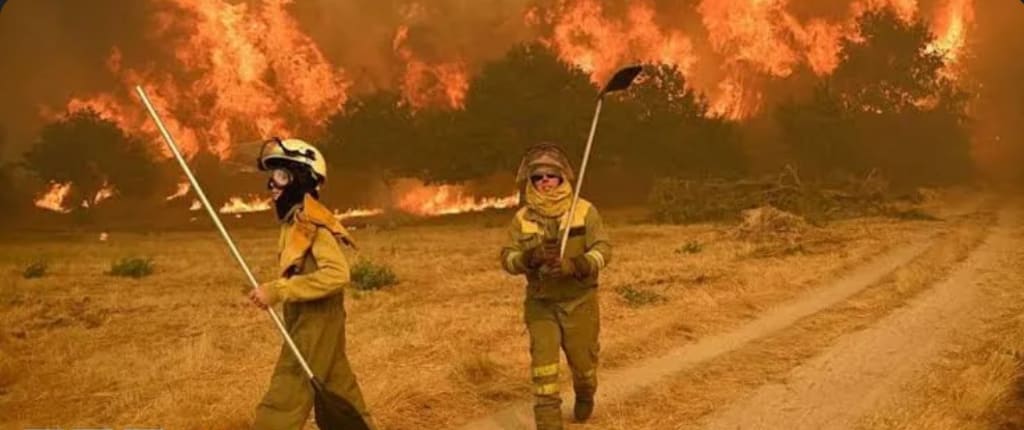
Authorities in Spain have issued a warning that large portions of the country are at “extreme risk” as a result of soaring temperatures, strong winds, and prolonged drought conditions combining to create a hazardous environment. As a result, Spain is once again facing the devastating threat of wildfires. Officials have confirmed that 14 separate fires are currently burning, putting a strain on resources and necessitating emergency services to fight fires in multiple locations. The fires, which have already destroyed thousands of hectares, emphasize Spain's increasing difficulty in dealing with climate-driven natural disasters. Numerous provinces have been issued red alerts by meteorological agencies, stressing that the perfect tinderbox of heatwaves and dry vegetation exists. Temperatures have frequently surpassed 40 degrees Celsius in parts of Andalusia, Extremadura, and Catalonia, well above seasonal averages. Because even a small spark can spread uncontrollably in a matter of minutes, these conditions make forests, farmland, and rural communities extremely vulnerable. The wind has been blowing at speeds that make it possible for fires to leap over roads, rivers, and other natural barriers in many places, making efforts to contain them more difficult. The most severe fires, according to authorities, are raging in Galicia, Valencia, and Aragón. A thick layer of smoke has engulfed entire towns in Galicia, necessitating the evacuation of hundreds of residents. In order to strengthen operations, additional firefighters from nearby provinces have been brought in to work night and day. Meanwhile, in Valencia, flames have already devoured extensive areas of pine forest, with local mayors calling the destruction unprecedented in recent years. Aragón has also seen rapid fire spread in rugged terrain, making it difficult for ground crews to reach the heart of the fires.
Spain’s emergency services have deployed thousands of personnel, backed by helicopters and water-dropping planes, to try to control the situation. However, given the scale of the crisis and the simultaneous emergence of multiple fires, the resources at our disposal are constrained. Officials emphasize that, despite the importance of cutting-edge firefighting techniques and technological tools, the current blazes' sheer frequency and severity exceed the system's capacity. The government has urged the public to remain vigilant and to avoid any activities that could spark new fires. In high-risk areas, outdoor barbecues, agricultural burning, and careless disposal of cigarette butts are strictly forbidden. It has been suggested to people who live near forests to clear the area around their homes of vegetation and make plans for an emergency evacuation. Even the most prepared communities are susceptible to sudden danger due to the rapidity and unpredictability of fire behavior. Environmental experts underline that the current wave of wildfires is not merely a seasonal occurrence but part of a broader pattern linked to climate change. Rising global temperatures are extending Spain’s fire season, reducing rainfall, and intensifying drought. In recent years, Spain has consistently recorded some of the highest numbers of wildfires in Europe, with scientists warning that the trend is likely to worsen in the coming decades. The shift threatens not only forests and biodiversity but also agriculture, tourism, and the health of local populations.
Economic losses from wildfires can be immense. Fires also destroy crops, livestock pastures, and forests that communities rely on for their livelihoods, in addition to the immediate destruction of homes and infrastructure. As smoke and destruction discourage visitors from the affected areas, tourism, a crucial component of Spain's economy, also suffers. The psychological toll on residents who lose their homes or see their communities burned is significant, and efforts to rebuild can take years. Additionally, health authorities are advising against inhaling smoke. Risks are higher for vulnerable groups like children, the elderly, and people with respiratory conditions. Hospitals in the affected areas have reported an increase in cases of difficulty breathing and other health issues related to smoking. Public health officials are becoming increasingly concerned about the long-term effects of frequent exposure to wildfire smoke. Spain is calling for greater national and European cooperation in response to the crisis. Under the EU Civil Protection Mechanism, neighboring nations have previously sent firefighting teams and equipment, and similar requests are anticipated if conditions continue to deteriorate. Policymakers argue that a coordinated continental approach is essential, as wildfires increasingly ignore borders and affect multiple nations across southern Europe.
Experts emphasize that prevention must remain a top priority as Spain goes through yet another destructive wildfire season. It is believed that crucial measures include enhanced community awareness campaigns, investment in early detection systems, and improved forest management. At the same time, addressing the root causes of climate change through emissions reduction and sustainable land use is necessary to reduce long-term risks. Without such efforts, Spain will likely continue to face the grim reality of summers marked by smoke, flames, and widespread loss.
The nation's immediate priorities remain containment of the 14 active fires and life protection. On the ground, firefighters describe their work as a race against the clock in which every hour can determine whether a village is saved or destroyed. Spain's fight against wildfires is far from over, as forecasts predict additional heatwaves in the coming weeks.
About the Creator
GLOBAL NEWS
World News Updated
Short News upload
Technology News
Keep reading
More stories from GLOBAL NEWS and writers in The Swamp and other communities.
Crypto Firm Bullish Rockets 84% in Blockbuster IPO Debut
Crypto Firm Bullish Rockets 84% in Blockbuster IPO Debut On its first day of trading, cryptocurrency exchange Bullish raised a remarkable 1.1 billion dollars, a stunning display of investor enthusiasm as it surged 84% above its initial public offering price. One of the most successful public listings for a crypto-linked company in recent memory, this performance hints at investors' renewed interest in digital asset exposure. Bullish priced its debut at 37 dollars per share, exceeding earlier guidance of 28 to 33 dollars. The offering consisted of 30 million shares, raising approximately 1.11 billion dollars in proceeds and placing the company’s initial valuation around 5.4 billion dollars. On debut day, shares opened near 90 dollars, soared to an intraday high of 118 dollars, and settled at 68 dollars, still representing a robust 84% premium over the IPO price.
By GLOBAL NEWS7 months ago in The Swamp
A Gathering of Evil Bosses
“I’m the queen of chin jutting while I smooth my hair, attacking, insulting, and deflecting to protect my appointer.” “Oh, please, Blondi, my hair is curled, highlighted, and longer than yours. I feature television commercials telling immigrants that we will give them a free plane ride home, and if they voluntarily turn themselves in, they will be allowed to legally apply for re-entry. It runs everywhere, and I look good in it! You can’t compete because of your blond hair. Mine is nicer, and my lips are prettier than yours.”
By Andrea Corwin 16 days ago in The Swamp




Comments
There are no comments for this story
Be the first to respond and start the conversation.