
South Korea Clears Way for Google Maps to Fully Operate
Government approval marks major shift in digital mapping policy and data sovereignty debate
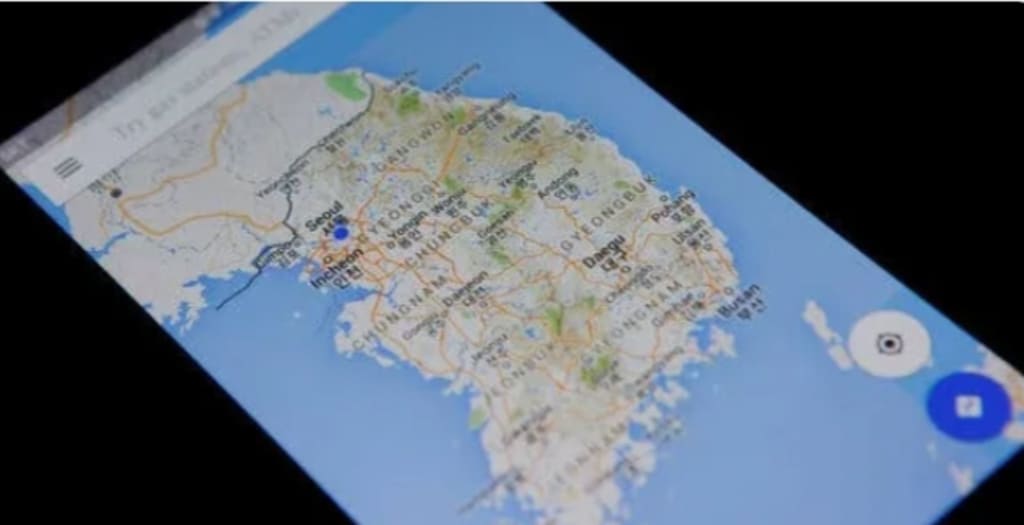
In a landmark decision that could reshape the country’s digital landscape, South Korea has cleared the way for Google Maps to fully operate within its borders. The move follows years of regulatory debate over mapping data, national security, and digital sovereignty — issues that have long restricted the platform’s functionality compared to its services elsewhere in the world.
For years, users in South Korea experienced a limited version of Google Maps. While basic search and location services were available, detailed turn-by-turn navigation and high-resolution mapping data were constrained due to government regulations on exporting geographic information.
Now, officials say updated safeguards and revised data-handling agreements have paved the way for broader functionality, potentially aligning South Korea with global standards in digital mapping services.
A Long-Standing Dispute Over Data
At the heart of the issue was South Korea’s policy restricting the overseas transfer of high-precision map data. Authorities have historically argued that detailed geographic information — including military facilities and sensitive infrastructure — could pose national security risks if stored or processed abroad.
Because Google operates many of its global servers outside South Korea, the company had sought permission to export mapping data for integration into its worldwide systems. Until now, those requests were denied or stalled.
Domestic companies such as Naver and Kakao have dominated the country’s navigation and mapping market, offering highly detailed services tailored to local users. Their platforms benefited from direct access to domestic data servers and compliance with national regulations.
Critics of the restrictions argued that limiting foreign platforms created inefficiencies for international travelers, global businesses, and foreign residents accustomed to Google’s ecosystem.
What Changes Now?
Under the newly approved framework, Google Maps will gain expanded capabilities, including enhanced navigation features, more precise mapping layers, and improved integration with ride-hailing, food delivery, and tourism services.
Officials emphasized that sensitive locations will continue to be protected through blurring or data masking protocols, a practice already common in several countries. Google reportedly agreed to specific data localization and security review measures designed to address longstanding government concerns.
The decision reflects a balancing act between economic competitiveness and national security priorities. South Korea has emerged as a global technology powerhouse, home to major electronics and telecommunications firms. Ensuring compatibility with international digital platforms may strengthen its position in global commerce.
Economic and Tourism Impact
Industry analysts suggest the expanded operation of Google Maps could boost tourism and international business activity. Foreign visitors often rely on Google’s mapping services for navigation, reviews, and real-time transit updates.
In cities like Seoul and Busan, where dense transit systems and multilayered streets can be challenging for newcomers, integrated navigation tools are particularly valuable.
Business groups also welcomed the move. Multinational corporations operating in South Korea frequently depend on standardized mapping platforms for logistics, workforce mobility, and customer engagement.
“Global interoperability matters,” said one trade analyst. “Companies function more efficiently when digital tools work seamlessly across borders.”
The decision could also encourage more foreign startups and entrepreneurs to establish operations in South Korea, confident that widely used digital infrastructure tools are fully accessible.
Competitive Pressures on Domestic Firms
The approval introduces new competitive dynamics for domestic mapping providers. Naver Maps and KakaoMap have long been praised for their detailed coverage, localized language support, and integration with Korean-specific services.
However, Google’s global reach and ecosystem integration — spanning search, Android devices, advertising platforms, and travel services — give it a powerful advantage.
Market analysts expect intensified competition in areas such as augmented reality navigation, artificial intelligence-powered route optimization, and real-time traffic analytics.
Some observers believe domestic firms may respond by doubling down on hyper-local features and exclusive partnerships. Others predict strategic collaborations rather than direct rivalry.
The South Korean government has signaled that maintaining a fair competitive environment remains a priority, emphasizing that regulatory oversight will continue.
Digital Sovereignty in a Connected World
The debate surrounding Google Maps in South Korea reflects a broader global conversation about digital sovereignty. Governments worldwide are grappling with how to regulate foreign technology platforms while remaining integrated into the global digital economy.
Countries across Europe and Asia have enacted data localization requirements, cybersecurity reviews, and foreign platform oversight measures. South Korea’s decision suggests a nuanced approach — permitting broader access while retaining protective controls.
Experts note that mapping data occupies a unique space in the digital ecosystem. Beyond navigation, it underpins industries ranging from autonomous vehicles to emergency response systems.
By resolving the dispute, South Korea may be signaling confidence in its ability to safeguard sensitive information without isolating itself technologically.
User Experience and Public Reaction
Public reaction has been largely positive, particularly among younger users and expatriate communities who rely heavily on Google’s services.
For years, travelers often downloaded domestic mapping apps upon arrival due to Google’s limited functionality. Now, seamless integration with existing Google accounts and services could simplify the experience.
Local users, however, remain divided. Many are deeply accustomed to domestic platforms optimized for Korean-language searches and local address systems.
Tech commentators note that user loyalty in South Korea is strong, meaning Google will need to tailor its service to local preferences to gain significant market share.
A Strategic Policy Shift
The approval of full Google Maps operations may also reflect broader diplomatic and economic considerations. South Korea maintains close trade and security relationships with the United States, where Google is headquartered.
While officials insist the decision was based on technical and legal evaluations, geopolitical context often shapes digital policy in subtle ways.
South Korea’s economy is heavily export-driven and intertwined with global supply chains. Ensuring compatibility with major international digital platforms may reinforce its economic resilience.
At the same time, authorities have emphasized that national security protocols remain intact. Sensitive sites, including military installations, will continue to receive protective treatment in digital maps.
Looking Ahead
As Google rolls out enhanced services, attention will turn to implementation details. Technical adjustments, server arrangements, and compliance monitoring will determine how smoothly the transition unfolds.
Industry watchers will be tracking user adoption rates and potential impacts on domestic competitors. Policymakers, meanwhile, may use this case as a template for addressing other cross-border digital service disputes.
For South Korea, the decision represents more than a navigation upgrade. It signals a recalibration of how the country balances sovereignty with openness in an era defined by data flows and digital platforms.
In an increasingly interconnected world, mapping services are not merely convenience tools — they are infrastructure. By clearing the way for Google Maps to fully operate, South Korea has taken a step that reflects both confidence in its regulatory framework and recognition of the realities of global digital integration.
Whether the move becomes a model for other nations navigating similar tensions remains to be seen. But for millions of users navigating South Korea’s bustling streets, the road ahead just became more familiar.
About the Creator
Why Black History Matters in America?
The United States of America is celebrating their 250th anniversary in 2026. I'm proud to be an American and as someone who was born here, I wouldn't imagine myself living anywhere else. This is a country where opportunities are possible. Where anyone can be successful in anything they desire to do. Equality, community, and togetherness are the backbones of what America is and should be about. However, we have an administration who wants to erase and disregard those who have made positive, meaningful impacts in our country, specifically Black figures, such as Martin Luther King, Jr., Rosa Parks, and Maya Angelou. President Trump and his administration have been constantly complaining and fighting against what they call the "Woke agenda". They use this excuse as a distraction from other issues they refuse to address, such as the high cost of living, climate change, and inflation. That equality is dividing America, when in reality, it's bringing us together. Being woke is not tied to a specific political party. No matter where you stand on the political spectrum, you can still care about other people and their plights. Compassion and empathy for others isn't tied to a political party, either. We were taught as children to treat others the way we want to be treated and not judge others because they're different from us. Caring about others isn't a personal attack on your beliefs. It doesn't make you any less of a person. People who are easily offended over African American figures, past or present, or anything related to it, are grasping at straws. Current and future generations need to know who people like Harriet Tubman and Shirley Chisholm were, especially in the classroom. Black History is part of American History. It should be recognized, not hidden or forgotten. Besides, you can't shield children from everything, just because your feelings are easily hurt.
By Mark Wesley Pritchard 27 days ago in The Swamp
When the Shelter Closes
Across the street from my house, a man slept under a tree, his dog by his side. My first, naive thought: he must be traveling through. But he kept coming back, often sleeping there during the day. Then it hit me—that person might not have a home.
By Bride of Sound3 days ago in Humans




Comments
There are no comments for this story
Be the first to respond and start the conversation.