
Skies Clear, and a New Outpost Springs Up at the Bottom of the World
Amid the icy expanse of Antarctica, a new research outpost rises, marking humanity’s enduring quest for knowledge in the planet’s most extreme frontiers.


Antarctica has always captivated scientists, explorers, and dreamers alike. Its frozen landscapes, vast ice sheets, and extreme weather conditions make it one of the harshest environments on Earth. Yet, humanity’s curiosity never wanes. In a remarkable demonstration of ambition and scientific pursuit, a new research outpost has been established at the bottom of the world, promising fresh insights into climate science, glaciology, and the delicate ecosystems that survive in extreme cold.
A Bold Step into the Frozen Frontier
The newly established outpost, constructed in one of the most remote sectors of Antarctica, represents the latest chapter in international research efforts on the continent. While existing stations have focused on long-term climatological studies and wildlife observation, this facility is designed to expand the scope of scientific exploration. Equipped with cutting-edge laboratories, sustainable energy sources, and advanced communication systems, it allows scientists to conduct real-time monitoring of environmental changes in one of the world’s most isolated regions.
Unlike previous stations that relied heavily on seasonal personnel rotations, this new outpost is designed for extended habitation. Modular living quarters, efficient insulation technologies, and renewable energy sources such as wind and solar power make year-round operations feasible. For scientists, engineers, and support staff, it’s not just a workplace—it’s a small, functioning community in the middle of a frozen desert.
Engineering Marvel in Extreme Conditions
Constructing a permanent facility in Antarctica is no small feat. Extreme cold, high winds, and shifting ice sheets create a constantly moving landscape, demanding resilient and adaptable infrastructure. Engineers had to design structures capable of withstanding gusts exceeding 200 kilometers per hour while minimizing heat loss in temperatures plunging below minus 50 degrees Celsius.
Materials had to be chosen carefully. Lightweight, insulated panels form the walls of living and laboratory quarters, while elevated platforms protect against snow accumulation and glacial shifts. The outpost’s energy grid combines solar panels optimized for low-angle sunlight with wind turbines capable of operating in near-zero temperatures. Even water management systems, including ice-melting units and advanced filtration, were engineered to ensure sustainability without reliance on external supply chains.
Science at the Edge of the World
At the heart of this outpost’s mission is science. Climate researchers are particularly excited about the facility’s ability to monitor the Antarctic ice sheets in unprecedented detail. Satellite imagery and remote sensing provide broad views, but in-situ measurements—taken directly at the ice’s edge—offer critical data to model sea-level rise and predict global climate impacts.
Glaciologists, marine biologists, and atmospheric scientists also benefit from the station’s versatility. With laboratories on-site, experiments that once required transporting fragile samples thousands of kilometers can now be conducted immediately, ensuring accuracy and reliability. The station also serves as a hub for international collaboration, hosting visiting researchers from multiple countries, fostering knowledge exchange, and ensuring that the scientific output benefits the global community.
Environmental Considerations
Operating in one of Earth’s last untouched wildernesses demands responsibility. The outpost incorporates strict environmental protocols, minimizing its footprint. Waste management follows a zero-discharge policy wherever possible, and energy efficiency is maximized to reduce reliance on fossil fuels.
The station’s designers also focused on minimizing ecological disruption. Helicopter and vehicle routes were carefully planned to avoid wildlife colonies, and construction activities were timed to prevent interference with breeding seasons. Even minor details, like the placement of antennas and lighting, were optimized to prevent affecting local fauna.
Human Life on the Ice
Beyond science and engineering, the outpost represents human resilience. Living at the bottom of the world is challenging: the extreme cold, months-long darkness during the polar winter, and isolation from civilization test both physical and mental endurance. Psychologists have been involved in designing communal spaces, recreational facilities, and routines that help prevent isolation fatigue and maintain morale.
Food systems have also been carefully planned. Freeze-dried meals are complemented by hydroponic growing areas that supply fresh greens year-round, providing both nutrition and a psychological boost. Even minor comforts, such as digital connectivity with families and recreational areas, are critical for sustaining long-term missions in the extreme Antarctic environment.
International Collaboration
One of the most remarkable aspects of the new outpost is its role in global cooperation. Antarctica is governed by international treaties, emphasizing scientific collaboration over territorial claims. This station exemplifies that spirit, with scientists, engineers, and logistics personnel from multiple nations working together. Shared data and joint missions ensure that discoveries are disseminated widely, helping humanity better understand both the fragile Antarctic environment and broader planetary systems.
A Symbol of Human Curiosity
The new outpost is more than just a scientific facility—it’s a symbol of human ambition and curiosity. In a world often focused on urban expansion and technological convenience, the creation of a small community in one of the planet’s harshest environments reminds us of the enduring drive to explore, understand, and preserve.
As climate change accelerates and polar regions experience unprecedented shifts, this outpost may provide some of the most critical data of our time. It demonstrates that even at the bottom of the world, where skies are often clear and horizons seem endless, humanity can leave a footprint—not one of destruction, but of knowledge, collaboration, and hope.
Conclusion
“Skies clear, and a new outpost springs up at the bottom of the world” is not just a headline—it is a statement about possibility. It shows how science, engineering, and human resilience converge to push boundaries. Antarctica, with its icy expanse and extreme isolation, continues to challenge and inspire, and the new outpost ensures that humanity’s curiosity remains undiminished.
By combining sustainability, innovation, and collaboration, this outpost is poised to be a center for discovery for decades to come—a beacon in the frozen south, reminding us that even at the edges of the Earth, knowledge can flourish.
About the Creator
Muhammad Hassan
Muhammad Hassan | Content writer with 2 years of experience crafting engaging articles on world news, current affairs, and trending topics. I simplify complex stories to keep readers informed and connected.
Keep reading
More stories from Muhammad Hassan and writers in The Swamp and other communities.
At Davos, a European Backlash to Trump
Start writing...The annual World Economic Forum in Davos is usually a carefully choreographed exercise in diplomacy, optimism, and elite consensus. This year, however, the alpine resort has become the epicenter of a sharp and unusually public transatlantic confrontation. As political leaders, executives, and economists gathered in Switzerland, a clear theme emerged: Europe is no longer willing to quietly absorb pressure from Washington. Instead, a visible backlash against U.S. President Donald Trump is taking shape—one that signals a deeper shift in the global balance of alliances.
By Muhammad Hassanabout 12 hours ago in The Swamp
Trump Heads to Davos More Aggressive and Ambitious Than Ever
This January, the global stage in Davos, Switzerland, has become the center of attention once again. But this year, all eyes are on Donald J. Trump, who is making a return to the World Economic Forum with a bold, aggressive, and ambitious agenda unlike anything we’ve seen before.
By Aqib Hussaina day ago in The Swamp
India Has a River That Flows Backwards: Know Which River It Is
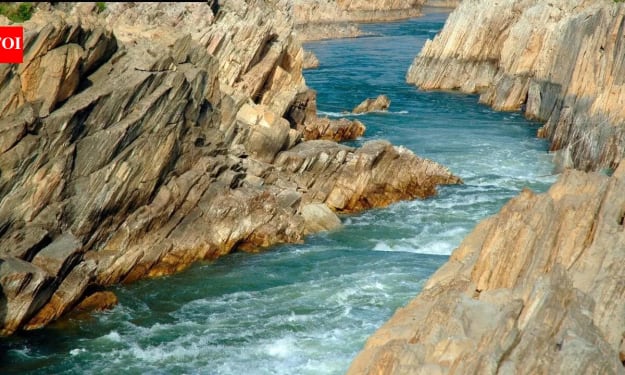
India, a land of rivers and spirituality, is home to more than 1,500 rivers that nourish its agriculture, sustain ecosystems, and form the backbone of its culture and economy. Most rivers follow the natural topography, flowing from higher altitudes to lower plains, eventually joining larger rivers or emptying into the sea. But among India’s vast river network, there exists a fascinating anomaly—a river that flows backward. Yes, you read that right. Contrary to the usual flow, this river reverses its course under certain conditions, capturing the imagination of locals, scientists, and travelers alike. The river in question is the Narmada River, which primarily flows westward through the states of Madhya Pradesh, Maharashtra, and Gujarat before emptying into the Arabian Sea. The Narmada is one of India’s most significant rivers, both historically and culturally. It is considered sacred, with numerous temples and ghats along its banks. Its backward flow phenomenon, however, is an extraordinary natural event tied to tidal influences, geography, and seasonal changes. Understanding the Phenomenon The Narmada River’s backward flow occurs near its estuary in Bharuch, Gujarat, where the river meets the Arabian Sea. During the monsoon season, or when the sea tide is exceptionally high, the force of the incoming tide can overpower the river’s natural current. As a result, the water begins to flow upstream, moving back into the river instead of towards the sea. Locals often refer to this as the river “swallowing” the sea, and the phenomenon has been documented by hydrologists and environmental experts. This is not unique to the Narmada; tidal rivers worldwide exhibit similar behavior, but it is rare in India. The combination of the river’s relatively flat gradient near its mouth, high tidal variations in the Arabian Sea, and heavy seasonal rainfall make the Narmada one of the few rivers in India where this backward flow is noticeable and significant. Cultural and Historical Significance The Narmada River has long been celebrated in Indian culture. Ancient texts, folklore, and religious scriptures frequently praise its waters. The backward flow phenomenon has inspired myths and local stories. Some communities consider it a divine occurrence, believing that the river reverses its course to honor the gods or cleanse the lands during specific lunar events. Pilgrimages along the river, known as the Narmada Parikrama, attract thousands of devotees every year. They often plan their visits to witness the backward flow, adding a spiritual dimension to a natural phenomenon. Beyond its religious significance, the river has historically served as a major trade and transportation route. Ancient settlements flourished along its banks, benefiting from fertile soils and reliable water. The Narmada’s estuary, where the backward flow occurs, became a hub for commerce, as the unusual river dynamics created navigable conditions that local traders skillfully exploited. Scientific Perspective Hydrologists and geologists have studied the Narmada’s backward flow to understand its dynamics better. Tidal action, riverbed gradient, and seasonal water volume play a crucial role. During the monsoon, the river swells with rainwater from its catchment areas, increasing its speed and volume. When the sea tide rises simultaneously, the river’s velocity can be temporarily reversed. Scientists monitor these events to study sediment transport, estuarine ecology, and flood risk management. The phenomenon also provides insights into how rivers respond to climate variations. Rising sea levels and changing rainfall patterns could alter the intensity and frequency of such backward flows in the future. Understanding these dynamics is essential for local infrastructure planning, agriculture, and disaster preparedness, particularly in flood-prone regions. Tourism and Exploration The backward flow of the Narmada River has recently become a point of interest for eco-tourism and adventure enthusiasts. Visitors flock to Bharuch and nearby areas to witness this rare occurrence. Guided tours offer explanations of the tidal dynamics, cultural stories, and ecological importance of the river. Kayaking and river cruises along the estuary allow tourists to experience the force of the water reversing, a sight that is both mesmerizing and humbling. Local authorities are also promoting awareness about the river’s unique behavior. Efforts include signage, educational programs, and environmental campaigns to protect the river from pollution and unsustainable development. By combining tourism with conservation, the Narmada backward flow has become a symbol of India’s natural wonders and the delicate balance between nature and human activity. Conclusion India’s Narmada River is not just a source of water and life; it is a living example of nature’s unpredictability and grandeur. Its rare backward flow phenomenon reminds us of the power of tides, the intricacies of geography, and the cultural narratives that rivers inspire. Whether you are a traveler seeking unusual natural events, a student of hydrology, or a devotee of India’s spiritual heritage, witnessing the Narmada’s backward flow is an unforgettable experience. In a country renowned for its diverse landscapes and river systems, the Narmada stands out as a river that defies expectations, flowing backward against the tide and leaving behind a story that is part science, part culture, and wholly awe-inspiring.
By Fiaz Ahmed Brohi3 days ago in The Swamp



Comments
There are no comments for this story
Be the first to respond and start the conversation.