
India Has a River That Flows Backwards: Know Which River It Is
Narmada River’s Rare Backward Flow Reveals the Science, Culture, and Mystique of India’s Sacred Waterways"

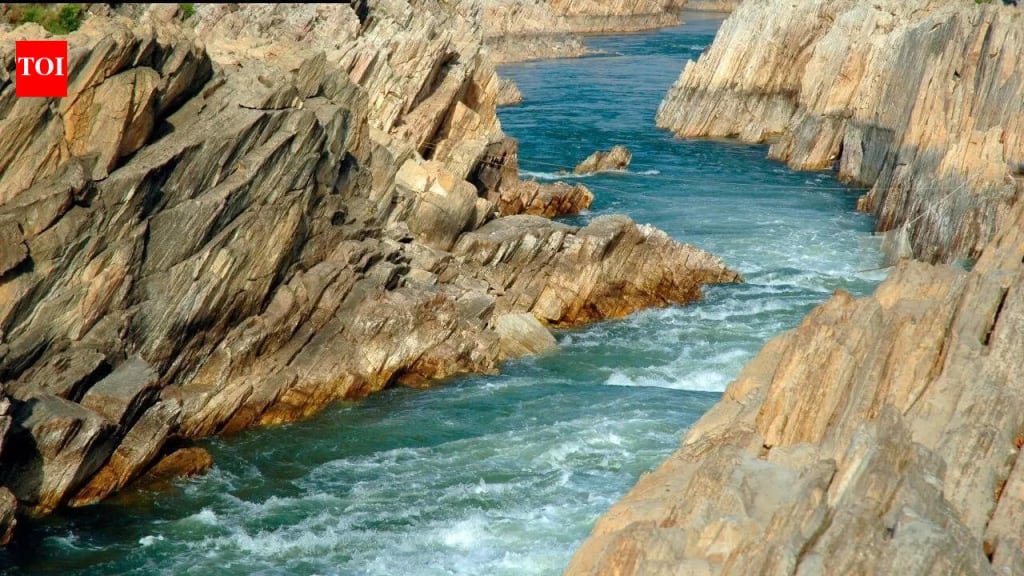
India, a land of rivers and spirituality, is home to more than 1,500 rivers that nourish its agriculture, sustain ecosystems, and form the backbone of its culture and economy. Most rivers follow the natural topography, flowing from higher altitudes to lower plains, eventually joining larger rivers or emptying into the sea. But among India’s vast river network, there exists a fascinating anomaly—a river that flows backward. Yes, you read that right. Contrary to the usual flow, this river reverses its course under certain conditions, capturing the imagination of locals, scientists, and travelers alike.
The river in question is the Narmada River, which primarily flows westward through the states of Madhya Pradesh, Maharashtra, and Gujarat before emptying into the Arabian Sea. The Narmada is one of India’s most significant rivers, both historically and culturally. It is considered sacred, with numerous temples and ghats along its banks. Its backward flow phenomenon, however, is an extraordinary natural event tied to tidal influences, geography, and seasonal changes.
Understanding the Phenomenon
The Narmada River’s backward flow occurs near its estuary in Bharuch, Gujarat, where the river meets the Arabian Sea. During the monsoon season, or when the sea tide is exceptionally high, the force of the incoming tide can overpower the river’s natural current. As a result, the water begins to flow upstream, moving back into the river instead of towards the sea. Locals often refer to this as the river “swallowing” the sea, and the phenomenon has been documented by hydrologists and environmental experts.
This is not unique to the Narmada; tidal rivers worldwide exhibit similar behavior, but it is rare in India. The combination of the river’s relatively flat gradient near its mouth, high tidal variations in the Arabian Sea, and heavy seasonal rainfall make the Narmada one of the few rivers in India where this backward flow is noticeable and significant.
Cultural and Historical Significance
The Narmada River has long been celebrated in Indian culture. Ancient texts, folklore, and religious scriptures frequently praise its waters. The backward flow phenomenon has inspired myths and local stories. Some communities consider it a divine occurrence, believing that the river reverses its course to honor the gods or cleanse the lands during specific lunar events. Pilgrimages along the river, known as the Narmada Parikrama, attract thousands of devotees every year. They often plan their visits to witness the backward flow, adding a spiritual dimension to a natural phenomenon.
Beyond its religious significance, the river has historically served as a major trade and transportation route. Ancient settlements flourished along its banks, benefiting from fertile soils and reliable water. The Narmada’s estuary, where the backward flow occurs, became a hub for commerce, as the unusual river dynamics created navigable conditions that local traders skillfully exploited.
Scientific Perspective
Hydrologists and geologists have studied the Narmada’s backward flow to understand its dynamics better. Tidal action, riverbed gradient, and seasonal water volume play a crucial role. During the monsoon, the river swells with rainwater from its catchment areas, increasing its speed and volume. When the sea tide rises simultaneously, the river’s velocity can be temporarily reversed. Scientists monitor these events to study sediment transport, estuarine ecology, and flood risk management.
The phenomenon also provides insights into how rivers respond to climate variations. Rising sea levels and changing rainfall patterns could alter the intensity and frequency of such backward flows in the future. Understanding these dynamics is essential for local infrastructure planning, agriculture, and disaster preparedness, particularly in flood-prone regions.
Tourism and Exploration
The backward flow of the Narmada River has recently become a point of interest for eco-tourism and adventure enthusiasts. Visitors flock to Bharuch and nearby areas to witness this rare occurrence. Guided tours offer explanations of the tidal dynamics, cultural stories, and ecological importance of the river. Kayaking and river cruises along the estuary allow tourists to experience the force of the water reversing, a sight that is both mesmerizing and humbling.
Local authorities are also promoting awareness about the river’s unique behavior. Efforts include signage, educational programs, and environmental campaigns to protect the river from pollution and unsustainable development. By combining tourism with conservation, the Narmada backward flow has become a symbol of India’s natural wonders and the delicate balance between nature and human activity.
Conclusion
India’s Narmada River is not just a source of water and life; it is a living example of nature’s unpredictability and grandeur. Its rare backward flow phenomenon reminds us of the power of tides, the intricacies of geography, and the cultural narratives that rivers inspire. Whether you are a traveler seeking unusual natural events, a student of hydrology, or a devotee of India’s spiritual heritage, witnessing the Narmada’s backward flow is an unforgettable experience.
In a country renowned for its diverse landscapes and river systems, the Narmada stands out as a river that defies expectations, flowing backward against the tide and leaving behind a story that is part science, part culture, and wholly awe-inspiring.
About the Creator
Fiaz Ahmed Brohi
I am a passionate writer with a love for exploring and creating content on trending topics. Always curious, always sharing stories that engage and inspire.
Keep reading
More stories from Fiaz Ahmed Brohi and writers in The Swamp and other communities.
Why the Govt's Approval for 114 French Dassault Rafales Raises Questions
India’s recent approval for the purchase of 114 Dassault Rafale fighter jets from France has reignited discussions about defense planning, procurement processes, and the balance between national security and fiscal responsibility. While the government frames this as a step toward modernizing the Indian Air Force (IAF), critics are questioning whether this massive acquisition is entirely justified or if it masks deeper strategic and operational issues. The Rafale Deal in Context The Rafale deal is one of the largest defense procurements in India’s history, valued at over $15 billion. The aircraft, built by French aerospace giant Dassault Aviation, is considered one of the most advanced multi-role fighters in the world, equipped with state-of-the-art avionics, weapons systems, and stealth capabilities. India has already inducted a batch of these jets, and the government’s approval now paves the way for the remaining 114 to be produced and delivered. Proponents argue that Rafales will significantly enhance India’s air combat capabilities, particularly in high-altitude operations along the northern borders with China and in countering aerial threats from Pakistan. The jets’ ability to carry advanced missiles and precision-guided munitions makes them a formidable addition to the IAF’s fleet. Questions About Costs and Procurement Despite the strategic rationale, several questions remain. Critics highlight the high cost per aircraft, which far exceeds what India spends on domestic fighter programs such as the HAL Tejas. While Rafales offer advanced technology, the steep price tag raises concerns about whether such large-scale imports strain India’s defense budget and divert funds from domestic development programs. Moreover, the approval process itself has drawn scrutiny. Transparency advocates argue that the government’s decision-making lacks sufficient public disclosure and debate. Questions have been raised about how costs were negotiated, why offset agreements with French companies have not fully materialized, and whether India could have leveraged more local manufacturing to reduce expenses and foster the domestic defense industry. Domestic Defense Industry Implications India has invested heavily in indigenous defense production under initiatives like “Make in India”, aiming to reduce dependence on foreign suppliers and build local expertise. Critics of the Rafale deal argue that approving 114 foreign jets sends a mixed message to domestic manufacturers. HAL, India’s primary defense aerospace company, has been developing the Tejas fighter and has faced delays due to technical challenges and budget constraints. By purchasing a large number of foreign jets, some fear that local projects may be deprioritized, slowing India’s long-term goal of self-reliance in defense technology. Supporters counter that Rafales are needed immediately to address capability gaps while domestic programs catch up. They point out that indigenous jets like the Tejas cannot yet match the operational readiness, range, or payload of the Rafale, and that the imported jets complement rather than replace domestic efforts. Strategic Significance and Regional Dynamics Beyond cost and procurement concerns, the Rafale acquisition has geopolitical implications. France has been a key defense partner, and the deal strengthens Indo-French relations in the face of evolving security challenges in South Asia and the Indo-Pacific. The jets enhance India’s deterrence posture against potential adversaries and signal India’s commitment to modernizing its armed forces. However, critics caution that such acquisitions must be balanced with broader defense strategy. They argue that focusing on high-end fighters like Rafales may overlook other critical areas such as unmanned aerial vehicles, cyber defense, naval aviation, and ground-based air defense systems. A holistic approach, they contend, is essential to address the full spectrum of modern warfare threats. Public Debate and Accountability The approval of 114 Rafales also raises questions about democratic accountability in defense spending. Large-scale defense deals often involve classified details, but citizens and defense analysts stress the need for transparent justification, oversight by parliamentary committees, and adherence to ethical procurement practices. Public debate ensures that such multimillion-dollar acquisitions serve national interests rather than becoming politically motivated or financially opaque decisions. Conclusion India’s decision to approve 114 Rafale jets undoubtedly strengthens the IAF’s capabilities and bolsters strategic ties with France. Yet, it also highlights enduring debates over cost-effectiveness, domestic defense industry development, procurement transparency, and long-term strategic planning. As the Rafales gradually join the fleet, India will need to balance immediate defense needs with the broader goal of building a self-reliant, technologically advanced military. The Rafale deal is more than a transaction—it is a litmus test for India’s defense policy, industrial strategy, and governance. The government must ensure that while India soars with these cutting-edge jets, it does not lose sight of the bigger picture: developing indigenous capabilities, maintaining fiscal prudence, and preparing comprehensively for the complex security landscape of the 21st century.
By Fiaz Ahmed Brohiabout 20 hours ago in The Swamp
Awaken Thoughts: Unlocking the Power of Mindful Reflection
In a fast-paced world filled with distractions, our minds are often cluttered with endless streams of information, worries, and responsibilities. Awakening our thoughts means taking a deliberate pause to reflect, analyze, and gain clarity. It is a conscious effort to break free from autopilot thinking and engage deeply with our ideas, emotions, and values.
By Aarif Lashari4 days ago in The Swamp



Comments
There are no comments for this story
Be the first to respond and start the conversation.