
Six Dead as Russia Hits Energy and Residential Sites in Ukraine
Renewed Russian airstrikes leave a deadly mark on Ukraine’s energy grid and homes, intensifying humanitarian fears as winter approaches.

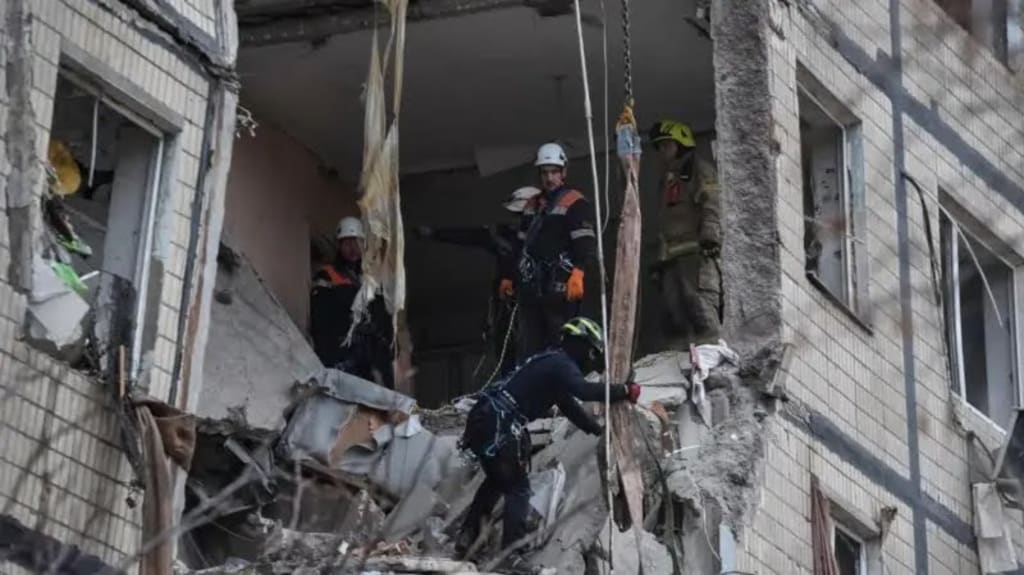
A Grim Morning in Ukraine
Ukraine woke to another grim reminder of war this week as six people were killed and dozens injured when Russian missiles and drones struck both energy and residential sites across several regions. The coordinated assault, described by officials as one of the most destructive in recent months, has once again plunged parts of the country into darkness and fear.
The attack targeted key power infrastructure, causing blackouts in multiple cities including Kharkiv, Lviv, and Dnipro. Residential buildings were also hit, leaving families trapped under rubble and emergency crews racing against time. For Ukraine, the latest strikes mark another painful chapter in a war that shows no sign of slowing down.
---
What Happened: The Latest Wave of Strikes
According to Ukrainian authorities, the attacks began before dawn, when waves of drones and missiles swept across the country. The Ukrainian Air Force reported intercepting most of the incoming projectiles, but several managed to penetrate air defenses and strike populated areas.
In Kharkiv, Ukraine’s second-largest city, a residential building was destroyed, killing at least four people, including a child. In Dnipropetrovsk, energy infrastructure suffered major damage, cutting off electricity to thousands of homes. Two more deaths were reported in Zaporizhzhia, where a missile struck near a local hospital.
President Volodymyr Zelensky condemned the attacks as “acts of pure terror,” emphasizing that Russia’s targeting of civilian and energy infrastructure serves no military purpose. “They want to break our spirit as winter nears,” he said in a televised address. “But Ukraine will not surrender.”
---
A Renewed Focus on Ukraine’s Energy Grid
This latest offensive echoes Russia’s winter strategy from the previous year, when widespread strikes on energy facilities left millions without heat or power. Analysts believe Moscow aims to repeat that tactic to weaken Ukraine’s resilience as temperatures drop.
The Ukrainian energy ministry confirmed that several power substations and transmission lines were damaged, forcing emergency shutdowns to stabilize the grid. Repair teams have been working around the clock, often under fire, to restore electricity.
Experts warn that if such attacks continue, the country could face rolling blackouts and heating shortages similar to last winter. The European Union and United States have already pledged to deliver more air defense systems and power equipment to help Ukraine protect and repair its critical infrastructure.
---
Civilians in the Crossfire
Beyond the damage to power plants, it’s the civilian toll that continues to shock the world. Videos circulating online showed firefighters pulling survivors from collapsed homes and families huddled in basements as air raid sirens blared.
Among the victims was a 10-year-old boy who had been asleep when the missile struck his apartment in Kharkiv. His mother, badly injured, told reporters from her hospital bed, “We heard the explosion and then everything went dark.”
Humanitarian groups warn that such attacks have left millions psychologically scarred. The United Nations Human Rights Monitoring Mission in Ukraine reports that civilian deaths are rising again after a brief summer lull.
“These strikes are not random,” said a UN spokesperson. “They are deliberate attempts to disrupt daily life and erode morale.”
---
Global Reactions and Condemnations
The international community quickly condemned the assault. U.S. Secretary of State Antony Blinken called it “a blatant attack on civilians and energy infrastructure,” promising continued support for Ukraine’s defense. European leaders, including those of Germany and France, echoed similar sentiments, reaffirming their commitment to supplying weapons and humanitarian aid.
In contrast, the Kremlin maintained that the strikes were aimed at “military and logistical targets,” dismissing reports of civilian casualties as “Ukrainian propaganda.”
However, satellite imagery and local testimony tell a different story. Several of the damaged sites were clearly residential buildings or public utilities — evidence that bolsters claims of indiscriminate bombardment.
---
The Road Ahead: Resilience Amid Ruins
For many Ukrainians, life under constant threat has become tragically normal. Yet, despite the fear and loss, there’s an undeniable spirit of resilience. Volunteers distribute food and blankets, local engineers rebuild power lines, and families return to damaged homes to start over again.
That spirit is what keeps Ukraine standing. As one resident of Dnipro put it, “They can destroy our buildings, but not our will.”
Still, the challenges ahead are enormous. Winter is fast approaching, and with each new attack on the power grid, survival becomes more difficult. The government is urging citizens to conserve energy and prepare for possible outages, while humanitarian agencies rush to deliver generators, medical supplies, and heating equipment.
---
Conclusion: A War Without Boundaries
The tragedy of “Six dead as Russia hits energy and residential sites in Ukraine” is not just another headline—it’s a reminder of the war’s human cost. Every explosion tears through communities, leaving grief and uncertainty in its wake.
As Ukraine braces for another hard winter, the world watches—and waits—to see whether international unity can withstand fatigue and shifting global priorities. For now, Ukrainians continue to endure, proving that even amid destruction, hope and defiance burn brighter than the fires of war.
About the Creator
Fiaz Ahmed
I am Fiaz Ahmed. I am a passionate writer. I love covering trending topics and breaking news. With a sharp eye for what’s happening around the world, and crafts timely and engaging stories that keep readers informed and updated.
Keep reading
More stories from Fiaz Ahmed and writers in The Swamp and other communities.
What Hungary’s Orban Did — and Didn’t — Get from Trump
A Meeting of Strongmen When Hungary’s Prime Minister Viktor Orban met with Donald Trump, it wasn’t just another diplomatic courtesy call — it was a calculated move by two leaders known for their populist, nationalist rhetoric. The meeting, which drew both attention and controversy, was seen as part of Orban’s ongoing effort to align Hungary with Trump’s brand of conservative politics and distance itself from liberal Western influences.
By Fiaz Ahmed 2 months ago in The Swamp
Fleeing Settler Violence, Palestinians Leave One of Few Remaining Jordan Valley Hamlets
The Jordan Valley has always been more than just land. For generations of Palestinian Bedouin families, it has been home, livelihood, and identity. But today, that connection is being violently severed. One of the few remaining Palestinian hamlets in the Jordan Valley is slowly emptying, as families flee ongoing settler violence that has made daily life unbearable.
By Aqib Hussain7 days ago in The Swamp



Comments
There are no comments for this story
Be the first to respond and start the conversation.