
Senators Explore Off-Ramps to Prevent a Shutdown as Democrats Lay Out DHS Reforms
With a government shutdown looming, bipartisan talks intensify in the Senate while Democrats push sweeping reforms to the Department of Homeland Security.
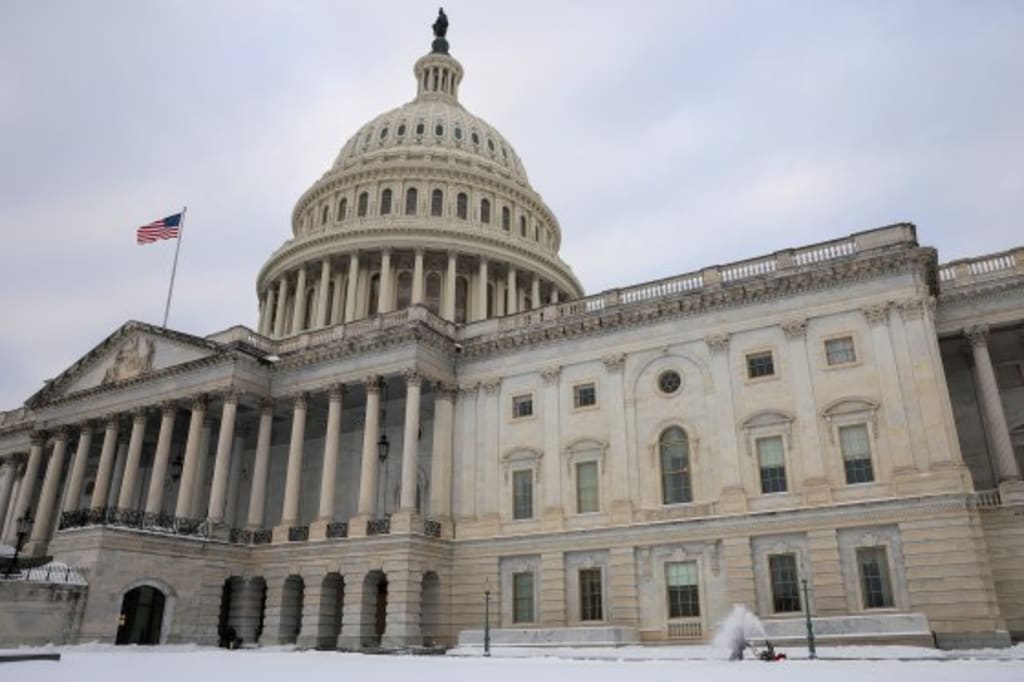
As the threat of a government shutdown growsouder in Washington, senators from both parties are racing against the clock to find “off-ramps” that could avert a funding lapse. At the same time, Democrats are using the moment to outline ambitious reforms to the Department of Homeland Security (DHS), turning routine budget negotiations into a high-stakes debate over immigration, border security, and the future direction of federal law enforcement.
The convergence of these two efforts highlights how deeply intertwined fiscal deadlines and policy priorities have become in today’s polarized Congress.
Shutdown Pressure Mounts on Capitol Hill
With funding deadlines approaching, Senate leaders are under intense pressure to strike a deal that can pass both chambers and be signed into law. A shutdown would disrupt federal agencies, delay paychecks for government workers, and ripple through the broader economy—outcomes that few lawmakers want to face, especially in an election-sensitive climate.
Behind closed doors, senators are exploring several off-ramps, including short-term funding extensions, targeted compromises on controversial provisions, and separating the most contentious policy issues from must-pass spending bills. These strategies are aimed at buying time while avoiding the political fallout of a full shutdown.
Moderate lawmakers from both parties are reportedly playing a key role, positioning themselves as brokers who can bridge the gap between hardliners unwilling to compromise and leadership eager to keep the government open.
Democrats Tie Funding to DHS Reform Vision
While shutdown prevention remains the immediate goal, Democrats are also advancing a broader policy agenda—particularly around the Department of Homeland Security. Party leaders argue that DHS, created in the aftermath of the September 11 attacks, is overdue for modernization and reform to reflect current security challenges and humanitarian responsibilities.
Their proposals include restructuring immigration enforcement priorities, strengthening oversight mechanisms, improving asylum processing systems, and investing in technology to enhance border management without relying solely on detention or mass enforcement operations.
Democrats contend that the current system is inefficient, costly, and inconsistent with American values. By laying out these reforms during budget talks, they are signaling that funding decisions should align with long-term strategic changes, not just short-term political fixes.
Republican Resistance and Political Calculations
Republicans, however, have pushed back strongly against linking DHS reforms to shutdown negotiations. Many GOP senators argue that Democrats are using the threat of a shutdown to advance policies that would weaken border security and immigration enforcement.
Conservative lawmakers insist that DHS funding must prioritize physical security, personnel support for Border Patrol and Immigration and Customs Enforcement (ICE), and tougher measures to deter unauthorized migration. For them, reforms proposed by Democrats risk sending the “wrong signal” at a time when border crossings remain a major political issue.
This standoff reflects a broader strategic calculation: neither party wants to be blamed for a shutdown, but both are keen to define the narrative around national security and governance.
Searching for Common Ground
Despite sharp rhetoric, there are signs of cautious optimism. Some senators have suggested compartmentalizing the negotiations—passing a clean, short-term funding bill to keep the government open while committing to separate, bipartisan talks on DHS reforms later in the year.
Others are exploring narrowly tailored compromises, such as enhanced oversight provisions or targeted investments in border technology, that could attract support from both sides without reopening larger ideological battles.
These off-ramps are fragile, however, and depend heavily on leadership’s ability to manage expectations within their own caucuses.
The Stakes Beyond a Shutdown
A government shutdown would have consequences far beyond Capitol Hill. DHS agencies, including TSA, Border Patrol, and FEMA, would face operational disruptions, potentially affecting airport security, disaster response, and border operations. For Democrats, this underscores the urgency of reforming an agency they say is stretched thin and structurally outdated. For Republicans, it reinforces the need for robust funding and enforcement clarity.
Public opinion also looms large. Voters have grown increasingly frustrated with shutdown brinkmanship, viewing it as a symptom of dysfunction rather than principled governance. Lawmakers on both sides are acutely aware that how they handle this moment could shape perceptions heading into future elections.
What Comes Next?
As negotiations continue, the path forward remains uncertain. A last-minute deal could emerge, as it often does, allowing senators to declare victory and move on. Alternatively, failure to find consensus could push the government to the brink, testing the political resolve of both parties.
What is clear is that the shutdown debate has become a proxy battle over the future of DHS and the broader direction of U.S. immigration and security policy. Whether through compromise or confrontation, the decisions made in the coming days will have lasting implications—not just for federal budgets, but for how the nation defines security, accountability, and governance in a divided era.
For now, senators continue searching for off-ramps, hoping to steer the country away from another shutdown and toward a more stable, if still contentious, path forward.
About the Creator
Japan Suspends World’s Largest Nuclear Plant Hours After Restart
Japan made headlines recently when the Kashiwazaki‑Kariwa Nuclear Power Plant, the world’s largest by capacity, had to halt operations just hours after restarting. The sudden suspension has reignited debates over nuclear safety, energy security, and Japan’s path to a carbon-neutral future.
By Aqib Hussain7 days ago in The Swamp
The Woman Who Stands Between Donald Trump and Greenland
How Denmark’s prime minister became the key figure defending Greenland’s sovereignty When former U.S. President Donald Trump publicly expressed interest in buying Greenland, the idea shocked many around the world. What sounded like a real-estate joke quickly turned into a serious diplomatic issue. At the center of that standoff stood Denmark’s prime minister, a leader who made it clear that Greenland was not for sale and that its future belonged to its people.
By Fiaz Ahmed 3 days ago in The Swamp




Comments
There are no comments for this story
Be the first to respond and start the conversation.