
Saudi, Israeli Officials Visit D.C. to Talk Possible U.S. Strikes on Iran
As tensions with Tehran escalate, regional allies converge on Washington to shape what could be a pivotal moment in Middle East policy

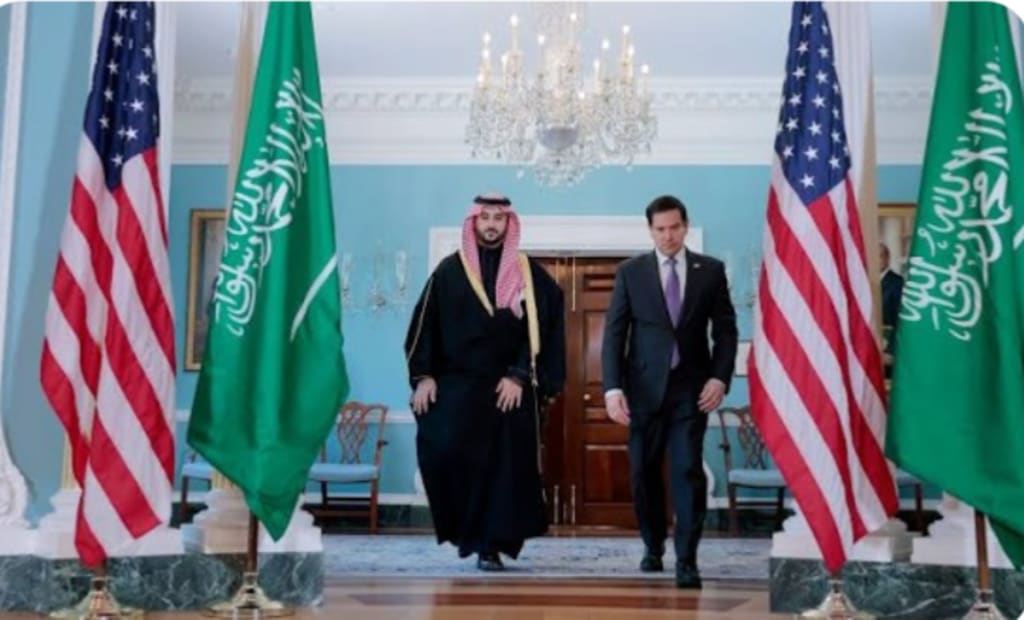
This week, Washington, D.C., became the center of a high-stakes diplomatic conversation. Senior officials from Israel and Saudi Arabia traveled to the U.S. capital to meet with top American policymakers about the possibility of military action against Iran. The timing could not be more critical: the region is on edge, the U.S. is signaling readiness for potential strikes, and Iran is responding with warnings of retaliation.
These meetings highlight the complex web of alliances, interests, and risks that define Middle East geopolitics. They also underscore the difficult position facing the United States as it navigates pressure from regional partners, international diplomacy, and domestic considerations.
Why the Visit Is Significant
Israel and Saudi Arabia have long shared concerns about Iran’s nuclear program, missile capabilities, and influence across the Middle East. While the two nations do not maintain formal diplomatic relations, their strategic alignment has deepened in recent years, particularly in response to perceived Iranian threats.
The Washington visit is more than ceremonial. Senior officials are briefing U.S. leaders on intelligence, potential targets, and strategies for possible military action. At the same time, they are trying to ensure that any action is coordinated and considers regional stability.
For the United States, these meetings serve as both a reality check and a source of intelligence. The administration must weigh the advice of regional allies against the broader risks of military escalation — including possible retaliation, disruption of global oil markets, and unintended consequences in other conflict zones.
Inside the Discussions
According to sources, the Israeli delegation includes top military and intelligence officials who are providing detailed assessments of Iran’s nuclear facilities, missile sites, and proxy networks. Their focus is clear: demonstrate the seriousness of the threat and the potential impact of U.S. strikes.
Meanwhile, Saudi officials are reportedly taking a more cautious approach. While Riyadh shares concerns about Iran, its representatives are emphasizing diplomatic alternatives and the dangers of a full-scale conflict. The Saudis are acutely aware that war could destabilize their economy, threaten oil exports, and increase regional insecurity.
This dual approach illustrates a significant tension: Israel favors assertive action to neutralize threats, whereas Saudi Arabia prioritizes stability and measured pressure. The U.S. administration is listening closely to both perspectives as it evaluates options.
The U.S. Position
President Donald Trump has publicly signaled that no final decision has been made regarding military strikes. Yet the U.S. has increased its military presence in the Gulf, including deploying naval assets and positioning forces capable of rapid action.
Sources indicate that military planners are considering a range of scenarios — from targeted strikes on key nuclear and military facilities to more limited precision operations aimed at sending a warning without triggering full-scale war.
Trump’s recent statements have warned Iran that inaction on nuclear negotiations could lead to consequences “far worse” than anything seen before. Behind the scenes, officials are balancing the need to project strength with the recognition that any strike carries significant risks, including retaliation against U.S. allies and regional partners.
Iran’s Response
Iran has responded forcefully to the heightened U.S. rhetoric. Senior officials have vowed a “crushing response” to any military action, signaling that attacks on Iranian territory or leadership could trigger broader escalation in the region.
Iran’s proxies in Iraq, Syria, Lebanon, and Yemen further complicate the situation, as any conflict could easily spread beyond Iranian borders. At the same time, Tehran has not closed the door on diplomacy. Iranian officials are engaging with mediators, including planned talks in Turkey, to explore ways to reduce tensions while protecting national interests.
The Regional Balancing Act
The presence of both Saudi and Israeli delegations in Washington highlights the delicate balance in Middle Eastern strategy:
Israel is pressing for assertive measures to deter Iran’s nuclear and military ambitions.
Saudi Arabia acknowledges the threat but seeks to minimize the risk of a regional conflict that could impact its economy and internal stability.
The U.S. must navigate these divergent perspectives while weighing global consequences and domestic political pressures.
This balancing act is further complicated by the broader international community, which has urged restraint and diplomacy. European allies, neighboring countries, and international organizations all play a role in trying to prevent an escalation that could spiral out of control.
Potential Outcomes
As the Washington meetings continue, several scenarios remain possible:
Limited U.S. strikes — targeted operations designed to degrade Iran’s capabilities without triggering a full-scale war.
Broader military action — aimed at significantly weakening Iran’s nuclear and missile infrastructure, potentially with Israeli or allied coordination.
Diplomatic resolution — a combination of back-channel talks, mediation by regional powers, and renewed negotiations on nuclear agreements.
Prolonged tension — a continuation of threats, military posturing, and regional uncertainty without immediate action.
Each option carries its own risks and trade-offs, with consequences for regional security, global energy markets, and U.S. foreign policy credibility.
What Comes Next
The meetings in Washington will help shape U.S. strategy toward Iran in the coming weeks. They are a reminder of how closely regional allies influence American decisions in the Middle East.
For now, the world is watching carefully. Iran remains defiant, Israel and Saudi Arabia are seeking coordinated action, and the United States is weighing its options. Any decision could have far-reaching consequences not just for the Middle East, but for global stability and security.
As diplomatic and military consultations continue, one thing is clear: this moment represents a critical juncture in U.S.-Iran relations — one that could define the region’s trajectory for years to come.
About the Creator
Sajida Sikandar
Hi, I’m Sajida Sikandar, a passionate blogger with 3 years of experience in crafting engaging and insightful content. Join me as I share my thoughts, stories, and ideas on a variety of topics that matter to you.
Keep reading
More stories from Sajida Sikandar and writers in The Swamp and other communities.
Immigration Espresso Shot – New Year Special
As the clock struck midnight and the world welcomed another new year, many people celebrated with fireworks, resolutions, and fresh beginnings. But for millions of migrants, refugees, and immigrants across the globe, the new year arrived with unanswered questions: Will borders open or tighten? Will policies become fairer or more restrictive? Will opportunity finally meet aspiration?
By Sajida Sikandar2 days ago in The Swamp
“Jobs, Jobs, Jobs”: The AI Mantra in Davos as Fears Take Back Seat
As the World Economic Forum (WEF) in Davos kicked off its 2026 meetings, the conversation has taken a noticeably optimistic turn. Gone are the dominant narratives of fear and disruption surrounding artificial intelligence (AI); instead, a new mantra—“jobs, jobs, jobs” is taking center stage. Policymakers, business leaders, and technologists are focusing on AI’s potential to create employment opportunities, boost productivity, and transform industries. From Fear to Opportunity Over the past few years, discussions about AI often centered on job displacement, automation, and economic disruption. Headlines highlighted fears that machines would replace human workers, creating uncertainty across sectors. However, the narrative at Davos this year is different. Leaders are increasingly emphasizing AI as a tool for economic growth: Generating new employment opportunities in tech, healthcare, logistics, and creative industries. Streamlining workflows to boost productivity without necessarily reducing workforce numbers. Encouraging upskilling and reskilling initiatives to prepare workers for AI-driven economies. Executives repeatedly echoed the mantra “jobs, jobs, jobs”, signaling a shift from anxiety to proactive planning. AI’s Role in Job Creation Industry experts at Davos highlighted that AI is not just a threat to employment—it can also be a powerful engine for job creation. Some examples include: New tech roles: AI development, machine learning engineering, and AI ethics positions are in high demand. Support roles: Deployment of AI systems requires trainers, quality assurance specialists, and maintenance teams. Creative industries: AI-powered tools are enabling artists, writers, designers, and marketers to produce more efficiently, opening new revenue streams. Healthcare and education: AI applications are creating roles in telemedicine, diagnostics, personalized learning, and data analysis. A report presented at Davos indicated that for every role AI automates, it could potentially create 1.5 to 2 new roles, especially in sectors that adapt quickly. Corporate Perspectives Major corporations attending WEF 2026 are presenting AI as a growth strategy rather than a disruption threat: Tech giants are investing billions in AI initiatives while highlighting plans to train existing staff. Financial institutions see AI as a way to enhance client services, reduce manual tasks, and expand operations, thereby creating more human-centric jobs. Manufacturing and logistics companies emphasized collaborative robots (cobots) and AI-powered supply chains that augment workers rather than replace them. Executives consistently framed AI as a tool to enhance human potential, aligning with the global focus on employment generation. Policy Makers and Economic Implications Government officials at Davos are echoing similar sentiments, suggesting that policy frameworks must balance AI adoption with workforce protection: Investments in training programs and education reform to equip citizens with AI-related skills. Tax incentives and grants to encourage businesses to create AI-enhanced jobs rather than automate positions entirely. Collaboration between public and private sectors to ensure AI technologies drive inclusive growth. These discussions signal a shift from fear-driven policies to opportunity-driven approaches, acknowledging that AI could become a major driver of economic expansion. Upskilling and Reskilling Initiatives A recurring theme at Davos is preparing the workforce for AI integration. Companies and governments are rolling out programs to help workers: Learn AI tools and platforms relevant to their industries. Develop skills for emerging roles that AI cannot replace, such as creative thinking, leadership, and human-centered problem solving. Transition from traditional roles into AI-enhanced positions that require hybrid skills. By focusing on upskilling rather than layoffs, AI is positioned as a tool for workforce empowerment rather than displacement. Global Economic Outlook The positive framing of AI at Davos is supported by economic data: Studies suggest AI adoption could add trillions to global GDP over the next decade. AI-driven productivity gains may boost wage growth in skilled sectors. Emerging economies could leverage AI to create jobs and accelerate development, particularly in technology, logistics, and education sectors. Analysts believe that the emphasis on employment opportunities helps reduce fears and encourages broader societal acceptance of AI technologies. Challenges and Considerations Despite the optimism, experts caution that AI adoption is not without risks: Unequal access to AI technologies could widen global and regional disparities. Rapid automation in certain sectors may still displace low-skill jobs if upskilling initiatives lag. Ethical and regulatory challenges surrounding AI usage must be addressed to ensure fair labor practices. Leaders at Davos emphasized that responsible AI governance is essential to realize the promise of job creation while mitigating social and economic risks. The Cultural Shift at Davos The 2026 forum represents a cultural shift in the global conversation about AI. Whereas past meetings were dominated by fear of disruption, this year: Industry and government leaders are highlighting human-AI collaboration. Discussions are oriented toward practical implementation of AI for economic and social benefit. The mantra “jobs, jobs, jobs” reflects a proactive, opportunity-oriented approach to technology adoption. This optimism signals a new era where AI is framed as a workforce multiplier rather than a replacement threat. Final Thoughts The World Economic Forum in Davos 2026 underscores a pivotal moment in how the world views AI. Rather than fearing mass job losses, leaders are embracing AI as a tool for economic growth, workforce empowerment, and innovation. The repeated refrain of “jobs, jobs, jobs” reflects a global consensus: AI’s future is not just about automation—it’s about creating new opportunities, industries, and careers. For businesses, policymakers, and workers, the message is clear: preparation, upskilling, and collaboration are key to ensuring that AI drives inclusive, sustainable employment growth. As fears take a back seat, the focus in Davos is on human potential augmented by technology, a message that could shape the global economic landscape for years to come.
By Muhammad Hassan7 days ago in The Swamp



Comments
There are no comments for this story
Be the first to respond and start the conversation.