
Samsung: How a Global Tech Giant Continues to Shape the Future
Innovation, competition, and the brand that redefined modern consumer technology

Samsung is more than just a technology company. It is a global powerhouse whose products influence how billions of people communicate, work, and live every day. From smartphones and televisions to semiconductors and smart home solutions, Samsung has built a reputation for innovation, scale, and resilience. Its journey from a small trading company to one of the world’s most valuable brands reflects both strategic vision and an ability to adapt to rapid technological change.
The Origins of Samsung’s Success
Founded in 1938 in South Korea, Samsung began as a modest trading business. Over the decades, it diversified into industries ranging from textiles and construction to electronics. This diversification laid the foundation for what would become Samsung Electronics, the division that eventually propelled the company onto the global stage.
Samsung’s rise coincided with South Korea’s broader economic transformation. By investing heavily in research, manufacturing, and global expansion, the company positioned itself as a serious competitor to established Western and Japanese brands. Today, Samsung is recognized not only for its products but also for its role in shaping the global technology landscape.
Samsung and the Smartphone Revolution
One of Samsung’s most visible successes is its smartphone division. The Galaxy series has become synonymous with innovation, offering cutting-edge features such as high-resolution displays, advanced cameras, and powerful processors. Samsung was also among the first to popularize large-screen smartphones, a trend that has since become the industry standard.
In recent years, Samsung has pushed boundaries with foldable devices, redefining what a smartphone can be. These products demonstrate the company’s willingness to take risks and invest in future-oriented design, even when market adoption is uncertain.
Despite intense competition, Samsung remains one of the world’s leading smartphone manufacturers, balancing premium flagship devices with affordable models that reach emerging markets.
Leadership in Display and Semiconductor Technology
Beyond consumer devices, Samsung plays a crucial role behind the scenes. The company is a global leader in display technology, supplying OLED and advanced screens not only for its own products but also for competitors. Samsung displays are widely regarded for their brightness, color accuracy, and durability.
Even more significant is Samsung’s dominance in semiconductors. Chips and memory components produced by Samsung power countless devices, from smartphones and laptops to data centers and artificial intelligence systems. This division makes Samsung a vital player in the global supply chain, especially as demand for computing power continues to grow.
Innovation Through Research and Development
Samsung’s success is driven by massive investment in research and development. The company spends billions annually to explore new technologies such as artificial intelligence, 5G and 6G networks, robotics, and sustainable energy solutions.
This long-term approach allows Samsung to stay ahead of trends rather than simply react to them. Its innovation strategy combines internal research with partnerships, acquisitions, and collaboration with startups and academic institutions.
Competition and Challenges
Despite its strengths, Samsung operates in an extremely competitive environment. In smartphones, it faces strong rivals offering similar features at lower prices. In semiconductors, geopolitical tensions and supply chain disruptions pose ongoing challenges.
Additionally, consumer expectations are higher than ever. Users demand not only performance but also sustainability, privacy, and seamless integration across devices. Meeting these expectations requires constant adaptation and transparency.
Samsung has also faced criticism at times, particularly regarding software updates, environmental impact, and labor practices. Addressing these concerns is essential for maintaining trust in an increasingly socially conscious market.
Sustainability and Corporate Responsibility
In recent years, Samsung has placed greater emphasis on sustainability. The company has committed to reducing carbon emissions, increasing the use of recycled materials, and improving energy efficiency across its product lines.
Samsung’s sustainability initiatives extend to packaging, manufacturing, and recycling programs. While challenges remain, these efforts reflect a broader shift within the tech industry toward environmental responsibility.
Corporate responsibility also includes digital inclusion and education. Samsung supports programs aimed at improving access to technology and developing digital skills, particularly in underserved communities.
Samsung’s Role in the Smart Ecosystem
Samsung’s vision extends beyond individual products. Through its smart ecosystem, the company aims to connect smartphones, TVs, appliances, wearables, and home automation into a unified experience. Platforms like SmartThings allow users to control multiple devices seamlessly, highlighting Samsung’s ambition to be central to everyday digital life.
This ecosystem approach strengthens customer loyalty while positioning Samsung as a long-term partner rather than just a device manufacturer.
The Future of Samsung
Looking ahead, Samsung is well-positioned to influence emerging technologies. Artificial intelligence, extended reality, next-generation connectivity, and advanced manufacturing will shape the next decade of innovation.
The company’s challenge will be to balance rapid technological advancement with ethical responsibility, sustainability, and user trust. As technology becomes more integrated into daily life, Samsung’s decisions will have a wide-reaching impact.
Conclusion
Samsung’s journey from a small trading firm to a global technology leader is a testament to vision, innovation, and adaptability. Its influence can be felt in nearly every corner of modern life, from the devices we hold in our hands to the infrastructure powering the digital world.
While challenges remain, Samsung’s commitment to innovation and its ability to evolve suggest that it will continue to shape the future of technology. For consumers, competitors, and industries alike, Samsung remains a defining force in the modern era. 📱🌍
About the Creator
Keep reading
More stories from Ayesha Lashari and writers in The Swamp and other communities.
Yellow Warning: What It Means and Why It Should Not Be Ignored
In many countries, weather alerts are color-coded to help the public quickly understand potential risks. Among these alerts, the Yellow Warning is often misunderstood. Because it represents a lower level of danger than orange or red alerts, people sometimes dismiss it as unimportant. However, a yellow warning plays a critical role in public safety and awareness, serving as an early signal that conditions could become hazardous.
By Ayesha Lashari2 months ago in The Swamp
The Saddest Thing - The Billionaires Who Rule America Aren't Even Enjoying Themselves
This single post says more about our ruling class than a thousand policy papers. The saddest thing about today's system is that the men robbing the rest of us - sabotaging our economic prospects, our pensions, our access to affordable healthcare - are not even happy.
By Scott Christenson🌴25 days ago in The Swamp
Sirens Expected Across Central Israel Amid New Iranian Missile Attack
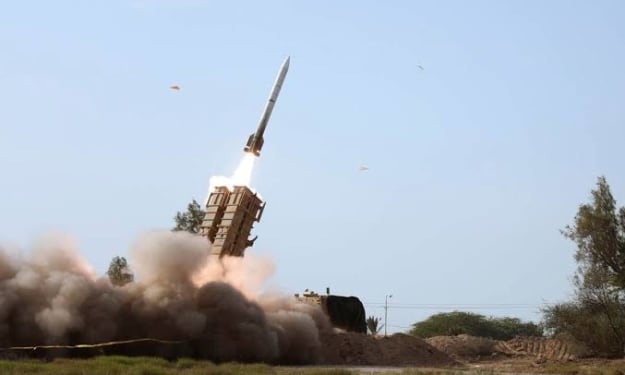
Central Israel braced for potential air-raid sirens and heightened alert after Tehran launched a fresh missile attack targeting Israeli territory, in what Israeli officials called a “significant escalation” in a conflict that has drawn the two adversaries into direct confrontation. The incident underscores the increasing risk of a wider regional war and has prompted intensified military readiness, emergency preparations, and diplomatic alarm from capitals around the world. The reported missile barrage late Tuesday was confirmed by both Israeli and Iranian sources, with the Iranian government claiming the strikes were retaliation for recent attacks on Iranian territory and “acts of aggression” attributed to Israel. According to state media in Iran, multiple ballistic missiles and long-range cruise systems were fired toward targets inside central Israel, including near urban population centres. Israeli defence officials, while remaining cautious about public disclosures, acknowledged that air-defence systems had detected incoming threats and that civil defence sirens could be expected across central districts, including in and around Tel Aviv and Jerusalem. The Israeli military stressed that interception efforts were underway and urged civilians to follow protective instructions from authorities. Details of the Attack Iranian state television released video footage purportedly showing ballistic missiles being launched from bases in central Iran, accompanied by statements from Iranian military officials claiming the operation was precise and intended to strike military infrastructure. Tehran asserted that its forces had successfully launched multiple projectiles that crossed neighbouring airspace and entered Israeli defensive zones. Israeli air-defence batteries, including the Iron Dome and longer-range anti-missile systems, were reported to have engaged the incoming missiles to protect population centres and critical infrastructure. Early reports suggested that several intercepts had occurred, though assessments of resulting damage were still being compiled as of early Wednesday. Casualty and Damage Assessments At the time of the report, Israeli authorities had not confirmed civilian casualties but described some structural impacts in outlying areas near military installations. Hospitals in central districts were placed on emergency standby, and authorities mobilised additional medical and civil-defence personnel to prepare for potential civilian injuries. Local news outlets broadcast footage of residents taking shelter in protected areas, while official civil-defence channels advised families to remain indoors, stay near reinforced areas, and avoid unnecessary travel until the alert was lifted. Escalatory Context The missile exchange comes amid months of intensifying hostilities between Iran and Israel. The two countries, which have long engaged indirectly through proxies and covert operations, have escalated to overt strikes in recent weeks. Israel has targeted Iranian missile and nuclear facilities, claiming that Tehran’s efforts to expand its nuclear programme and long-range strike capabilities pose an existential threat. Iran, in turn, has justified its actions as defensive, framing them as retaliation for apparent aggression by Israeli forces. The attacks mark a significant shift from earlier phases of tension, which were primarily conducted through proxy forces in Syria, Lebanon (via **Hezbollah), and Palestinian territories. Analysts say direct missile exchanges between Tehran and Jerusalem increase the risk of miscalculation and could draw in other regional actors. Military and Civil Responses In Israel, the military — known as the Israel Defense Forces — placed key units on heightened alert and prepared fighter squadrons, air defence batteries, and reserve forces. Defence Minister Yoav Gallant emphasised that Israel would defend its citizens and sovereignty “with full force and resolve,” vowing that any attacks on Israeli civilians or territory would be met with decisive response. Prime Minister Benjamin Netanyahu addressed the nation, urging calm and unity. “Our enemies seek to sow fear, but we will protect our people and our land,” he said in a televised statement. “We call on all residents to remain vigilant and heed instructions from civil-defence authorities.” Global Diplomatic Reactions International reaction to the escalation was swift. Western capitals, including the United States Department of State, called for restraint, urging both sides to step back from further military confrontation. The United Nations Security Council convened an emergency session to address the crisis, with diplomats warning that unchecked escalation could destabilise the Middle East and disrupt global economic and security interests. European leaders expressed concern about the safety of civilians and called for an immediate de-escalation. Several countries emphasised support for Israel’s right to self-defence while also criticising the use of long-range missile strikes against population centres. Economic and Regional Impacts Markets reacted to the news of the missile strikes, with energy prices rising amid fears of wider disruption in the region, which contains some of the world’s most critical oil-export infrastructure. Shipping corridors, including access to the Strait of Hormuz, were closely monitored amid concerns about disruptions. Regional neighbours, including Jordan, Egypt, and Gulf Cooperation Council members, heightened their own security postures and appealed for de-escalation. Looking Ahead With sirens and alerts expected across central Israel, the immediate focus remains on civilian protection and intercepting any further missile threats. The broader geopolitical implications — from defence postures to diplomatic negotiations — continue to evolve rapidly. As both Tehran and Jerusalem stand firm, analysts warn that without diplomatic intervention, the exchange of strikes risks drawing the region into a broader conflict that could have far-reaching consequences for security and economic stability across the Middle East and beyond.
By Fiaz Ahmed 2 days ago in The Swamp
When the Shelter Closes
Across the street from my house, a man slept under a tree, his dog by his side. My first, naive thought: he must be traveling through. But he kept coming back, often sleeping there during the day. Then it hit me—that person might not have a home.
By Bride of Sound6 days ago in Humans



Comments
There are no comments for this story
Be the first to respond and start the conversation.